

Bansuri (Flute)Prepared by KalaSudha
Advanced Bansuri (Flute)
Advanced bansuri, prepared by KalaSudha: a full raga rendering, fast taans and tihais, teaching-line study, composition, supervised teaching and a concert.
- Module
- 3A–3C
- Lessons
- One-to-one or in a group
- Ends in
- A KalaSudha certificate

Übersicht
About Advanced
Advanced bansuri prepares you for a judged 30-minute concert, with composition and supervised teaching alongside. You enter after Intermediate or a placement session that confirms the same skills. It is the third level of the Bansuri (Flute) course prepared by KalaSudha. As a typical guide, Advanced takes 12–30 months, and you agree the pace with your teacher.
Module 3A builds a full raga rendering. You join alap, jod and jhala into one opening that builds in pulse and register, then develop a slow gat and move into a fast gat without a pause. A fifth raga comes with its allied raga for comparison. The module ends with a 15-minute raga rendering.
Read the full overviewWeniger anzeigen
Module 3B covers fast taans and the highest notes, tihais from three starting beats and layakari against the cycle. You transcribe a recorded taan passage, analyse teaching-line evidence and take studies such as the Maihar line's beenkari ang alap or the Banaras line's vocal-inflected phrasing on the bansuri.
Module 3C prepares the concert: work with a concert tabla player, a sound check, pitch recovery, programme notes with sources, a gat of your own and one Foundation topic taught under supervision. In a cohort, you rehearse the concert in front of fellow learners before the judged performance. A judging assessor other than your teacher reviews the concert, and the level leads to a KalaSudha award (see certificates). Ask about Advanced in the Academy.
Module
The three Advanced modules
-
3A
Module 3A: Complete raga rendering
8 core + 4 teacher-setfrom 14 topics
Review endurance and plan preparation. Keep a slow tempo with tabla, join alap, jod and jhala, and develop the slow gat. Move into the fast gat, compare a fifth raga with its allied raga and present a 15-minute raga rendering.-
Review endurance and preparationKernsystem
Review your Intermediate recordings and plan practice for a fifteen-minute rendering.
-
Slow tempo with tablaKernsystem
Keep a slow cycle with a tabla player and enter the slow gat on sam.
-
Alap, jor and jhala in sequenceKernsystem
Join alap, jor and jhala into one opening that builds in pulse and register.
-
Development in the slow gatKernsystem
Develop the slow gat with vistar and taans that return to the mukhda.
-
From slow to fast gatKernsystem
Move from the slow gat to a fast gat in the same raga without a pause.
-
A fifth raga and its allied ragaKernsystem
Render a teacher-selected raga and tell it apart from an allied raga by its phrases.
-
Guided rehearsal: complete raga renderingKernsystem
Rehearse your fifteen-minute raga rendering and correct one fault using teacher feedback.
-
Review and presentation: complete raga renderingKernsystem
Present your fifteen-minute raga rendering and discuss your preparation and corrections with the assessor.
-
Slow and fast khayal modelWahlthema
Shape a rendering on the khayal model, a slow section then a fast composition, in place of a slow gat.
-
Pacing at a very slow tempoWahlthema
Pace a development in a very slow tala section without losing the cycle.
-
A second complete ragaWahlthema
Prepare a second raga from alap to fast gat.
-
Lower octave on a longer fluteWahlthema
Explore lower-octave alap on a longer, teacher-approved flute.
-
Play with a singerWahlthema
Accompany a singer on the flute, following their phrases and filling pauses.
-
Transcribe a recorded alapWahlthema
Transcribe two phrases of alap from an attributed bansuri recording.
Your teacher fills 4 slots from the electives, their own topics or both.
-
-
3B
Module 3B: Advanced technique, rhythm and style
8 core + 4 teacher-setfrom 14 topics
Keep clarity at speed and play fast taans and the highest notes. Play tihais from different beats and layakari against the cycle. Transcribe a recorded taan passage, analyse teaching-line evidence and take Maihar, Banaras or seven-hole studies.-
Review clarity at speedKernsystem
Record your fastest clean taan and set a tempo ladder for the module.
-
Fast taans and the highest notesKernsystem
Play fast taans clearly and reach the highest notes your flute allows, in tune.
-
Tihais from different beatsKernsystem
Construct and play tihais that start from different beats and land on sam.
-
Layakari against the cycleKernsystem
Play a phrase in dugun and tigun against a steady slow or medium cycle.
-
Transcribe a recorded taan passageKernsystem
Transcribe a taan passage from an attributed bansuri recording and describe its technique.
-
Analyse teaching-line evidenceKernsystem
Compare attributed recordings from the three teaching lines in alap, gat and ornament, citing sources.
-
Guided rehearsal: advanced technique, rhythm and styleKernsystem
Rehearse your taan and layakari presentation and correct one fault using teacher feedback.
-
Review and presentation: advanced technique, rhythm and styleKernsystem
Present your taan and layakari presentation and discuss your preparation and corrections with the assessor.
-
Maihar: beenkari ang alapWahlthema
Practise a dhrupad-rooted alap in beenkari ang through a Maihar teacher-approved example.
-
Maihar: gat and tongued taansWahlthema
Practise gat development and tongued taans through a Maihar teacher-approved example.
-
Banaras: vocal-inflected phrasingWahlthema
Practise vocal-inflected phrasing in a slow composition through a Banaras teacher-approved example.
-
Banaras: thumri and light classicalWahlthema
Practise a thumri or dhun through a Banaras teacher-approved example.
-
Seven-hole line: the seventh holeWahlthema
Practise phrases that use the seventh hole for lower tivra Ma through a seven-hole teacher-approved example.
-
Seven-hole line: very slow khayal-model tempoWahlthema
Practise a very slow khayal-model section through a seven-hole teacher-approved example.
Your teacher fills 4 slots from the electives, their own topics or both.
-
-
3C
Module 3C: Concert, composition and teaching
8 core + 4 teacher-setfrom 14 topics
Plan concert preparation and work with a concert tabla player. Run a sound check, recover pitch and write programme notes with sources. Compose a gat, teach a Foundation topic under supervision, then play a judged 30-minute concert.-
Plan concert preparationKernsystem
Review the programme, flute care and practice log, then schedule rehearsal and rest before assessment.
-
Work with a concert tabla playerKernsystem
Agree tempo, raga, pitch and cues with the tabla player before the concert.
-
Sound check and pitch recoveryKernsystem
Set microphone balance and recover pitch when the flute's temperature changes between items.
-
Programme notes and sourcesKernsystem
Prepare a programme with timings, notation and attribution for inherited and adapted compositions.
-
Compose a gatKernsystem
Compose a short gat with sthayi and antara in a taught raga and notate it.
-
Teach a Foundation topic under supervisionKernsystem
Plan and teach one Foundation topic, diagnose a learner's error and check their improvement.
-
Guided rehearsal: concert, composition and teachingKernsystem
Rehearse your thirty-minute judged concert and correct one fault using teacher feedback.
-
Review and presentation: concert, composition and teachingKernsystem
Present your thirty-minute judged concert and discuss your preparation and corrections with the assessor.
-
Close with a dhun or thumriWahlthema
Prepare a dhun or thumri to close the concert programme.
-
A khayal-model itemWahlthema
Prepare a slow and fast khayal-model item for the programme.
-
A jugalbandi itemWahlthema
Prepare an item shared with a second soloist, with agreed exchanges.
-
Compose a dhunWahlthema
Compose a short dhun in a taught raga and notate it.
-
Teach first sound to a groupWahlthema
Lead a short group session on hold, blowing and first sound for Foundation learners under supervision.
-
A programme on two flutesWahlthema
Plan a programme that changes flute between items and keeps the drone aligned with each.
Your teacher fills 4 slots from the electives, their own topics or both.
-
Why Advanced
What Advanced builds
-
A full raga, in order
Join alap, jod and jhala into one opening, then move from the slow gat to the fast gat with no gap or tempo jump. -
Rhythm you can calculate
Write the counts for tihais from three starting beats and for layakari against the cycle, then play each one and land on sam. -
Composer and teacher
Compose a gat of your own. Then teach a Foundation topic while a supervisor records your correction and the learner's response.
Lessons
Ways to learn
One-to-one
Learn at your own pace. You book online lessons through KalaSudha in your own time zone.
Register interest in 1:1 lessonsIn a group
Learn in a group on a timetable.
Ask about group lessonsTeachers
Teachers for Advanced
-
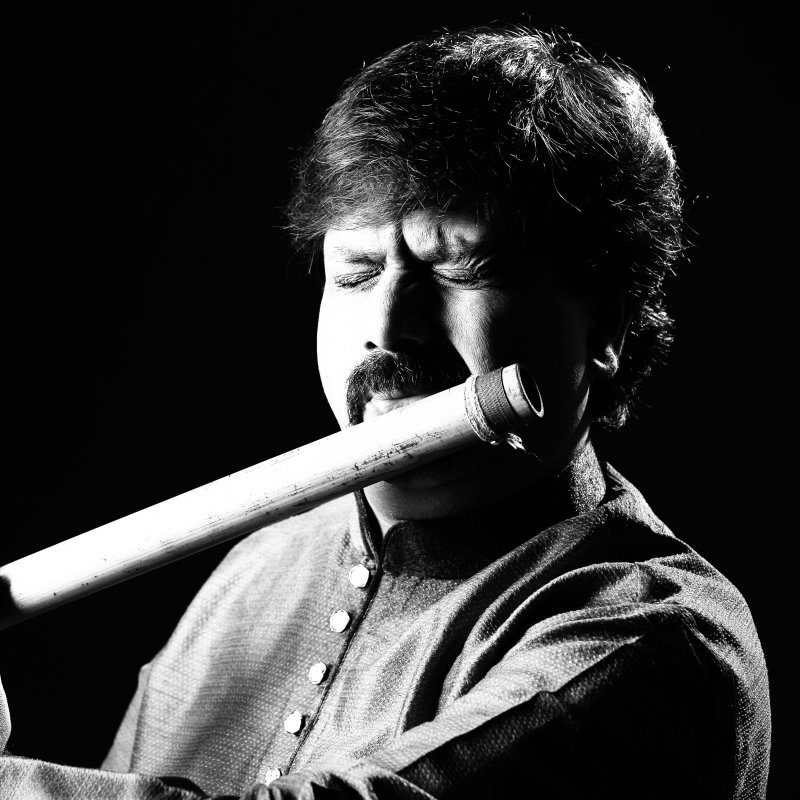
Flute
Pandit Ajay Prasanna
<p>Pandit Ajay Prasanna ist ein international anerkannter Flötist aus einer angesehenen Musikerfamilie. Er führt das Erbe seines Vaters Pandit Bholanath Prasanna fort, der zu den besten Flötisten Indiens zählte. Zu seinen Schülern zählt Pandit Hari Prasad Chaurasia.</p>
Teaches
Bansuri (Flute) -
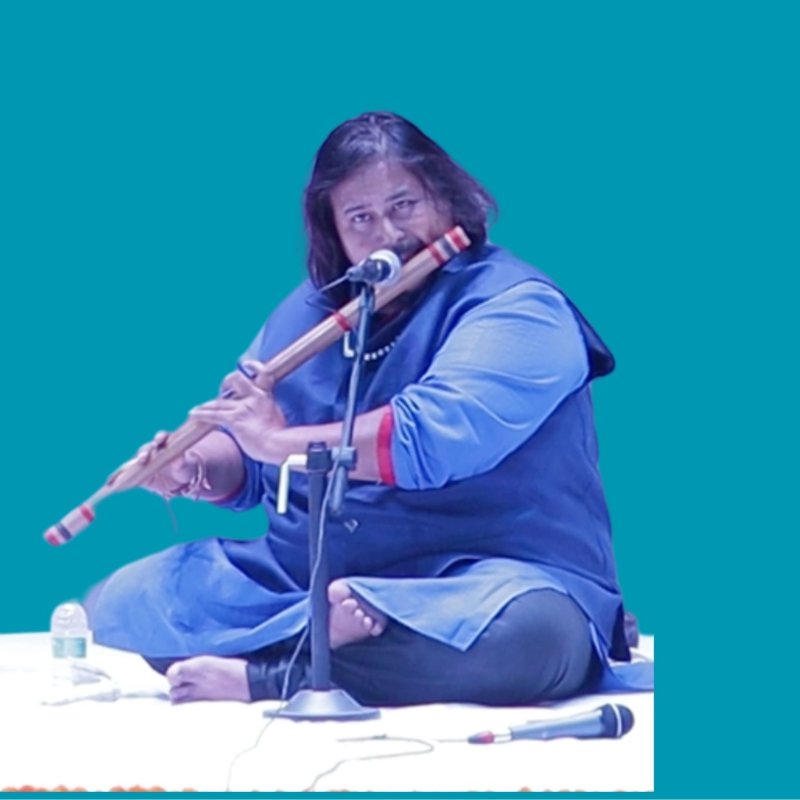
Dr. Shanish Kumar Gyawali spielt Bansuri in der Banaras-Tradition, Schüler von Vinod Prasanna und Dr. Prahalad Nath, Promotion BHU, AIR-Status 'B High', Young Artist Stipendium.
Teaches
Bansuri (Flute)


Fragen
Questions about Advanced
Entry, pace, assessment and what you show to finish the level.
A full raga on the bansuri comes in module 3A of Advanced bansuri. You join alap, jod and jhala into an 8-minute opening that stays in the raga, then develop a slow gat and move into a fast gat without a pause.
The module ends with a 15-minute raga rendering. Electives add a khayal-model rendering and a second complete raga.
No. The Advanced bansuri core works on the flute your teacher approved, and only one 3B elective, the study of the seventh hole, needs a seven-hole flute. No learner has to buy one for an elective, because your teacher can fill that slot with another study.
A longer flute for the lower octave is also an elective, in module 3A.
Yes. Advanced bansuri includes one Foundation topic that you plan and teach while a supervisor observes. You submit a lesson plan, diagnose a learner's error and show one useful correction.
The supervisor records the correction and the learner's response. An elective adds teaching first sound to a group.
The Advanced level of the Bansuri (Flute) course ends with a 30-minute concert to an audience. A judging assessor other than your teacher reviews cycle accuracy, pitch, development, partner response and recovery; a failed criterion needs correction and reassessment.
You also submit an original composition, an observed Foundation lesson and a written theory portfolio with a viva. All 18 Advanced skills must be met.
Nächste Schritte
Bereit für Advanced?
Tell us what you want to learn and where you are today. An academy advisor will help you find a good next step.