

Norwich Ragas: Tabla-Solo von Ustad Akram Khan
- #Norwich
- #Vor Ort
- SEP 19, 2026
- Samstag
- 12:00 PM
- 1 Stunde, 30 Minuten
- St Andrew's Hall, Norwich
- Norwich, Vereinigtes Königreich
Sichern Sie sich Ihre Tickets

Veranstaltungsübersicht
Auftretende Künstler
-
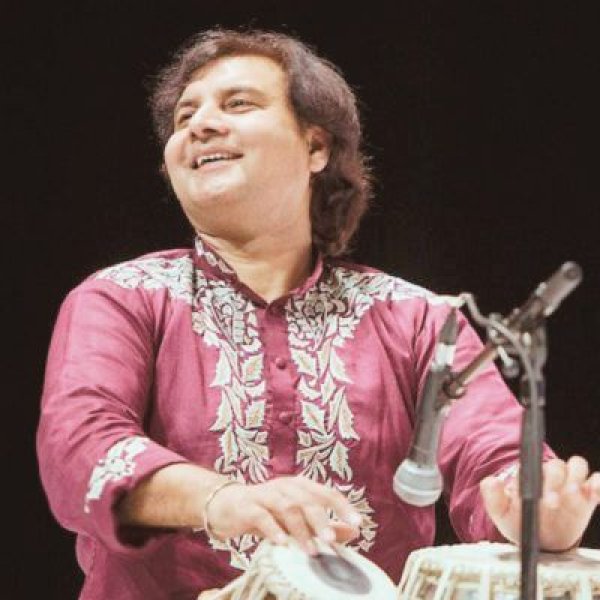 Akram Khan
-
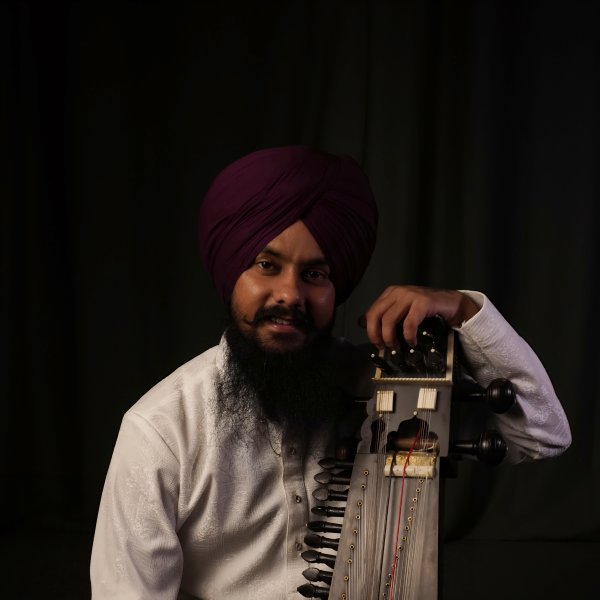 Satwinder Pal Singh


Veranstaltungsdetails
Liebe Musikliebhaber aus Norwich, wir freuen uns, im Rahmen des Kala Festival 2026 im Norwich Arts Centre ein Tabla-Solo von Ustad Akram Khan zu präsentieren. Nach dem herzlichen Empfang des vergangenen Jahres kehren wir in diese Stadt zurück, um die jahrhundertealte Musiküberlieferung Indiens und ihre lebendige Kraft in diesem Nachmittagskonzert vorzustellen.
Ustad Akram Khan, Meister der siebten Generation der Ajrara-Gharana und einer der bedeutendsten Tabla-Spieler weltweit, entfaltet in seinem Solovortrag einen Bogen vom sanften Flüstern langsamer Rhythmen bis zum pulsierenden Strom schneller Taktfolgen. Er präsentiert Kompositionen aus verschiedenen Epochen sowie eigene Improvisationen. An seiner Seite begleitet ihn der aufstrebende Sarangi-Virtuose Satwinder Pal Singh, der seit früher Kindheit Sarangi spielt und von großen Meistern geformt wurde.
Dieser Nachmittag geht über die Musik hinaus. Er lädt dazu ein, innezuhalten, nachzudenken und die heilende Kraft des Klangs (Shabd) zu erleben. Seit Jahrhunderten versteht die indische Klassiktradition Musik als eine Form der Meditation, als einen Weg, inneres Gleichgewicht und Gemeinschaft wiederherzustellen. Wenn wir uns in intimen Konzerten zusammenfinden und dem uralten Klang lauschen, öffnet sich eine andere Welt. In der heutigen Zeit erinnern uns diese zeitlosen Praktiken an die tiefe Verbindung zwischen Musik, psychischer Gesundheit, Achtsamkeit und emotionalem Wohlbefinden. Dieser Nachmittag bietet Erneuerung, eine Möglichkeit, durch die universelle Sprache der Musik gestärkt, verbunden und erneuert zu werden.
Wenn Sie in Norwich oder Umgebung sind, kommen Sie. Für besondere Bedürfnisse wenden Sie sich bitte an uns.
Einlass ab 11:45 Uhr, Konzertbeginn um 12:00 Uhr
Publikumsregeln
- Unbefugtes Filmen oder Fotografieren ist nicht gestattet.
- Bitte schalten Sie Ihr Mobiltelefon während der Veranstaltung auf lautlos oder aus (auch SMS). Wir danken Ihnen für Ihre Rücksichtnahme.
Venue information
Häufig gestellte Fragen
How do I get to St Andrew's Hall, Norwich?
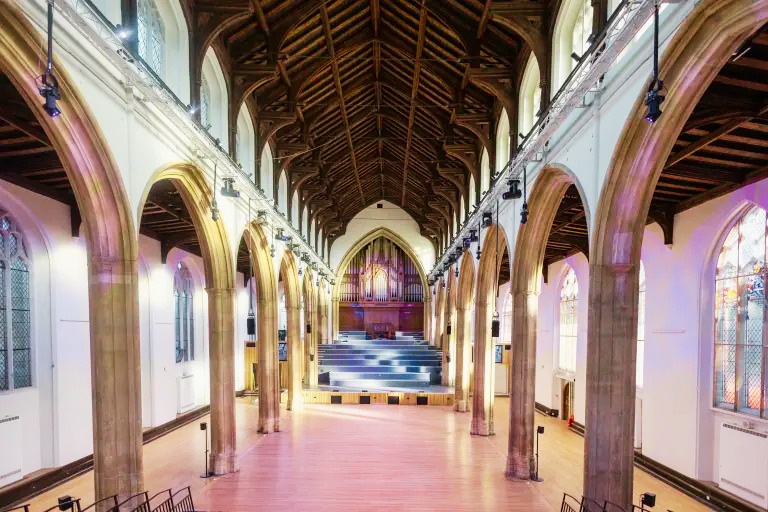
St Andrew's Hall is on St Andrew's Plain, Norwich NR3 1AU, in the city centre, 950 metres from Norwich railway station, a walk of about 12 minutes. The bus station is also 950 metres away. The hall is part of The Halls, the name the venue uses for the complex.
From the railway station you can also take a bus to Castle Meadow, or a taxi from the rank outside the station.
Driving? See parking near the hall.
Where can I go to hear live Indian classical music in Norwich, which venues have hosted KalaSudha's concerts, and where do I find the next Norwich date?
KalaSudha presents Indian classical music in Norwich and lists each concert on its Norwich page, with a link to book. For the next Norwich date, read how to hear about new Norwich concerts.
KalaSudha has presented concerts at St Andrew's Hall on St Andrew's Plain and at The Assembly House, a Grade I listed building on Theatre Street.
Who is the tabla player Ustad Akram Khan, and what is his lineage?
Ustad Akram Khan is a tabla player and the seventh generation of his family in the Ajrara gharana. His father was Hashmat Ali Khan. As a boy he trained first with his great-grandfather, Mohammad Shafi Khan, and later with Niazu Khan. For over four decades he has kept the gharana's repertoire alive, and he preserves more than 15 of its classic qaidas through his teaching and concerts. He made his international debut in Norway in 1987 and has played on All India Radio more than 800 times.
Who is the sarangi player Satwinder Pal Singh, and who taught him?
Satwinder Pal Singh is a London-based sarangi player from Moga, Punjab. He took up the sarangi at 11 under his father, Shaminder Pal Singh, a Top Grade artist of All India Radio, and in 2012 studied in Delhi with his father's teacher, Sabri Khan. He has also trained under Ram Narayan and Harsh Narayan. He plays the saranda, israj, dilruba and taus too, instruments his family has carried through generations of Sikh music. He and his father both hold Top Grade status for sarangi from All India Radio.
What is a tabla?
A tabla is a pair of hand drums. The smaller drum, the dayan, is wooden, sits under the right hand and carries the pitch. The larger drum, the bayan, sits under the left hand and gives the bass. The bayan is most often copper, sometimes clay or wood, and the player bends its bass by pressing the heel of the palm into the head while striking.
Each head carries a black circle of tuning paste. The paste weights the skin and adds overtones. The dayan rings at a clear pitch, and the bayan gives a deep bass with a looser pitch that the palm can shift.
What is the Ajrara (Ajrada) gharana of tabla, where did it begin, and what is it known for?
The Ajrara gharana, also spelt Ajrada, is a school of tabla that arose in the late 18th or early 19th century in the village of Ajrara, in Meerut district. Most accounts trace it to two brothers, Kallu Khan and Miru Khan, who learnt in Delhi, making it an offshoot of the Delhi gharana. Its players add the ring finger to the Delhi technique. It is best known for qaidas, themes with set variations, in aad laya, three strokes to every two beats. Ustad Akram Khan plays in the gharana today.
Have more questions? Contact our support team and we'll be happy to help!