

Tabla Tales: Unveiling the Secrets of Rhythm with Ustad Akram Khan
- #London
- #In-Person
- SEP 25, 2025
- Thursday
- 1:00 PM
- 3 hours, 30 minutes
- The Bhavan
- London, United Kingdom
Get Your Tickets

Event Summary
Performing Artists
Performing Artists
-
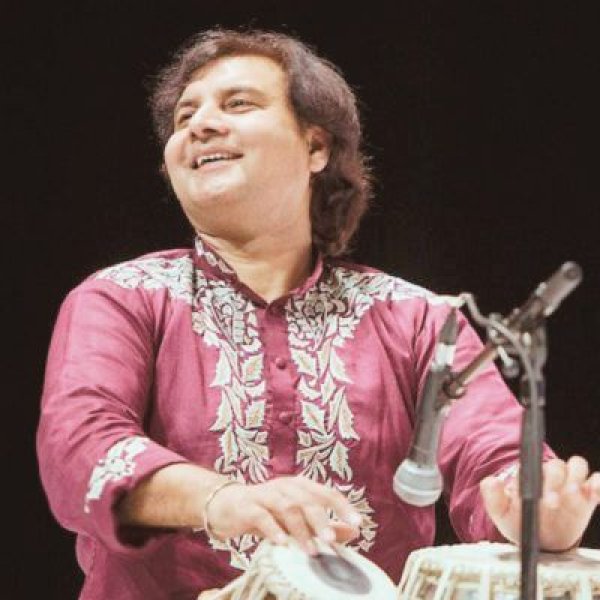 Akram Khan

Event Details
Join Ustad Akram Khan, one of the finest Tabla Players in India and the torchbearer of Ajrada Gharana, one of the 6 main Gharanas (Schools) of tabla.
This exclusive workshop will put the limelight on the tabla's rich tradition and Intricacy, especially the Ajrada Style (Known for its precise execution and sophisticated techniques) — an Opportunity for Beginner, Intermediate, & Advanced Tabla Students to learn from the maestro.
Workshop Highlights: An overview of the Mastery of the tabla
1. Understanding the Basics of Tabla
• Tabla Structure: The tabla consists of two drums—the bayan (left drum) and the dayan (right drum). The dayan is usually made of wood, while the bayan is typically made of metal or clay.
• Tunings: Learning to tune both drums to the correct pitch is fundamental. The dayan is tuned to the tonic note (Sa) of the raga or the piece being played.
2. Fundamental Techniques and Bol (Syllables)
• At the core of tabla playing are the bols, distinct syllables corresponding to specific strokes on the drum. These bols, like dha, tin, na, and tu, form the basic vocabulary of tabla rhythms. A beginner learns to articulate these bols with clarity and precision, gradually combining them to form simple compositions called thekas.
3. Mastery of Taal (Rhythmic Cycles)
• Indian classical music is structured around specific taals, or rhythmic cycles. Common taals include Teentaal (16 beats), Ektaal (12 beats), and Jhaptaal (10 beats). Mastery of the tabla requires an in-depth understanding of these cycles, as well as the ability to maintain the steady rhythm while navigating complex variations.
4. Developing Hand Techniques and Control
Each hand and finger plays a vital role in creating different tonal qualities:
• The dayan is struck with the index and middle fingers to produce bright, high-pitched sounds.
• The bayan requires a more extensive use of the palm, thumb, and little fingers to generate resonant, bass tones.
A skilled tabla player develops control over these techniques to produce a wide range of sounds, from delicate, soft notes to forceful, resonating ones. Precision in hand positioning, finger placement, and pressure control is essential for refining these skills.
5. Theory & Tradition
Along with technical skills, a tabla master has in-depth Knowledge of Indian classical music theory, including the concept of “layakari” (timing) and the intricacies of taals.
6. Speed and Precision
Progressing from basic strokes to more complex rhythms demands the ability to play faster sequences without sacrificing clarity. Speed and precision are cultivated over years of practice, starting from slow tempos and incrementally increasing the speed. The balance between speed and accuracy is a hallmark of tabla mastery.
7. Creative Improvisation and Expression
One of the most distinctive aspects of tabla playing is the ability to improvise. Advanced players express their creativity through intricate variations and spontaneous compositions. The tabla solo (or tukda) expresses rhythmic virtuosity and innovation. Mastery in improvisation is achieved by understanding the nuances of rhythm, musicality, and the traditional framework within which the player operates.
8. Accompaniment
In addition to solo performances, the tabla is often played in accompaniment to other instruments or vocalists. Accompanying artists require understanding the raga (melody) and taal (rhythm) of the piece being performed. A tabla player must adapt their playing to complement the melodic flow of the other musicians while maintaining rhythmic integrity.
9. The Guru-Shishya Tradition
Learning the tabla is traditionally passed down through the guru-shishya (teacher-student) system, where knowledge is transmitted directly from master to disciple. This mentorship fosters technical skill and a deep emotional and spiritual connection to the music. The relationship with a guru is crucial in progressing from a student to a master of the instrument.
10. Mental Focus and Physical Endurance
Becoming a tabla master requires not just physical dexterity but also mental focus. The intricate patterns of rhythm and melody require sustained concentration and mental discipline. In addition, the physical demands of long practice sessions help build endurance, enabling the tabla player to perform for extended periods with energy and clarity.
11. Practice and Discipline:
Like any form of Mastery, becoming proficient on the tabla demands years of practice under the guidance of a guru (teacher). The discipline of consistent practice, is crucial to refine technique and increase musical expression.
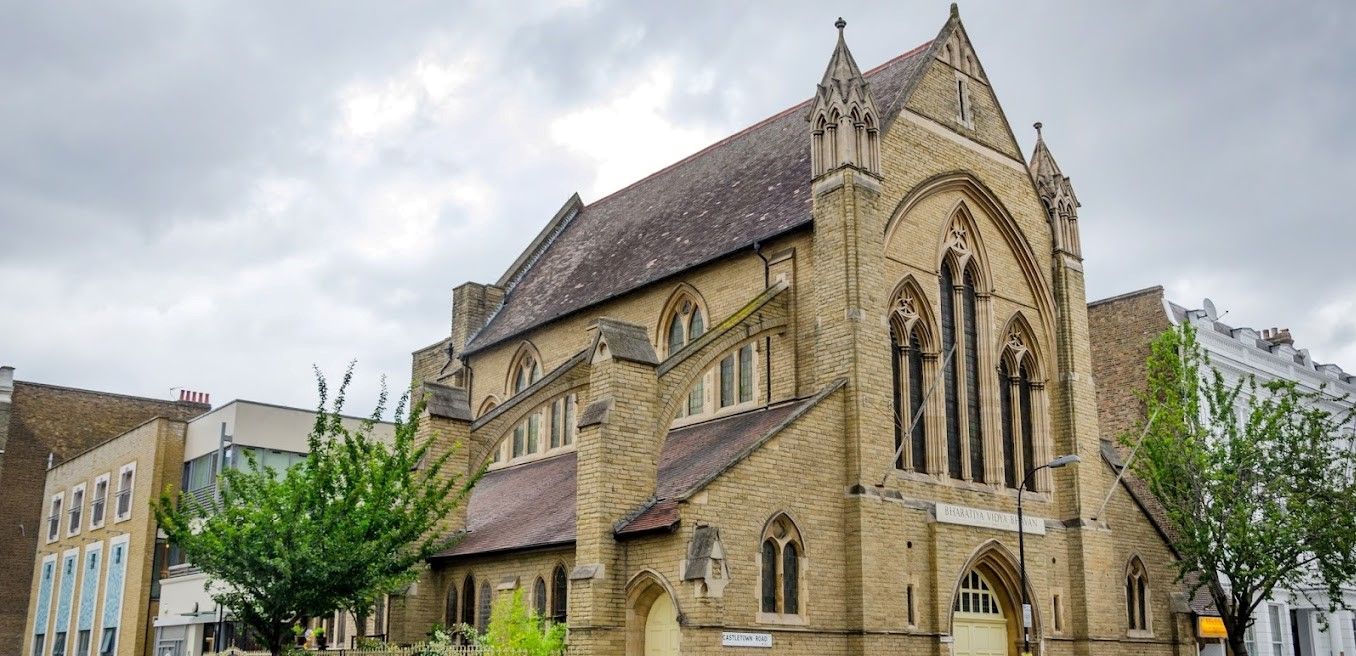
Venue information
Frequently Asked Questions
How do I get to The Bhavan?
The nearest tube to The Bhavan in West Kensington, London, is West Kensington on the District line, three minutes' walk away. Barons Court, on the District and Piccadilly lines, is seven minutes' walk. Buses 28 and 306 stop on North End Road, three minutes away.
Enter on Challoner Street. The postal address is 4a Castletown Road, London W14 9HE.
Driving? See where to park at The Bhavan. For lifts and wheelchair spaces, see whether The Bhavan is accessible.
Is The Bhavan accessible?
Yes. The building is fully wheelchair accessible with lifts to all floors, and an induction loop serves the main auditorium.
The auditorium holds two wheelchair spaces, both in the Front zone. Write to [email protected] to book one.
Where can I hear live Indian classical music in London, and which venues does KalaSudha use?
You can hear Hindustani (North Indian) classical music live in London at London Ragas, KalaSudha's concert series in London. Its evenings are baithaks: the audience sits close to the musicians. London Ragas can take place at different venues across London, and KalaSudha plans to add more baithaks in other parts of London. KalaSudha is based in London, so every concert tour it organises also plays London once.
See how to book tickets for a London concert and how to get to the venues.
Who is the tabla player Ustad Akram Khan, and what is his lineage?
Ustad Akram Khan is a tabla player and the seventh generation of his family in the Ajrara gharana. His father was Hashmat Ali Khan. As a boy he trained first with his great-grandfather, Mohammad Shafi Khan, and later with Niazu Khan. For over four decades he has kept the gharana's repertoire alive, and he preserves more than 15 of its classic qaidas through his teaching and concerts. He made his international debut in Norway in 1987 and has played on All India Radio more than 800 times.
What is a tabla?
A tabla is a pair of hand drums. The smaller drum, the dayan, is wooden, sits under the right hand and carries the pitch. The larger drum, the bayan, sits under the left hand and gives the bass. The bayan is most often copper, sometimes clay or wood, and the player bends its bass by pressing the heel of the palm into the head while striking.
Each head carries a black circle of tuning paste. The paste weights the skin and adds overtones. The dayan rings at a clear pitch, and the bayan gives a deep bass with a looser pitch that the palm can shift.
What is the Ajrara (Ajrada) gharana of tabla, where did it begin, and what is it known for?
The Ajrara gharana, also spelt Ajrada, is a school of tabla that arose in the late 18th or early 19th century in the village of Ajrara, in Meerut district. Most accounts trace it to two brothers, Kallu Khan and Miru Khan, who learnt in Delhi, making it an offshoot of the Delhi gharana. Its players add the ring finger to the Delhi technique. It is best known for qaidas, themes with set variations, in aad laya, three strokes to every two beats. Ustad Akram Khan plays in the gharana today.
Have more questions? Contact our support team and we'll be happy to help!