

Norwich Ragas: Tabla Solo by Ustad Akram Khan
- #Norwich
- #In-Person
- SEP 19, 2026
- Saturday
- 12:00 PM
- 1 hour, 30 minutes
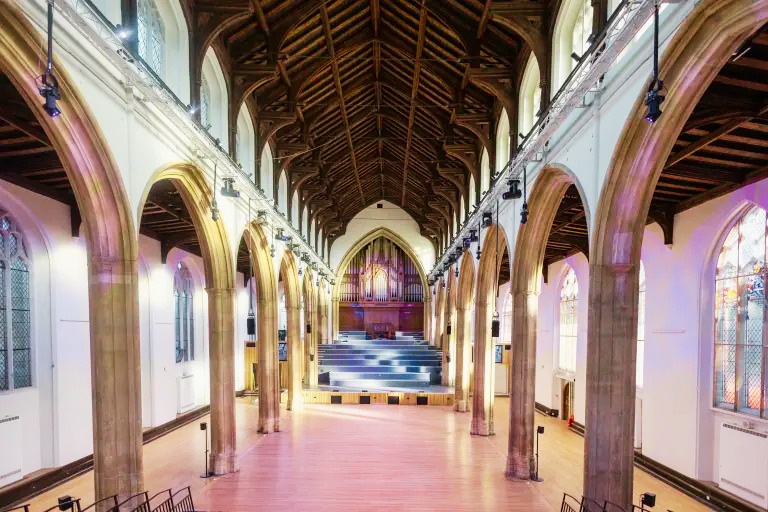
- St Andrew's Hall, Norwich
- Norwich, United Kingdom
Get Your Tickets

Event Summary
Performing Artists
Event Highlights
Ustad Akram Khan, seventh generation of the Ajrada Gharana
Satwinder Pal Singh, sarangi from a father-son lineage
Compositions from across the tradition, and his own improvisations
Kala Festival 2026 returns to St Andrew's Hall
Performing Artists
-
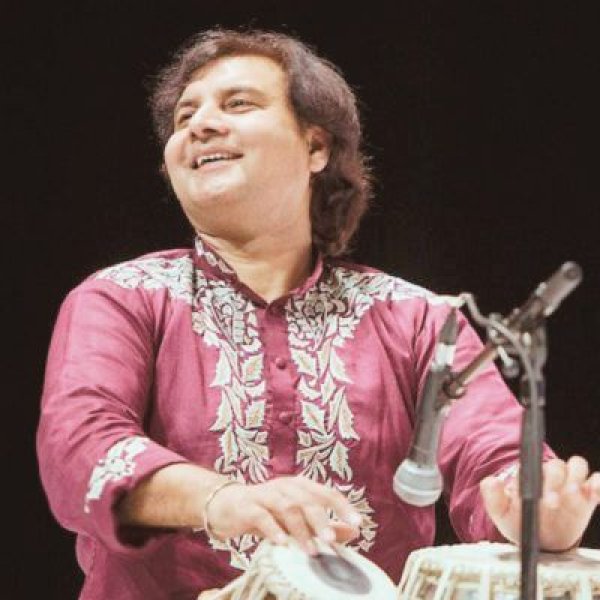 Akram Khan
-
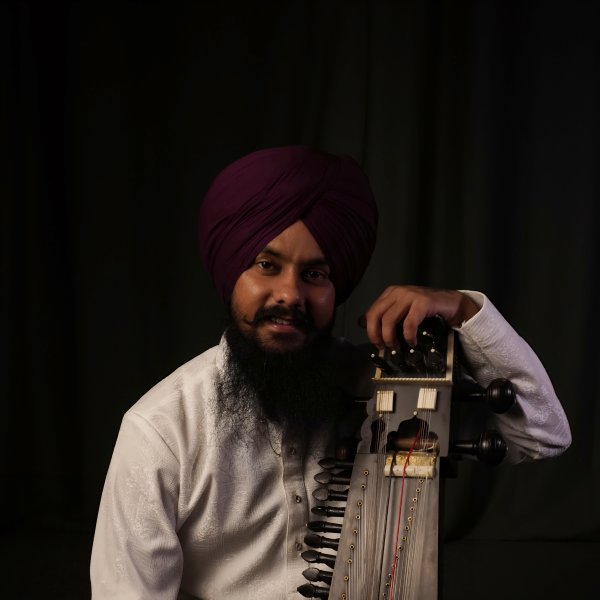 Satwinder Pal Singh


Event Details
Dear music lovers from Norwich, we are delighted to present "Tabla Solo by Ustad Akram Khan" as part of Kala Festival 2026 at St Andrew's Hall, Norwich. After huge support last year, we are returning to the city to present this beautiful afternoon concert of centuries-old traditions and their musical craft.
Ustad Akram Khan, a seventh-generation master of the Ajrara gharana and the world’s finest exponent of Tabla, unleashes a tabla solo that shifts seamlessly from whisper-soft textures of slow beats to thunderous cascades of fast rhythmic patterns. Notations of different eras and his improvisations. Supporting him is the rising sarangi virtuoso Satwinder Pal Singh. He has been playing the sarangi since a very early age, and has been nurtured by great legends.
This is more than music; they are also an invitation to pause, reflect, and experience the healing resonance of sound (Shabd). For centuries, Indian classical traditions have regarded music as a form of meditation, a means of restoring balance within ourselves and within our communities. When we gather for intimate concerts with others and participate in musical experiences that carry ancient sound, we open a whole new world to ourselves. In today’s world, these timeless practices remind us of our profound connection between music, mental health, mindfulness, and emotional well-being. This evening offers renewal, a chance to feel uplifted, connected, and restored through the universal language of music.
If you are in Norwich or around, do join. For any special needs, contact us.
Doors open at 11:45 AM, with music starting at 12:00
Audience Policy:
- Unauthorised filming or photography is not permitted.
- The use of mobile phones (including texting) is not allowed during the event. We kindly ask for your cooperation. Thank you!
Venue information
Frequently Asked Questions
How do I get to St Andrew's Hall, Norwich?
St Andrew's Hall is on St Andrew's Plain, Norwich NR3 1AU, in the city centre, 950 metres from Norwich railway station, a walk of about 12 minutes. The bus station is also 950 metres away. The hall is part of The Halls, the name the venue uses for the complex.
From the railway station you can also take a bus to Castle Meadow, or a taxi from the rank outside the station.
Driving? See parking near the hall.
Where can I go to hear live Indian classical music in Norwich, which venues have hosted KalaSudha's concerts, and where do I find the next Norwich date?
KalaSudha presents Indian classical music in Norwich and lists each concert on its Norwich page, with a link to book. For the next Norwich date, read how to hear about new Norwich concerts.
KalaSudha has presented concerts at St Andrew's Hall on St Andrew's Plain and at The Assembly House, a Grade I listed building on Theatre Street.
Who is the tabla player Ustad Akram Khan, and what is his lineage?
Ustad Akram Khan is a tabla player and the seventh generation of his family in the Ajrara gharana. His father was Hashmat Ali Khan. As a boy he trained first with his great-grandfather, Mohammad Shafi Khan, and later with Niazu Khan. For over four decades he has kept the gharana's repertoire alive, and he preserves more than 15 of its classic qaidas through his teaching and concerts. He made his international debut in Norway in 1987 and has played on All India Radio more than 800 times.
Who is the sarangi player Satwinder Pal Singh, and who taught him?
Satwinder Pal Singh is a London-based sarangi player from Moga, Punjab. He took up the sarangi at 11 under his father, Shaminder Pal Singh, a Top Grade artist of All India Radio, and in 2012 studied in Delhi with his father's teacher, Sabri Khan. He has also trained under Ram Narayan and Harsh Narayan. He plays the saranda, israj, dilruba and taus too, instruments his family has carried through generations of Sikh music. He and his father both hold Top Grade status for sarangi from All India Radio.
What is a tabla?
A tabla is a pair of hand drums. The smaller drum, the dayan, is wooden, sits under the right hand and carries the pitch. The larger drum, the bayan, sits under the left hand and gives the bass. The bayan is most often copper, sometimes clay or wood, and the player bends its bass by pressing the heel of the palm into the head while striking.
Each head carries a black circle of tuning paste. The paste weights the skin and adds overtones. The dayan rings at a clear pitch, and the bayan gives a deep bass with a looser pitch that the palm can shift.
What is the Ajrara (Ajrada) gharana of tabla, where did it begin, and what is it known for?
The Ajrara gharana, also spelt Ajrada, is a school of tabla that arose in the late 18th or early 19th century in the village of Ajrara, in Meerut district. Most accounts trace it to two brothers, Kallu Khan and Miru Khan, who learnt in Delhi, making it an offshoot of the Delhi gharana. Its players add the ring finger to the Delhi technique. It is best known for qaidas, themes with set variations, in aad laya, three strokes to every two beats. Ustad Akram Khan plays in the gharana today.
Have more questions? Contact our support team and we'll be happy to help!