

Indian Slide Guitar
(भारतीय स्लाइड गिटार)The Indian slide guitar is played with a metal or glass slide and tuned to open drone intervals, developed for Hindustani raga performance by Vishwa Mohan Bhatt and Debashish Bhattacharya, whose custom instruments add sympathetic strings for sustained resonance.
3
£300 - £4,000
Entry-level adapted lap steel or resonator guitars suitable for Indian slide technique start around £300–£600. Mid-range specialist instruments with sympathetic strings cost £800–£2000. Custom-built instruments by luthiers working in the Bhattacharya tradition — Chaturangui, Anandi, or Gandharvi — cost £2000–£4000 and require direct commission from specialist builders in India.

History & Origins
What the Indian Slide Guitar Is
The Indian slide guitar is a guitar played with a metal or glass slide rather than by fretting strings, tuned to open or drone-friendly intervals that suit raga performance. The slide replaces left-hand fingering and moves freely along the strings to produce continuous pitch glides, the defining ornament of raga music. This freedom from fixed fret positions allows the player to render microtonal inflections, sustained meends (pitch glides), and the gamaka ornaments that characterise Indian classical music, matching capabilities that the vichitra veena or sarangi achieve on traditional instruments.
Hawaiian Origins and Indian Adaptation
Hawaiian steel guitar arrived in India in the early 20th century through gramophone records and travelling musicians. Indian film composers and studio musicians adopted the instrument quickly, using its gliding tone for romantic and devotional songs in Hindi film music from the 1930s onward. Early players treated the instrument as a vehicle for imitative melodic lines; the move to systematic raga performance came later. Vishwa Mohan Bhatt adapted a standard guitar into the Mohan Veena in the 1960s–70s by adding sympathetic strings and drone strings, receiving global recognition through his 1994 Grammy-winning collaboration with Ry Cooder. Debashish Bhattacharya pursued a different path: rather than modifying a standard guitar, he designed instruments built from the ground up for Indian classical playing.
Debashish Bhattacharya's Three Instruments
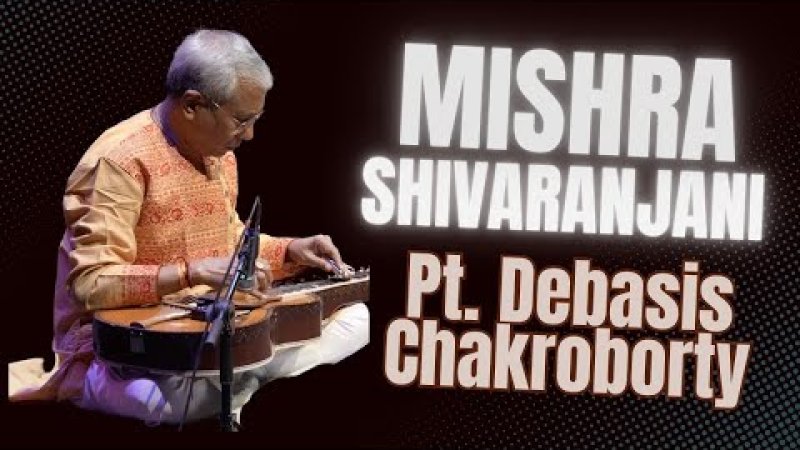
Bhattacharya developed three distinct slide guitar forms, each suited to different musical contexts. The Chaturangui is a four-neck instrument with 24 strings across its necks, capable of rendering the full range of both Hindustani and Carnatic ragas. The Anandi is a lap steel-style instrument with sympathetic strings added beneath the main playing strings, designed for Hindustani concert performance. The Gandharvi is a lighter concert instrument with a hollow body and sympathetic strings, optimised for travel and acoustic amplification. All three instruments share the core feature of sympathetic strings: unstruck strings that vibrate in resonance with the played notes, adding a sustained shimmer to the sound.
Sympathetic Strings and Their Role
Sympathetic strings run beneath or alongside the main playing strings, tuned to the notes of the raga being performed. When a playing string sounds, these sympathetic strings vibrate at matching frequencies, producing a soft sustain that enriches the overall sound. The effect resembles the jawari of a sitar or the resonator strings of a sarangi: it fills the acoustic space around a note with harmonic context, making a single pitch feel embedded in the raga rather than isolated. Bhattacharya tunes sympathetic strings to the scale of the raga, retuning between pieces as needed. In live performance, this sustained sympathetic resonance creates the meditative atmosphere associated with alap, the free, slow exploration of a raga's character before rhythm enters.
Construction: Body and Resonator
Indian slide guitars use hollow or semi-hollow bodies to maximise acoustic resonance. Bhattacharya's instruments feature large hollow bodies built from teak, mahogany, or other hardwoods, with a spruce or cedar top. The body depth exceeds that of a standard guitar, providing a larger air chamber that sustains low notes and amplifies sympathetic string vibration. Some instruments incorporate a resonator cone, a spun metal disc inside the body borrowed from Dobro-style resonator guitars, that raises volume and adds midrange bite. The construction prioritises sustain and resonance over portability, resulting in instruments heavier than standard guitars but acoustically suited to raga elaboration.
Playing Technique and Microtonal Control
Slide placement requires precision that fingered fretwork does not: a fretted note snaps into place; a slide note can sit anywhere between pitches. Indian slide guitar technique demands that the player position the slide directly above the fret wire for accurate intonation, then slide away from that point in exact intervals to reach the next note. Raga gamaka requires controlled oscillation of the slide, back-and-forth movement within a narrow range, to create the shaking ornament called andolan. Pulling the slide across multiple strings at once produces chordal swells that the Mohan Veena and Chaturangui exploit for dramatic effect. Right-hand technique uses fingerpicks on three or four fingers to pluck melody strings and strike drone strings simultaneously, maintaining a continuous tonic drone beneath melodic movement.
Setup and Climate Considerations
Indian slide guitars need higher action than standard guitars: string height of 5–8 mm at the 12th fret prevents the slide from touching frets and buzzing. String gauges run heavier than on standard instruments, 0.013–0.056 or 0.014–0.060, providing the tension and sustain that slide technique requires. In India's variable climate, hollow bodies need humidity management: 45–55 percent relative humidity prevents top cracking in dry conditions and brace loosening in monsoon humidity. The sympathetic strings detune with temperature shifts between soundcheck and performance, so players retune immediately before playing.
Hawaiian steel guitar reached India through the international gramophone trade in the 1910s and 1920s. Records by Sol Hoopii and other Hawaiian musicians circulated among urban Indian listeners, and Indian musicians noted the instrument's capacity for pitch glides. Film studios in Bombay and Calcutta began employing lap steel guitarists for background scores in the 1930s; the instrument's sighing, bending tone suited the emotional register of Hindi film songs and appeared on hundreds of recordings under the generic label 'Hawaiian guitar.' These early players used the instrument decoratively, not as a vehicle for classical raga.
Brij Bhushan Kabra's work in the 1960s showed that the standard guitar could carry Hindustani raga through string-bending technique, and Vishwa Mohan Bhatt extended this by adding sympathetic and drone strings to a standard guitar to create the Mohan Veena, receiving global recognition through his 1994 Grammy-winning collaboration with Ry Cooder. These developments demonstrated that modified guitar forms could access Indian classical territory, but neither Kabra nor Bhatt built instruments designed from the ground up for classical performance. That work fell to Debashish Bhattacharya, who began studying Hawaiian slide guitar in the 1970s and spent two decades developing custom instruments with his luthier, addressing every limitation the standard Hawaiian guitar posed for raga music.
Bhattacharya's three instruments (the Chaturangui, Anandi, and Gandharvi) emerged from this development process and won recognition from Hindustani classical authorities including Pandit Ravi Shankar, who endorsed Bhattacharya's approach and performed with him. Bhattacharya performed at major international festivals, recorded with classical and jazz musicians, and established the Indian slide guitar as a legitimate concert instrument capable of full raga elaboration. His students carry the tradition forward in India and abroad. The instrument occupies a distinct position from the Mohan Veena: the Mohan Veena is a modified standard guitar; Bhattacharya's instruments are custom-built, purpose-designed for Indian classical music.
Construction & Craftsmanship
Construction Process
Indian slide guitars use hollow or semi-hollow bodies built for maximum acoustic resonance. Debashish Bhattacharya's instruments feature large hollow bodies with teak or mahogany sides and back, topped with a spruce or cedar soundboard. Body depth runs 10–15 cm, deeper than a standard acoustic guitar, enlarging the internal air chamber to sustain low notes and amplify sympathetic string resonance. Internal bracing uses a modified X or ladder pattern reinforced at stress points where the added string tension from multiple string sets bears down on the top. Some instruments incorporate a Dobro-style resonator cone (a spun aluminium disc) that raises projection and adds midrange definition useful in concert settings without amplification.
High action is a structural requirement built into the instrument's geometry. The nut and saddle stand 5–8 mm above the fretboard, far above the 1.5–2.0 mm of a standard guitar. Luthiers achieve this with custom-height nuts cut from bone or dense synthetic material, and with saddles raised on wooden or bone risers. The frets remain present but function only as position markers; the slide never presses strings to the fretboard. Some instruments omit frets entirely and use scribed lines on the fretboard instead, reducing noise from slide contact. The headstock accommodates up to 20 or more tuning pegs on the Chaturangui, requiring reinforced headstock wood and precise spacing to prevent sympathetic string buzz.
Sympathetic strings run in a separate channel alongside or beneath the main playing strings, threaded through small runners or guides mounted on the body. These strings attach to secondary tuning pegs at the headstock and anchor to a separate tailpiece or bridge saddle at the body end. Builders position sympathetic strings close enough to the soundboard to vibrate freely but far enough from the main strings that the slide does not accidentally contact them. The runners determine string height and spacing over the body. Sympathetic string tension adds a cumulative load to the top that builders must account for in bracing design; without reinforcement, the top collapses gradually under this additional pull.
Maintenance & Care
- Slide care: Inspect glass slides for chips at the rim before playing; a chipped edge produces string noise and uneven contact. Polish metal slides (steel, brass, chrome) with a dry cloth after each session to prevent oxidation that roughens the playing surface. Store slides in a padded pouch. Players often own several slides of different weights: lighter glass for alap, heavier steel for fast jor passages.
- Sympathetic strings: Change them as soon as they sound dull compared to fresh strings; lighter gauge wire corrodes faster and loses resonance within two to three weeks in humid conditions. When changing main strings, check the runners for wear. The slide's lateral movement grooves metal runners over time; replace a runner when the groove depth exceeds the string diameter. Apply light machine oil to metal runner contact points to reduce friction.
- Humidity: Maintain 45–55% relative humidity year-round. Use a soundhole humidifier during dry months and silica gel packets in the case during monsoon season. Watch for top movement: a rise behind the bridge indicates loosening braces from excess humidity; a sink below the bridge indicates drying and contraction. Both require a luthier's attention.
- Storage: Store horizontally on a padded support rather than upright. Multiple string sets pull the headstock forward under uneven tension when the instrument stands vertical for extended periods. Retune sympathetic strings at the start of each session; they detune with temperature shifts and need adjustment before playing.
Technical Specifications
Detailed specifications for the Indian Slide Guitar
Physical Dimensions
| Specification | Value |
|---|---|
| Overall Length | 1000–1100 mm (varies by instrument type) |
| Body Length | 500–540 mm |
| Body Depth | 100–150 mm (deeper than standard guitar) |
| Body Width | 380–420 mm |
| Total Weight | 3–6 kg |
Body & Resonator
| Specification | Value |
|---|---|
| Top Plate | Spruce or cedar |
| Back & Sides | Teak or mahogany |
| Internal Bracing | Modified X or ladder pattern, reinforced at multi-string stress points |
| Resonator Type | Optional Dobro-style spun aluminium cone |
| Surface Finish | Lacquer or oil |
Slide & Fret Setup
| Specification | Value |
|---|---|
| Action Height (12th fret) | 5–8 mm |
| Nut Material | Bone or dense synthetic |
| Nut Height | Custom-raised (5–8 mm string clearance) |
| Fret Function | Position markers only; slide does not press to fretboard |
| Slide Material | Glass (borosilicate) or metal (steel, brass, chrome) |
String Configuration
| Specification | Value |
|---|---|
| Main Playing Strings | 6 (heavy gauge) |
| Main String Gauges | 0.013–0.056 or 0.014–0.060 |
| Sympathetic String Count | 8–14 (varies by instrument) |
| Sympathetic String Gauges | 0.008–0.011 |
| Drone Strings | 2–4 (on Chaturangui and Anandi) |
Acoustic Characteristics
| Specification | Value |
|---|---|
| Frequency Range | ~82 Hz–5 kHz (playing strings) |
| Sustain | 4–8 seconds with resonator; 6–12 seconds with sympathetic strings |
| Sympathetic Resonance | Ambient harmonic shimmer tuned to raga scale |
| Tonal Character | Warm, sliding, vocal; open-body construction enriches bass |
| Amplification | Acoustic or piezo pickup (under saddle or through resonator) |
Your Journey to Indian Slide Guitar Mastery
Follow this structured path from absolute beginner to accomplished performer
Slide Technique & Open Tuning
Scale & Gamaka Practice
Raga Alap
Compositions in Taal
Concert Repertoire
Media Gallery
Watch performances, see details, and explore the Indian Slide Guitar in action


Past Events
Browse our archive of past performances


Frequently Asked Questions
What is an Indian slide guitar?
A guitar laid flat across the lap and stopped with a steel bar instead of fingers on frets. Extra sympathetic and drone strings ring underneath the melody without being struck.
Because the bar never leaves the string, one note travels into the next without a break. A fretted guitar steps between notes. This one slides, which is how it comes to imitate a singing voice.
Have more questions? Contact our support team and we'll be happy to help!
Ready to start learning Indian Slide Guitar?
Get personalized quotes and explore courses