

Tabla
(तबला)The tabla is a pair of tuned hand drums — the small dayan and the large bayan — that form the rhythmic and melodic-percussive backbone of Hindustani classical music, taught through a system of spoken syllables called bols within distinct lineage schools called gharanas.
5
6
£80 - £1,500
Entry-level tabla sets (sheesham dayan, brass bayan) cost £80–£200. Mid-range sets with copper bayan and better skin quality run £200–£500. Professional instruments from master craftsmen in Varanasi or Delhi cost £500–£1500 and require a waiting period. Prices reflect the drum pair; stands and hammer are additional.

History & Origins
What the Tabla Is
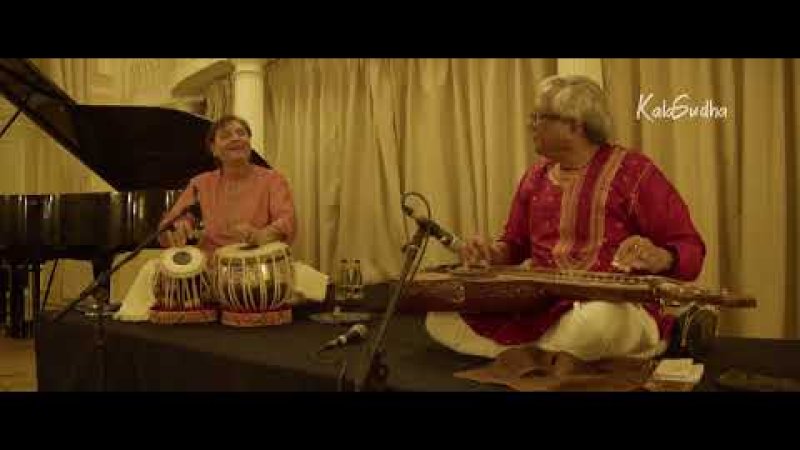
The tabla is a pair of hand drums central to Hindustani classical music. The smaller drum, called the dayan (or dahina), produces pitched tones and sits to the player's right. The larger drum, the bayan (or duggi), produces bass tones and sits to the left. Together they provide rhythmic structure and melodic-percussive dialogue. The tabla produces tuned pitches and participates in the melodic fabric of a performance; the dayan is tuned to the tonic note of the performer it accompanies, a quality that sets it apart from most percussion instruments.
The Bol System
Each stroke on the tabla carries a name, a bol, that players speak aloud before and during practice. The dayan produces sounds like na, tin, te, and re; the bayan produces ge, ke, and ka; combined strokes produce dha, dhin, and tun. Bols form the vocabulary of tabla: a player learns compositions by memorising bol sequences, then executes them at speed. The spoken bol syllable maps onto a specific finger placement and pressure: na requires the index finger at the edge of the black syahi centre; dha combines a bass drone from the left hand with a right-hand ring-finger stroke on the syahi. This bol system enables teachers to transmit compositions orally without notation.
Construction: The Dayan
The dayan's cylindrical shell is carved from a single block of hardwood, typically sheesham (Indian rosewood) or teak, to a depth of 24–28 cm. The interior tapers toward the base, shaping the acoustic chamber. The playing head uses a thin goatskin membrane layered with a circular paste called syahi: a mixture of manganese powder, iron dust, and rice starch applied in multiple coats over weeks and baked to hardness. The syahi controls the resonant frequency of the head; its size, position, and weight determine the pitch and tonal quality. Surrounding the syahi, a second layer of thicker skin (maidan) extends to the rim, where braided leather straps (tasma) lace the head to the base skin through cylindrical wooden dowels (gatta) that allow tuning by striking with a hammer.
Construction: The Bayan
The bayan uses a copper or brass metal shell in a rounded, kettle-drum shape roughly 20–25 cm in diameter and 25–28 cm deep. Its larger head uses buffalo hide, which sustains the lower-frequency vibrations a metal shell produces. The syahi on the bayan sits off-centre, a deliberate asymmetry that produces the characteristic sliding bass tone when the player's palm presses the skin mid-stroke. This wrist-bend technique, applying and releasing pressure during a stroke, gives the bayan its vocal, bending quality and is a defining feature of tabla playing.
The Gharana System
Six gharanas (lineage schools) define tabla tradition, each centred on a city and characterised by distinct compositional styles, stroke preferences, and aesthetic values. The Delhi gharana (oldest documented, attributed to Ustad Siddhar Khan) emphasises clarity and simplicity. The Ajrada gharana (near Meerut) values lyrical flow and interplay between the two drums. The Lucknow gharana prizes elegance, with compositions designed for the courts of the nawabs. The Farrukhabad gharana blends elements of Delhi and Lucknow, known for versatility. The Banaras gharana uses open, resonant strokes and features distinctive use of the bayan wrist-press. The Punjab gharana produces powerful, vigorous playing suited to folk and semi-classical contexts. A student's training path reflects their gharana: different kaidas, different stroke vocabularies, different priorities.
Key Figures
Ustad Alla Rakha Khan (1919–2000) brought the tabla to international attention through decades of accompaniment to Ravi Shankar and through his own solo concerts. His son, Ustad Zakir Hussain (1951–2024), became the most recognisable tabla player globally, collaborating across jazz, world music, and Western classical contexts while maintaining rigorous Hindustani classical training. Hussain's recordings with John McLaughlin (Shakti), Charles Lloyd, and others demonstrated the tabla's rhythmic sophistication to audiences unfamiliar with it. Both players trained in the Punjab gharana under a direct lineage from Ustad Mian Qadir Bakhsh.
Solo Tradition and Accompaniment
The tabla functions primarily as an accompanying instrument, supporting vocalists, instrumentalists, and dancers, but carries a substantial solo tradition in its own right. A tabla solo (tabla vadana) structures itself around a taal cycle: the player presents a theme composition (kaida), develops it through variations that maintain the syllabic count of the original, then accelerates through tihais (triple repetitions that resolve to sam, the first beat). Lucknow and Farrukhabad gharanas cultivate this solo form. In accompaniment, the tabla player listens and responds to the soloist, providing a rhythmic conversation rather than a fixed background pattern. A well-matched pairing between soloist and tabla player shapes the quality of a performance as much as any melodic decision.
The tabla's precise origin remains contested. One tradition attributes the instrument to Amir Khusrow (1253–1325), the Sufi poet and musician of the Delhi Sultanate, who reportedly split the earlier pakhawaj drum into two pieces to create the dayan and bayan. Most musicologists consider this attribution legendary; the pakhawaj is a horizontal barrel drum played differently from the tabla, and no physical evidence confirms this split occurred. More plausible accounts place the tabla's emergence in the 17th or early 18th century, as Mughal court music developed more refined percussion requirements and the pakhawaj's sonority gave way to the tabla's tonal clarity and agility in accompaniment.
The gharana system formalised during the 18th and 19th centuries as hereditary lineages of tabla masters formed around regional courts and cities. Each gharana codified its stroke vocabulary, compositional forms, and aesthetic priorities, transmitting them through gurukul-style teaching: a student living with and serving the master over many years. The Delhi gharana traces its documented lineage to Ustad Siddhar Khan in the late 18th century; the Lucknow gharana developed under patronage of the nawabs of Awadh. Rivalries between gharanas drove compositional innovation, as players developed more complex kaidas, relas (fast syllabic compositions), and tihais to outperform rivals at court competitions.
Ustad Alla Rakha Khan's decades of accompaniment to Ravi Shankar, including at the historic 1971 Concert for Bangladesh, brought the tabla before global audiences who had little prior exposure to Indian classical music. His son Ustad Zakir Hussain built on this platform, collaborating with jazz musicians, Western classical ensembles, and world music artists while teaching at major universities. Hussain's recordings with John McLaughlin, Charles Lloyd, and others gave non-Indian audiences a direct entry into the instrument's rhythmic depth. Today, tabla features in university music programs across Europe and North America, and players of many nationalities train in Indian gharana traditions.
Construction & Craftsmanship
Construction Process
The dayan shell is carved from a single block of hardwood (sheesham, Indian rosewood, teak, or neem), hollowed to form a cylindrical chamber that tapers internally toward the base. This taper focuses the acoustic energy toward the playing head. Craftsmen in instrument-making centres like Delhi, Varanasi, and Kolkata carve each shell by hand or on a lathe, then sand the interior to a smooth finish that affects resonance. Wall thickness runs between 6 and 10 mm; thinner walls produce brighter, more resonant tone, while thicker walls add warmth but reduce projection. The depth typically measures 24–28 cm for a standard dayan pitched to C or B.
The bayan shell is cast in copper or brass, formed into a rounded kettle shape approximately 20–25 cm wide and 25–28 cm deep. Copper shells produce a warmer, more resonant tone than brass; professional instruments typically use copper. The shell's rounded base creates an internal air column that reinforces low frequencies. A small hole at the base of some bayans allows the drum to breathe and prevents pressure buildup during the bass-press stroke. The bayan's head uses buffalo hide stretched over a hoop; buffalo skin's thickness and density suit the lower frequencies the bayan must produce and resist the moisture and pressure involved in the palm-press technique.
The syahi, a black paste applied to the centre of each drumhead, constitutes the tabla's most critical construction element. Craftsmen mix iron filings or manganese powder with cooked rice starch or wheat paste, then apply this compound in layers over several days. Each layer dries before the next application. The syahi raises and focuses the fundamental resonant frequency of the skin, suppressing overtones that would muddy the pitch. A correctly applied syahi produces a clear, singing tone on the dayan; an off-centre or poorly proportioned syahi distorts the pitch and cannot be corrected without replacing the head. Master craftsmen guard their syahi recipes; the composition and proportion vary by gharana tradition and by the individual craftsman.
Maintenance & Care
- Tuning: Use a small hammer on the gatta (wooden dowels) to adjust pitch. Strike a gatta downward at 12 or 6 o'clock to raise pitch; strike upward to lower it. Adjust in small increments, check against a tanpura or electronic tuner after each strike, and warm the drum by playing before tuning. Cold skin gives an unstable reading.
- Moisture and heat: Keep both heads away from water, direct sunlight, and air conditioning vents. Temperature extremes distort pitch and crack the skin. Wipe the syahi surface dry after playing to remove oils and sweat. Do not touch the syahi with wet fingers.
- Skin inspection: Small cracks in the maidan (outer skin ring) can be repaired with fine leather cement by a craftsman. A cracked syahi requires full head replacement. Check periodically; a failing head gives a dull, inconsistent tone before it cracks through.
- Storage and humidity: Store in cloth bags or a padded case. Maintain 40–60% relative humidity; dry conditions crack both the wooden dayan shell and the skins. In dry climates, use a room humidifier or place water near the storage area. Never store face-down. Wrap each drum separately for transport to prevent shells from striking each other.
- Gatta and lacing: Inspect the gatta blocks periodically for deep splits and replace any that are cracked. Check the tasma lacing for stretch or fraying; lacing that has stretched beyond tuning range needs replacement by a craftsman. Professional players have instruments restored every few years: heads re-faced, syahi replenished, and lacing replaced.
Technical Specifications
Detailed specifications for the Tabla
Physical Dimensions
| Specification | Value |
|---|---|
| Dayan Height | 24–28 cm |
| Dayan Head Diameter | 12.5–15 cm |
| Bayan Diameter | 20–25 cm |
| Bayan Depth | 25–28 cm |
| Combined Weight (pair) | 3–5 kg |
Shell Materials
| Specification | Value |
|---|---|
| Dayan Shell Wood | Sheesham (Indian rosewood), teak, or neem |
| Dayan Wall Thickness | 6–10 mm |
| Bayan Shell Metal | Copper (professional) or brass (student) |
| Bayan Wall Thickness | 2–4 mm (cast metal) |
| Surface Treatment | Lacquered or oiled (dayan); bare or lacquered (bayan) |
Membrane & Syahi
| Specification | Value |
|---|---|
| Dayan Head Skin | Goatskin (three-layer construction: keenam, maidan, inner keenam) |
| Bayan Head Skin | Buffalo hide |
| Syahi Composition | Iron filings or manganese powder with rice starch paste |
| Syahi Application | Multi-layer, applied over several days and baked to hardness |
| Syahi Diameter (dayan) | 6–8 cm (centered) |
| Syahi Position (bayan) | Off-center |
Tuning System
| Specification | Value |
|---|---|
| Tuning Mechanism | Hammer strikes on gatta (cylindrical wooden dowels) |
| Lacing Material | Braided leather (tasma) |
| Gatta Count | 16–32 per drum |
| Pitch Range (dayan) | C3–F3 (matched to Sa of soloist) |
| Tuning Frequency | Before each performance |
Acoustic Characteristics
| Specification | Value |
|---|---|
| Dayan Frequency Range | ~130 Hz–700 Hz |
| Bayan Frequency Range | ~55 Hz–200 Hz |
| Tonal Character | Tuned, melodic; syahi suppresses unwanted overtones |
| Dayan Sustain | 1–3 seconds |
| Bayan Sustain | 0.5–2 seconds (varies with wrist-press technique) |
Your Journey to Tabla Mastery
Follow this structured path from absolute beginner to accomplished performer
Hand Placement & Basic Bols
Taal Cycles
Layakari (Rhythmic Play)
Compositions: Kaida, Rela, Tukda
Solo Performance
Media Gallery
Watch performances, see details, and explore the Tabla in action




Featured Artists
Renowned Tabla players and performers
Akram Khan

Shahbaz Hussain

Durjay Bhaumik

Kousic Sen

Hanif Khan

Upcoming Events
Experience live Tabla performances

A Hundred Strings in Oxford: Two Strings, One Pulse
A Hundred Strings in Bournemouth: Ragas by the Sea
A Hundred Strings in London: Plucked and Struck
Past Events
Browse our archive of past performances

Rhythms of India: KalaSudha's Cultural Odyssey (#1)

Music Without Boundaries


An Instrumental Journey Through the Nature


Frequently Asked Questions
What is a tabla?
A pair of hand drums. The smaller wooden one sits under the right hand and carries the pitch. The larger metal one under the left hand supplies the bass and bends it, by pressing the heel of the palm into the head while striking.
The black circle on each head is what makes the sound recognisable. It weights the skin so the drum rings at a definite pitch rather than thudding.
Have more questions? Contact our support team and we'll be happy to help!
Ready to start learning Tabla?
Get personalized quotes and explore courses