

London Ragas: Pandit Debasis Chakroborty & Ustad Akram Khan
- #Londres
- #En présentiel
- SEP 26, 2026
- Samedi
- 6:00 PM
- 2 heures
- The Tate Institute
- Londres, Royaume-Uni
Obtenez vos billets

Résumé de l'événement
Artistes sur scène
Temps forts de l'événement
Senia-Maihar Slide Guitar
Seven Generations of Ajrada
Intimate Baithak in Silvertown
Sound as Meditation
Artistes sur scène
-
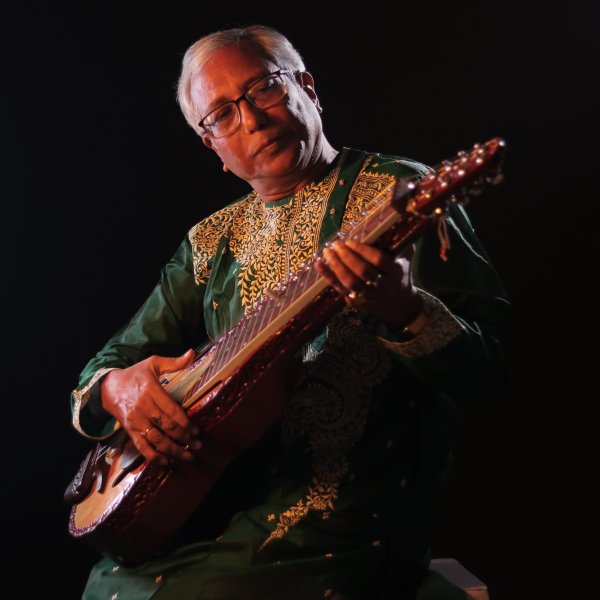 Debasis Chakroborty
-
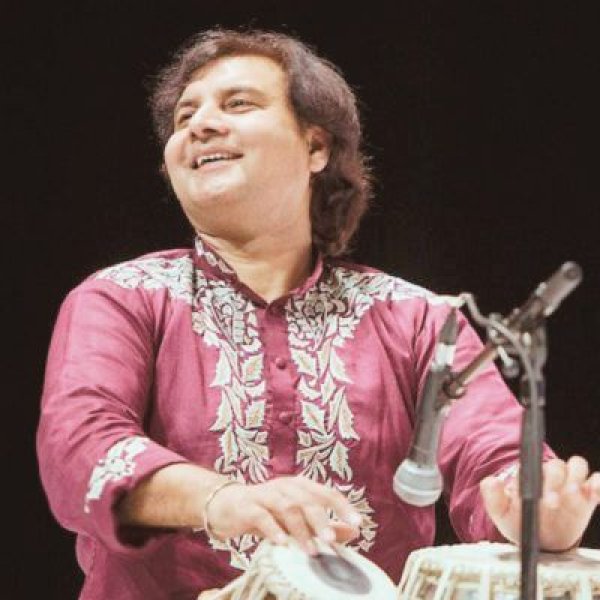 Akram Khan


Détails de l'événement
This September our London Ragas baithak brings Pandit Debasis Chakroborty to The Tate Institute in Silvertown, with Ustad Akram Khan on tabla. Chakroborty plays Indian slide guitar in the Senia-Maihar line of Pandit Brij Bhushan Kabra, the musician who brought the instrument into Hindustani classical music.
He teaches as Associate Professor of Music at Mangalayatan University and has spent more than twenty-five years on concert stages across Australia, the USA, Southeast Asia and Europe, the Melbourne International Jazz Festival among them in 2015 and 2024. The Ministry of External Affairs empanels him as an ICCR artist.
Ustad Akram Khan is the seventh generation of his family to play tabla in the Ajrada Gharana. He learned first from his great-grandfather Ustad Mohammad Shafi Khan, then from Ustad Niazu Khan, and he still teaches more than fifteen of the gharana's classic kaydas. He gave his first recital in Lucknow at seventeen, made his international debut in Norway in 1987, and has played more than eleven thousand concerts since.
Every Ragas evening asks you to pause. Indian classical tradition treats sound, Shabd, as a way to restore balance in ourselves and in the room we share. Slide guitar suits that work. One note travels into the next without a break, closer to a voice than to a fretted string, and a long alap can settle a room the way slow breathing settles the mind. Sit close and put the phone away.
If you are in London or nearby, do join us. For any access needs, contact us.
Doors open at 5:45 PM. Music starts at 6:00 PM.
Audience Policy:
- Unauthorised filming or photography is not permitted.
- The use of mobile phones (including texting) is not allowed during the event. We kindly ask for your cooperation. Thank you!
Venue information
The Tate Institute
1 Wythes Rd, London, E16 2DN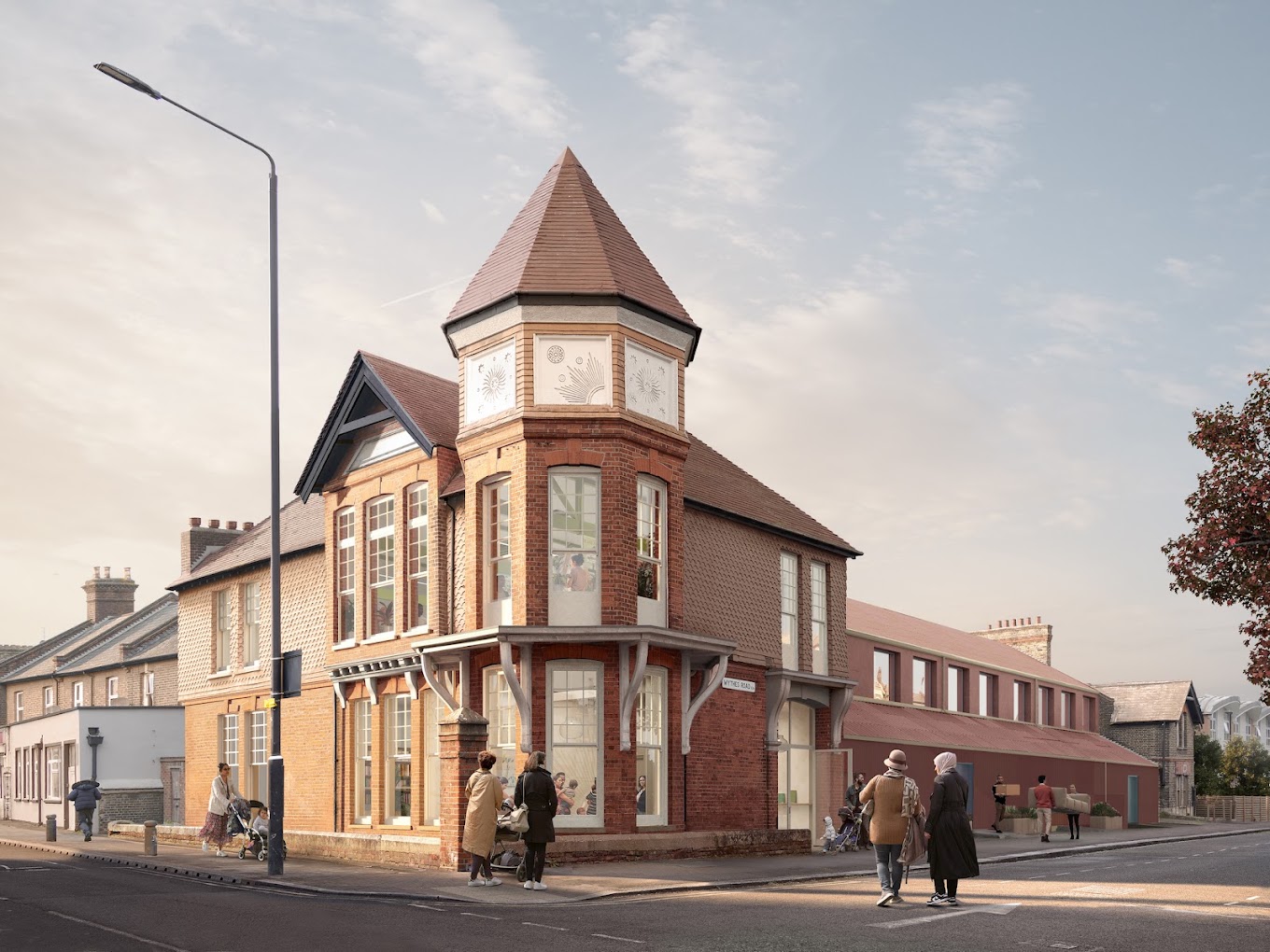
Questions fréquentes
Where is The Tate Institute?
The Tate Institute is at 1 Wythes Road, Silvertown, London E16 2DN, in East London.
Henry Tate paid for the building in 1887 as a social club for workers at the Tate Sugar Refinery. Newham Council owns the building. ReSpace Projects holds a 25-year lease and got the keys in March 2024. ReSpace is restoring it as a community venue, and the building hosts events as parts of it reopen.
For travel, see how to get to our London venues. For other concerts in the city, see where to hear Indian classical music live in London.
Where can I hear live Indian classical music in London, and which venues does KalaSudha use?
You can hear Hindustani (North Indian) classical music live in London at London Ragas, KalaSudha's concert series in London. Its evenings are baithaks: the audience sits close to the musicians. London Ragas can take place at different venues across London, and KalaSudha plans to add more baithaks in other parts of London. KalaSudha is based in London, so every concert tour it organises also plays London once.
See how to book tickets for a London concert and how to get to the venues.
Who is the Indian slide guitarist Pandit Debasis Chakroborty, the senior-most disciple of Pandit Brij Bhushan Kabra?
Pandit Debasis Chakroborty is a Hindustani slide guitarist and the senior-most disciple of Pandit Brij Bhushan Kabra, and his playing reflects Kabra's style. His name is also written Debasis Chakraborty. He plays in the Senia-Maihar gharana and has taught since 1992.
He has been part of the Department of Performing Arts at Mangalayatan University since its inception, and returns to universities in Australia and the USA as a conductor-performer and artist-in-residence. He helped carry out a joint music research project between Mangalayatan University and Monash University, and has published 10 research papers.
Who is the tabla player Ustad Akram Khan, and what is his lineage?
Ustad Akram Khan is a tabla player and the seventh generation of his family in the Ajrara gharana. His father was Hashmat Ali Khan. As a boy he trained first with his great-grandfather, Mohammad Shafi Khan, and later with Niazu Khan. For over four decades he has kept the gharana's repertoire alive, and he preserves more than 15 of its classic qaidas through his teaching and concerts. He made his international debut in Norway in 1987 and has played on All India Radio more than 800 times.
What is an Indian slide guitar, how is it played, and where can I learn it?
The Indian slide guitar is a guitar laid flat across the lap and stopped with a steel bar instead of fingers on frets. It is an instrument of Hindustani classical music, the classical music of North India. Sympathetic strings ring underneath the melody unstruck, and the player plucks extra drone (chikari) strings.
The bar never leaves the string, so one note travels into the next without a break. For its history and players, see the Indian slide guitar page. You can learn it with KalaSudha in the online academy.
What is the Ajrara (Ajrada) gharana of tabla, where did it begin, and what is it known for?
The Ajrara gharana, also spelt Ajrada, is a school of tabla that arose in the late 18th or early 19th century in the village of Ajrara, in Meerut district. Most accounts trace it to two brothers, Kallu Khan and Miru Khan, who learnt in Delhi, making it an offshoot of the Delhi gharana. Its players add the ring finger to the Delhi technique. It is best known for qaidas, themes with set variations, in aad laya, three strokes to every two beats. Ustad Akram Khan plays in the gharana today.
Have more questions? Contact our support team and we'll be happy to help!