

Norwich Ragas : Solo de tabla par Ustad Akram Khan
- #Norwich
- #En présentiel
- SEP 19, 2026
- Samedi
- 12:00 PM
- 1 heure, 30 minutes
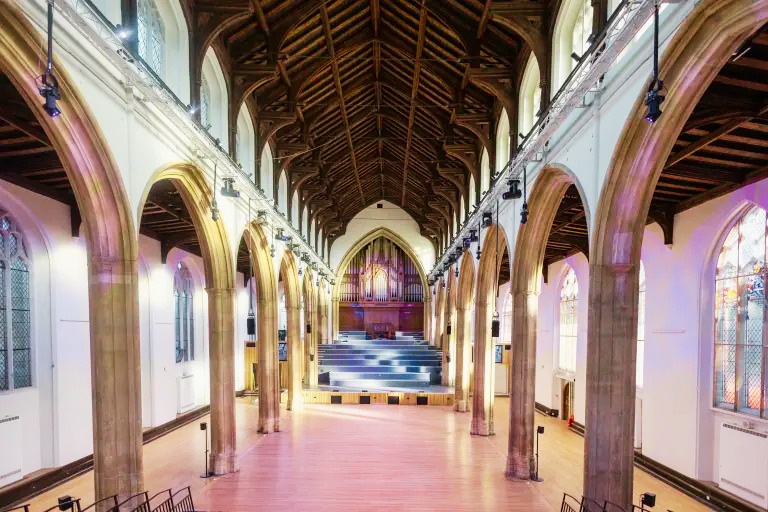
- St Andrew's Hall, Norwich
- Norwich, Royaume-Uni
Obtenez vos billets

Résumé de l'événement
Artistes sur scène
-
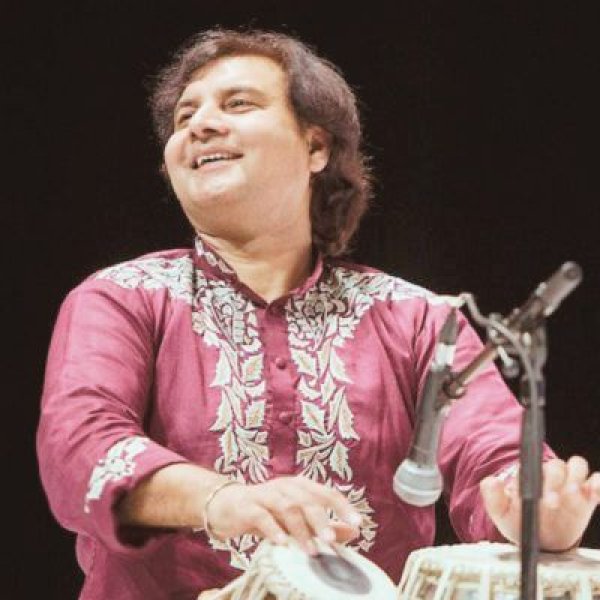 Akram Khan
-
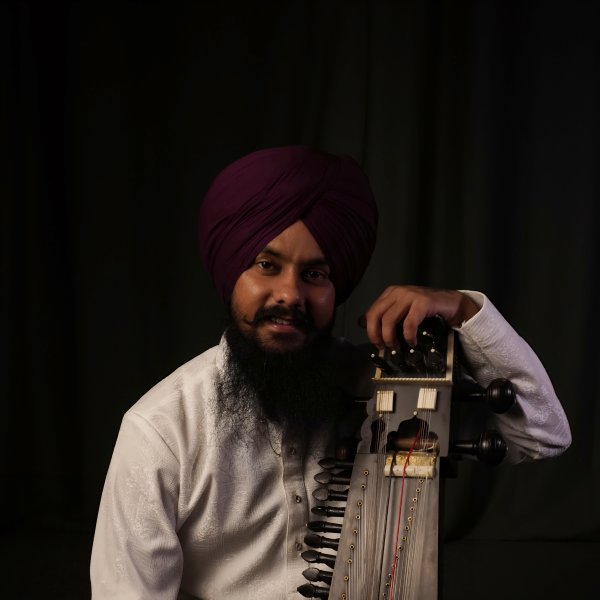 Satwinder Pal Singh


Détails de l'événement
Chers amateurs de musique de Norwich, nous avons le plaisir de vous accueillir de nouveau au Norwich Arts Centre dans le cadre du Kala Festival 2026. Après l’accueil chaleureux de l’an dernier, nous revenons dans cette ville avec le solo de tabla d’Ustad Akram Khan. Cette après-midi musicale célèbre des traditions vieilles de plusieurs siècles et leur art du son.
Ustad Akram Khan est un maître de la septième génération de l’Ajrara gharana et l’un des plus grands joueurs de tabla au monde. Son solo part de textures douces et contemplées pour s’élever en cascades de rythmes fulgurants. Il présente des compositions de différentes époques ainsi que ses propres improvisations. À ses côtés au sarangi se trouve Satwinder Pal Singh, qui joue de la sarangi depuis l’enfance et s’est formé auprès des grands maîtres de la musique.
Cet après-midi dépasse le cadre de la musique. C’est une invitation à s’arrêter, à réfléchir et à ressentir la résonance curative du son (Shabd). Depuis des siècles, la tradition classique indienne considère la musique comme une forme de méditation, un moyen de rétablir l’équilibre en nous-mêmes et dans nos communautés. Quand nous nous réunissons lors de concerts intimes pour nous imprégner de sons anciens, un nouveau regard s’ouvre à nous. Dans le monde d’aujourd’hui, ces pratiques intemporelles nous rappellent notre profond lien entre musique, santé mentale, pleine conscience et bien-être émotionnel. Cet après-midi est une occasion de renouveau, de se sentir élevé, connecté et restauré par le langage universel de la musique.
Si vous êtes à Norwich ou dans les environs, venez nous rejoindre. Pour tout besoin particulier, contactez-nous.
Les portes ouvrent à 11h45, la musique commence à 12h00.
Politique du public :
- Les enregistrements ou photographies non autorisés sont interdits.
- L’utilisation des téléphones mobiles (y compris les SMS) n’est pas autorisée pendant l’événement. Nous vous remercions de votre coopération. Merci !
Venue information
Questions fréquentes
How do I get to St Andrew's Hall, Norwich?
St Andrew's Hall is on St Andrew's Plain, Norwich NR3 1AU, in the city centre, 950 metres from Norwich railway station, a walk of about 12 minutes. The bus station is also 950 metres away. The hall is part of The Halls, the name the venue uses for the complex.
From the railway station you can also take a bus to Castle Meadow, or a taxi from the rank outside the station.
Driving? See parking near the hall.
Where can I go to hear live Indian classical music in Norwich, which venues have hosted KalaSudha's concerts, and where do I find the next Norwich date?
KalaSudha presents Indian classical music in Norwich and lists each concert on its Norwich page, with a link to book. For the next Norwich date, read how to hear about new Norwich concerts.
KalaSudha has presented concerts at St Andrew's Hall on St Andrew's Plain and at The Assembly House, a Grade I listed building on Theatre Street.
Who is the tabla player Ustad Akram Khan, and what is his lineage?
Ustad Akram Khan is a tabla player and the seventh generation of his family in the Ajrara gharana. His father was Hashmat Ali Khan. As a boy he trained first with his great-grandfather, Mohammad Shafi Khan, and later with Niazu Khan. For over four decades he has kept the gharana's repertoire alive, and he preserves more than 15 of its classic qaidas through his teaching and concerts. He made his international debut in Norway in 1987 and has played on All India Radio more than 800 times.
Who is the sarangi player Satwinder Pal Singh, and who taught him?
Satwinder Pal Singh is a London-based sarangi player from Moga, Punjab. He took up the sarangi at 11 under his father, Shaminder Pal Singh, a Top Grade artist of All India Radio, and in 2012 studied in Delhi with his father's teacher, Sabri Khan. He has also trained under Ram Narayan and Harsh Narayan. He plays the saranda, israj, dilruba and taus too, instruments his family has carried through generations of Sikh music. He and his father both hold Top Grade status for sarangi from All India Radio.
What is a tabla?
A tabla is a pair of hand drums. The smaller drum, the dayan, is wooden, sits under the right hand and carries the pitch. The larger drum, the bayan, sits under the left hand and gives the bass. The bayan is most often copper, sometimes clay or wood, and the player bends its bass by pressing the heel of the palm into the head while striking.
Each head carries a black circle of tuning paste. The paste weights the skin and adds overtones. The dayan rings at a clear pitch, and the bayan gives a deep bass with a looser pitch that the palm can shift.
What is the Ajrara (Ajrada) gharana of tabla, where did it begin, and what is it known for?
The Ajrara gharana, also spelt Ajrada, is a school of tabla that arose in the late 18th or early 19th century in the village of Ajrara, in Meerut district. Most accounts trace it to two brothers, Kallu Khan and Miru Khan, who learnt in Delhi, making it an offshoot of the Delhi gharana. Its players add the ring finger to the Delhi technique. It is best known for qaidas, themes with set variations, in aad laya, three strokes to every two beats. Ustad Akram Khan plays in the gharana today.
Have more questions? Contact our support team and we'll be happy to help!