

노리치 라가: 우스타드 악람 칸의 타블라 독주
- #노리치
- #대면
- 9월 19, 2026
- 토요일
- 12:00 오후
- 1 시간, 30분
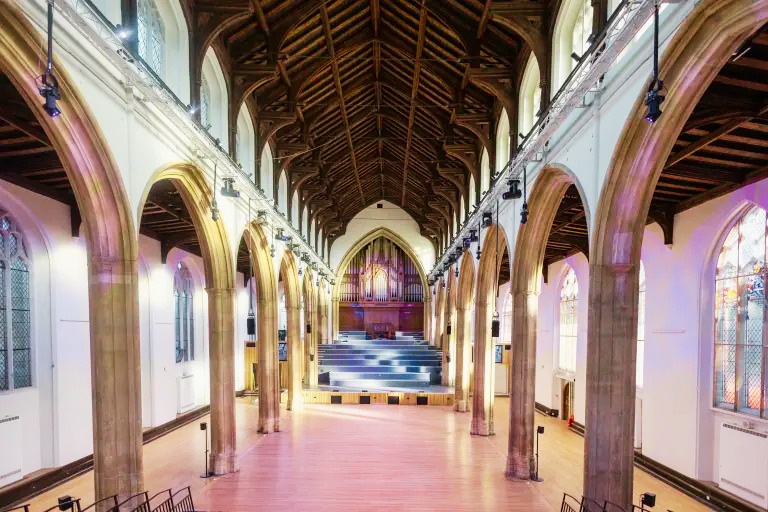
- St Andrew's Hall, Norwich
- 노리치, 영국
티켓 구매하기

이벤트 요약
공연 아티스트
-
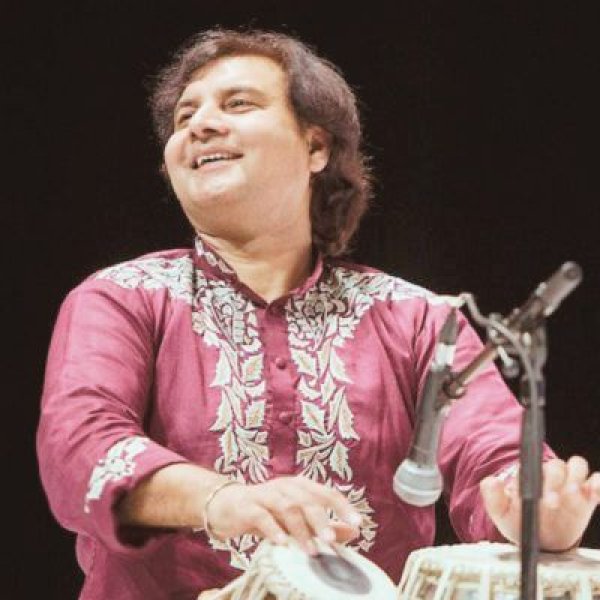 아크람 칸
-
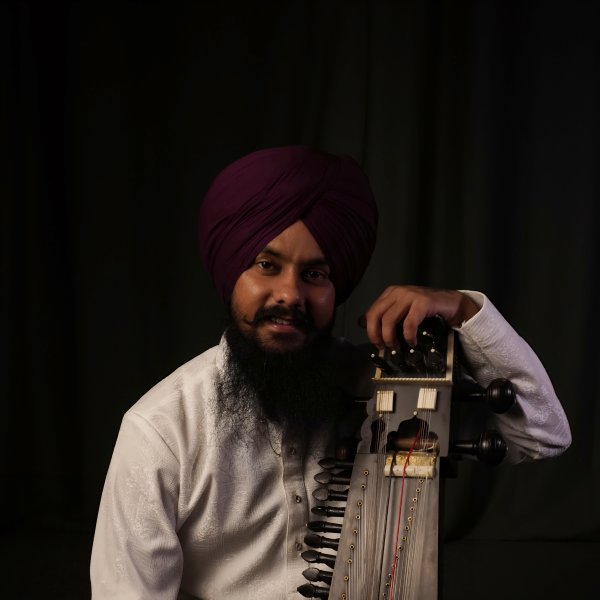 사트윈더 팔 싱


이벤트 상세 정보
노리치의 음악 애호가 여러분, 2026년 칼라 페스티벌의 일환으로 노리치 아츠 센터에서 우스타드 악람 칸의 타블라 독주를 선보이게 되어 기쁩니다. 지난해의 따뜻한 환영에 힘입어 이 도시를 다시 찾아, 인도의 오랜 음악 전통과 그 생동감을 이 오후 공연을 통해 소개합니다.
우스타드 악람 칸은 아즈라라 가라나 7대 전수자이자 세계 최고의 타블라 연주자 중 한 명으로, 느린 리듬의 고요한 울림에서 빠른 박자의 힘찬 흐름까지 타블라 독주의 전 스펙트럼을 선보입니다. 여러 시대의 전통 악보와 그 자신의 즉흥 연주를 함께 들을 수 있습니다. 어릴 때부터 사랑기를 배워온 신진 사랑기 연주자 사트윈더 팔 싱이 반주를 맡습니다.
이번 오후 공연은 음악 그 이상입니다. 멈춰 서서 생각하고, 소리(샤브드)의 치유하는 힘을 경험하는 시간이 될 것입니다. 인도 고전 음악 전통은 수 세기에 걸쳐 음악을 명상의 한 형태로, 내면의 균형과 공동체를 회복하는 길로 이해해 왔습니다. 소규모 공연에 함께 모여 오래된 소리에 귀 기울이면 새로운 세계가 열립니다. 이 시대를 초월한 전통은 음악과 정신 건강, 마음 챙김, 정서적 안녕 사이의 깊은 연결을 일깨워 줍니다. 이번 오후는 음악의 보편적 언어를 통해 힘을 얻고 하나로 연결되며 새롭게 될 수 있는 기회입니다.
노리치 또는 인근 지역에 계신다면 꼭 오세요. 특별한 지원이 필요하시면 저희에게 연락 주십시오.
오전 11시 45분에 입장을 시작하며, 연주는 12시 정각에 시작됩니다
관객 안내
- 무단 촬영 및 사진 촬영은 허용되지 않습니다.
- 공연 중 휴대폰 사용(문자 메시지 포함)은 삼가 주십시오. 여러분의 협조에 감사드립니다.
Venue information
자주 묻는 질문
How do I get to St Andrew's Hall, Norwich?
St Andrew's Hall is on St Andrew's Plain, Norwich NR3 1AU, in the city centre, 950 metres from Norwich railway station, a walk of about 12 minutes. The bus station is also 950 metres away. The hall is part of The Halls, the name the venue uses for the complex.
From the railway station you can also take a bus to Castle Meadow, or a taxi from the rank outside the station.
Driving? See parking near the hall.
Where can I go to hear live Indian classical music in Norwich, which venues have hosted KalaSudha's concerts, and where do I find the next Norwich date?
KalaSudha presents Indian classical music in Norwich and lists each concert on its Norwich page, with a link to book. For the next Norwich date, read how to hear about new Norwich concerts.
KalaSudha has presented concerts at St Andrew's Hall on St Andrew's Plain and at The Assembly House, a Grade I listed building on Theatre Street.
Who is the tabla player Ustad Akram Khan, and what is his lineage?
Ustad Akram Khan is a tabla player and the seventh generation of his family in the Ajrara gharana. His father was Hashmat Ali Khan. As a boy he trained first with his great-grandfather, Mohammad Shafi Khan, and later with Niazu Khan. For over four decades he has kept the gharana's repertoire alive, and he preserves more than 15 of its classic qaidas through his teaching and concerts. He made his international debut in Norway in 1987 and has played on All India Radio more than 800 times.
He also learned from his father, Hashmat Ali Khan, and he has accompanied Ustad Vilayat Khan.
Who is the sarangi player Satwinder Pal Singh, and who taught him?
Satwinder Pal Singh is a London-based sarangi player from Moga, Punjab. He took up the sarangi at 11 under his father, Shaminder Pal Singh, a Top Grade artist of All India Radio, and in 2012 studied in Delhi with his father's teacher, Sabri Khan. He has also trained under Ram Narayan and Harsh Narayan. He plays the saranda, israj, dilruba and taus too, instruments his family has carried through generations of Sikh music. His father holds Top Grade status for sarangi from All India Radio, and Satwinder Pal Singh is an A-grade artist.
His father, a disciple of Ustad Sabri Khan, is the first Sikh sarangi player in All India Radio's history to reach Top Grade.
What is a tabla?
A tabla is a pair of hand drums. The smaller drum, the dayan, is wooden, sits under the right hand and carries the pitch. The larger drum, the bayan, sits under the left hand and gives the bass. The bayan is most often copper, sometimes clay or wood, and the player bends its bass by pressing the heel of the palm into the head while striking.
Each head carries a black circle of tuning paste. The paste weights the skin and adds overtones. The dayan rings at a clear pitch, and the bayan gives a deep bass with a looser pitch that the palm can shift.
What is the Ajrara (Ajrada) gharana of tabla, where did it begin, and what is it known for?
The Ajrara gharana, also spelt Ajrada, is a school of tabla that arose in the late 18th or early 19th century in the village of Ajrara, in Meerut district. Most accounts trace it to two brothers, Kallu Khan and Miru Khan, who learnt in Delhi, making it an offshoot of the Delhi gharana. Its players add the ring finger to the Delhi technique. It is best known for qaidas, themes with set variations, in aad laya, three strokes to every two beats. Ustad Akram Khan plays in the gharana today.
Have more questions? Contact our support team and we'll be happy to help!