

Hindustani VocalPrepared by KalaSudha
Foundation Hindustani Vocal
Foundation Hindustani vocal, prepared by KalaSudha: breath, a steady Sa, swaras and alankars, sargam notation, two ragas and a first chhota khayal.
- மாட்யூல்கள்
- 1A–1C
- Lessons
- One-to-one or in a group
- Ends in
- A KalaSudha certificate

மேற்பார்வை
About Foundation
Foundation Hindustani vocal takes you from finding Sa to a 4-minute prepared set, with no music or singing background needed. It is the first level of the Hindustani Vocal course prepared by KalaSudha, taught in live online lessons. You hear each phrase and sing it back before you read it in notation.
Module 1A covers posture, breath and holding Sa on akar, the open vowel aa, against the drone. You then sing Sa, Pa and upper Sa and the seven shuddha, or natural, swaras. Module 1B adds alankars, swara patterns sung up and down, and the komal and tivra swaras, the flat and sharp forms. You learn sargam notation and mark the cycle by hand: sam, the first beat, the clapped tali, the waved khali and the vibhag sections. Then you keep Keherwa and Dadra.
Read the full overviewகுறைவாகக் காட்டு
Module 1C turns swaras into ragas, starting with the aroh, avaroh and pakad, the ascent, descent and catch phrase, of two ragas such as the suggested Yaman and Bhupali. You learn a chhota khayal, a fast bandish in Teentaal, with its antara and a short alap. You also hear six khayal gharanas, such as Kirana, through labelled excerpts. Meend, murki and slow vilambit singing come later.
Each module has 14 topics, eight core and six electives, and your path is 12 of them. As a typical guide, Foundation takes 9–12 months, and you agree the pace with your teacher. In a cohort, you hear other learners sing the same phrases, and each guided rehearsal and review becomes a short performance for the group. Foundation leads to a KalaSudha award (see certificates). Ask about Foundation in the Academy.
மாட்யூல்கள்
The three Foundation modules
-
1A
Module 1A: Voice, breath and Sa
8 core + 4 teacher-setfrom 14 topics
Set up your practice and keep a record. Find Sa from the drone and hold it on akar, then sing Sa, Pa and upper Sa and the seven shuddha swaras. Hear a phrase and sing it back, then present your held notes without losing Sa.-
Seating, posture and a practice recordகருவம்
Sit for singing without strain, set up the drone reference and start a practice log.
-
Find and hold Saகருவம்
Match your voice to Sa from the drone and hold it steady on akar, the open vowel aa.
-
Breath for a sustained noteகருவம்
Take a low, quiet breath and spend it evenly across a long held note.
-
Sa, Pa and upper Saகருவம்
Sing Sa, Pa and upper Sa against the drone and hear where each one sits.
-
The seven shuddha swarasகருவம்
Sing the seven natural swaras in ascent and descent, slowly, against the drone.
-
Hear a phrase and sing it backகருவம்
Listen to a short sargam phrase once and sing it back with the same swaras and shape.
-
Guided rehearsal: voice, breath and Saகருவம்
Rehearse your held-note and swara sequence and correct one fault using teacher feedback.
-
Review and presentation: voice, breath and Saகருவம்
Present your held-note and swara sequence and discuss your preparation and corrections with the assessor.
-
Voice care and warm-upவிருப்பப் பாடம்
Follow a short warm-up and learn the signs of vocal strain to report to your teacher.
-
Humming and the open voiceவிருப்பப் பாடம்
Move from a hum to an open akar on one note without a change in pitch.
-
Set the tanpura or drone appவிருப்பப் பாடம்
Set a tanpura or drone app to your Sa and check that it sounds true before you sing.
-
Recording your voiceவிருப்பப் பாடம்
Place a phone or microphone so your teacher can hear the voice and the drone clearly.
-
Match a heard pitchவிருப்பப் பாடம்
Sing back single pitches played on a reference instrument, with and without the drone.
-
Breath counting away from singingவிருப்பப் பாடம்
Practise an even, counted exhale between singing sessions.
Your teacher fills 4 slots from the electives, their own topics or both.
-
-
1B
Module 1B: Swaras, alankars and the cycle
8 core + 4 teacher-setfrom 14 topics
Sing alankars in ascent and descent at a logged tempo. Add komal Re, Ga, Dha and Ni and tivra Ma beside their shuddha forms. Mark sam, tali, khali and vibhag, keep Keherwa and Dadra by hand, and read and write sargam notation.-
Review Sa and set a tempoகருவம்
Check your held notes from the practice log and choose a pulse you can hold for alankars.
-
Alankars in ascent and descentகருவம்
Sing the first teacher-selected alankars, patterned swara exercises, across one octave at a steady pulse.
-
Komal and tivra swarasகருவம்
Hear and sing komal Re, Ga, Dha and Ni and tivra Ma beside their shuddha forms.
-
Sam, tali, khali and vibhagகருவம்
Mark a cycle with hand gestures and explain matra, avartan, sam, tali, khali and vibhag.
-
Keherwa and Dadra by handகருவம்
Recite the thekas of the suggested Keherwa and Dadra and keep each one by hand.
-
Read and write sargam notationகருவம்
Read swaras in sargam notation with beat numbers and write a short alankar from dictation.
-
Guided rehearsal: swaras, alankars and the cycleகருவம்
Rehearse your alankar and hand-count set and correct one fault using teacher feedback.
-
Review and presentation: swaras, alankars and the cycleகருவம்
Present your alankar and hand-count set and discuss your preparation and corrections with the assessor.
-
Alankars in dugunவிருப்பப் பாடம்
Sing one alankar at single and double density while the hand-count stays the same.
-
Lower octave swarasவிருப்பப் பாடம்
Extend your alankars down into the lower octave without losing tone or pitch.
-
A sargam geetவிருப்பப் பாடம்
Learn a short teacher-selected composition sung on swara names in a simple tala.
-
Two notation conventionsவிருப்பப் பாடம்
Compare Bhatkhande and Paluskar signs in a supplied line of sargam.
-
Find the cycle after silenceவிருப்பப் பாடம்
Keep the hand-count through a silent passage and re-enter singing on sam.
-
Sing with a theka trackவிருப்பப் பாடம்
Sing an alankar against a recorded Teentaal theka and keep your place in the cycle.
Your teacher fills 4 slots from the electives, their own topics or both.
-
-
1C
Module 1C: First ragas and a chhota khayal
8 core + 4 teacher-setfrom 14 topics
Learn the aroh, avaroh and pakad of a first raga and a contrasting second raga. Sing a chhota khayal sthayi and antara and a short alap. Hear six khayal gharanas through labelled excerpts, then present a 4-minute set.-
Review swaras and cyclesகருவம்
Use your log to fix one weak alankar or cycle before starting raga work.
-
Aroh, avaroh and pakad of a first ragaகருவம்
Learn the ascent, descent and catch phrase of the first raga (suggested: Yaman).
-
A second raga and its contrastகருவம்
Learn a second raga (suggested: Bhupali) and hear how its five swaras change the phrase shapes.
-
A chhota khayal sthayiகருவம்
Learn the sthayi of a teacher-selected drut bandish in Teentaal, words and swaras together.
-
The antara and a short alapகருவம்
Add the antara, then sing a short alap in akar using the raga's phrases.
-
Hear six khayal gharanasகருவம்
Listen to an attributed excerpt from each of six khayal gharanas and compare two of them by sound.
-
Guided rehearsal: first ragas and a chhota khayalகருவம்
Rehearse your four-minute Foundation set and correct one fault using teacher feedback.
-
Review and presentation: first ragas and a chhota khayalகருவம்
Present your four-minute Foundation set and discuss your preparation and corrections with the assessor.
-
First akar taansவிருப்பப் பாடம்
Sing short akar taans built from the raga's ascent and descent, returning to the mukhda.
-
A second drut bandishவிருப்பப் பாடம்
Learn a drut bandish in the second raga with its sthayi and antara.
-
A first bhajanவிருப்பப் பாடம்
Learn a short bhajan with its tek, the refrain that returns after each line.
-
Sargam in the ragaவிருப்பப் பாடம்
Sing a short sargam passage in the first raga within the bandish's tala.
-
Recover a missed samவிருப்பப் பாடம்
Practise recovery after a deliberate missed entry while singing the sthayi.
-
A khayal listening logவிருப்பப் பாடம்
Keep a dated log of four attributed khayal recordings and note what you hear in each.
Your teacher fills 4 slots from the electives, their own topics or both.
-
Why Foundation
What Foundation builds
-
Listen, then sing
Hear each phrase and sing it back before you read it. Your teacher hears whether your pitch is secure before working on the line. -
A steady Sa first
Breath and held notes come before ornament. The checks listen for a Sa held without drift and every swara in tune. -
A first chhota khayal
Learn the sthayi and antara of a fast bandish with a theka track, and add a short alap. Land the mukhda, its opening phrase, on sam.
Lessons
Ways to learn
One-to-one
Learn at your own pace. You book online lessons through KalaSudha in your own time zone.
Register interest in 1:1 lessonsIn a group
Learn in a group on a timetable.
Ask about group lessonsTeachers
Teachers for Foundation
-
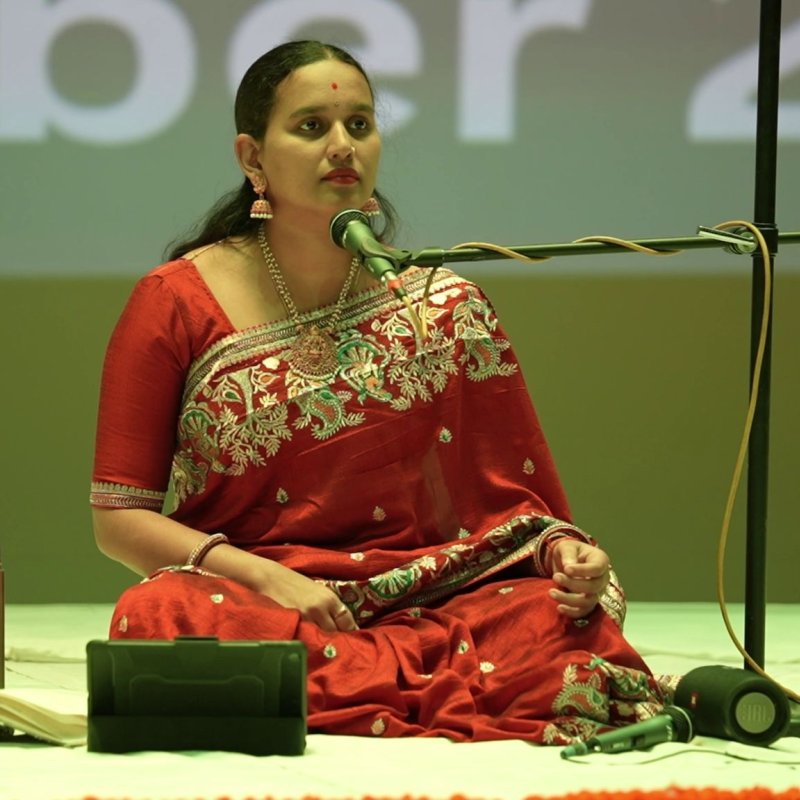
தேஜஸ்வினி வர்னேகர் இந்துஸ்தானி இசை மரபின் அறிமுகமான கர்நாடகர். BHU-வின் தங்க பதக்க வேர்வர் மற்றும் All India Radio தத்தம் பெற்ற கலைஞராக பட்டியலிட்டுள்ளார்; இந்துஸ்தானி புகழ்பெற்ற குருக்களின் கீழ் பயிற்சி பெற்றவர்.
Teaches
Hindustani Vocal

Questions
Questions about Foundation
Entry, pace, assessment and what you show to finish the level.
On Foundation Hindustani vocal you find Sa by matching your voice to the drone and holding it on akar, the open vowel aa. Your teacher sets your Sa for your voice first.
The topic closes when you match Sa within two attempts and hold it for 8 seconds without audible drift. You then sing Sa, Pa and upper Sa.
Foundation Hindustani vocal starts with two ragas, Yaman and Bhupali as the suggested pair, and your teacher confirms them before teaching. You learn each raga's aroh, avaroh and pakad, its ascent, descent and catch phrase.
You then sing a chhota khayal your teacher chooses. Bhimpalasi and Bihag are the suggested ragas at Intermediate.
Sargam notation writes each swara by its name, Sa, Re, Ga, Ma, Pa, Dha and Ni, and Foundation Hindustani vocal teaches it in module 1B with beat numbers. You read two lines in tempo and write one alankar from dictation with the right swaras and beats.
An elective compares two notation conventions.
The Foundation level of the Hindustani Vocal course is assessed through singing, listening and oral questions. Your teacher closes each topic when its completion check is met, and the level ends with a 4-minute prepared set.
In the set you sing without losing the cycle, explain one choice and recover from any slip. A listening check asks you to match excerpts of six gharanas to supplied labels.
Still have questions?
Our support team can help you find the right answer.
ஆதரவுக் குழுவைத் தொடர்புகொள்ளவும்அடுத்த படிகள்
Foundation தொடங்கத் தயாரா?
Tell us what you want to learn and where you are today. An academy advisor will help you find a good next step.