

Oxford Raga Unison: Duet of Winds and Drums
- #Oxford
- #Vor Ort
- NOV 13, 2025
- Donnerstag
- 7:00 PM
- 1 Stunde, 30 Minuten
- Holywell Music Room
- Oxford, Vereinigtes Königreich
Sichern Sie sich Ihre Tickets

Veranstaltungsübersicht
Auftretende Künstler
Auftretende Künstler
-
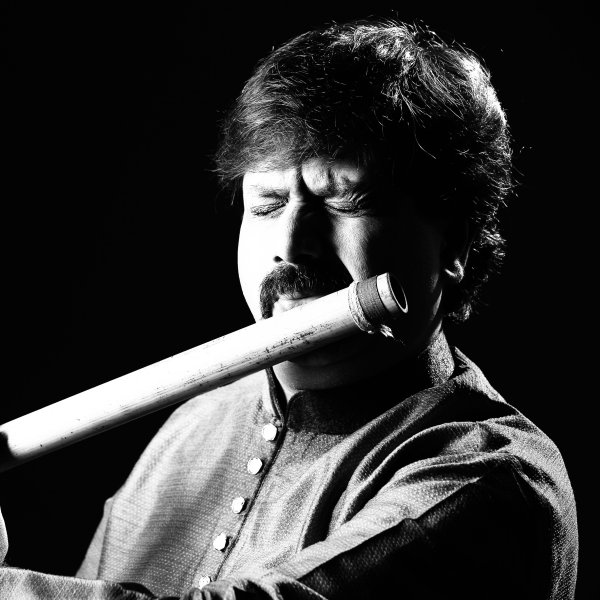 Ajay Prasanna
-
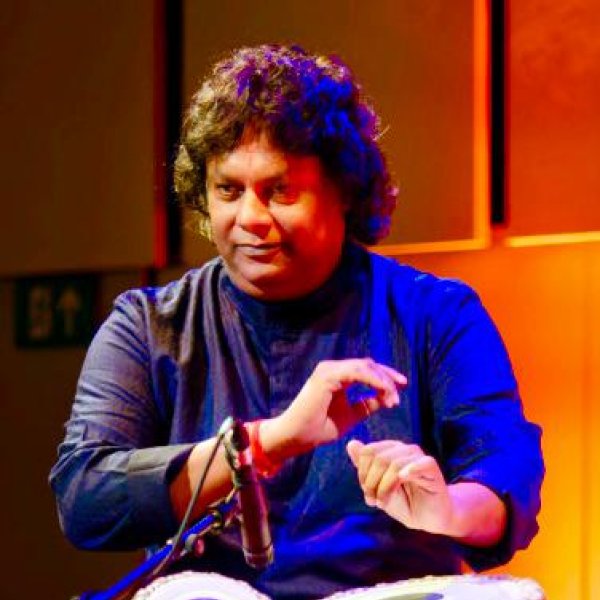 Kousic Sen


Veranstaltungsdetails
Liebe Musikliebhaber aus Oxford, wir bringen diesen Herbst etwas Poetisches in unsere schöne Stadt. Am 13. November findet im Holywell Music Room ein magischer Abend mit klassischen indischen Ragas auf der Flöte statt.
Erleben Sie Oxford Raga Unison: Duet of Winds and Drums, einen überragenden Abend mit klassischer Hindustani-Musik mit Pandit Ajay Prasanna, einem dreimaligen Grammy-Nominierten und international gefeierten Bansuri-Virtuosen, der für seine innovative genreübergreifende Flötensinfonie bekannt ist, und Kousic Sen, einem der führenden Tabla-Spieler seiner Generation.
Kousic wurde in Kalkutta in eine Musikerfamilie hineingeboren und von großen Meistern der Banaras Gharana ausgebildet. Er wird weltweit für sein kraftvolles und zugleich einfühlsames Tabla-Spiel bewundert. Seine energiegeladenen Auftritte erwecken die Bühne zum Leben, sei es bei klassischen Konzerten, als Tanzbegleitung oder in interkulturellen Kollaborationen. Als Artist in Residence beim Milapfest in Liverpool und auf Tourneen durch die USA, Kanada, Europa und Asien teilte er seine rhythmische Meisterschaft mit dem Publikum an vielen der berühmtesten Veranstaltungsorte der Welt.
Zusammen erzeugen Ajays meditatives Flötenspiel und Kousics lebendiger Tabla-Dialog Klanglandschaften, die zutiefst erholsam sind und den zeitlosen Glauben an die Kraft der Musik für Achtsamkeit, emotionales Gleichgewicht und geistige Gesundheit widerspiegeln.
Dies ist nicht nur ein Konzert; es ist eine Gelegenheit für unsere Gemeinde, etwas Seltenes in unserer Stadt zu erleben: Jahrhundertealte Traditionen südasiatischer Musik treffen hier in Oxford aufeinander. Studien zeigen, dass diese heilsame Musik den Geist beruhigen, Stress abbauen und das Wohlbefinden fördern kann.
Bringen Sie Freunde mit, machen Sie einen Abend daraus und bereichern Sie das reichhaltige kulturelle Leben unserer Stadt um eine weitere unvergessliche Nacht.
Einlass ist um 18:30 Uhr, die Musik beginnt um 19:00 Uhr
Zielgruppenrichtlinie:
- Unerlaubtes Filmen oder Fotografieren ist nicht gestattet .
- Die Nutzung von Mobiltelefonen (inkl. SMS und Lautlos-Modus) ist während der Veranstaltung nicht gestattet . Wir bitten um Ihr Verständnis. Vielen Dank!
Wir sehen uns dort, Oxford!
Venue information
Attendee reviews
Ratings describe the event experience.
-
Event Attendee
Event experience 5/5
I go to a lot of concerts, all kinds of music, mostly classical. The music I like best is probably string quartets. The other day I heard a very fine performance of Beethoven's late quartet, the number, Op. 130, with the Grosse Fuge, which was very fine. But tonight's concert is a completely different kind of music, two extraordinary virtuosos, or Virtuosi but the great quality they had was simple joyfulness astonishing virtuosity but what is virtuosity without the joyfulness and that music really leaves me with a feeling that is not going to leave me for a good few hours and probably I'll still be feeling it tomorrow I know this from great concerts and that was Wonderful, wonderful music. I can say no more.
-
Event Attendee
Event experience 5/5
I have to say thank you for making this an outstanding evening.
-
Event Attendee
Event experience 5/5
My mum played flute in this building many times like 60, 70 years ago and so it was a delight to come and watch a completely different musical tradition but still the flute is such an amazing instrument and we really witnessed a virtuoso tonight, it was quite incredible, really amazing.
-
Event Attendee
Event experience 5/5
I just started to play. Oh yeah? Yeah! And actually the guy who's making me my first flute, he was a student under Harry Prasad. Yep. So I think the same lineage, I think. Yep. Smaller. Yeah, he always takes me to another place, this music. Yep. And... The fun of it as well, the conversation between the two instruments and involving the crowd. It's just so beautiful, man. Such a break from normal life, you know. The thing about the breath, you know, that somehow takes you out of your head into the body.
-
Event Attendee
Event experience 5/5
Well, I think it was mesmerising, absolutely beautiful, complete serenity for an hour and a half and a complete stillness of intrusive thoughts. It was just all about being in this moment and being enraptured by that music. It really was. We have an emerging Indian flute player here. It should be prescribed on the NHS, seriously, for mental health, it really should. It's just, I think I'm going to sleep better than I have in a long time tonight.
Showing 3 of 5 reviews
Häufig gestellte Fragen
How do I get to the Holywell Music Room on Holywell Street in Oxford, and who do I ask about parking or step-free access?
To reach the Holywell Music Room, head for Holywell Street in Oxford city centre, postcode OX1 3SB. The room is part of Wadham College, which lists it at https://events.wadham.ox.ac.uk/holywell-music-room. If you need parking or step-free access, write to [email protected] before you book, or read who to talk to about access needs. To book a seat, see how to find and book KalaSudha concerts in Oxford.
Is the Holywell Music Room in Oxford accessible for wheelchair users and people with other access needs, and who should I contact about it?
The Holywell Music Room has a ramped main entrance on a loose gravel path, level access to the auditorium and one accessible toilet, according to the Oxford University AccessGuide.
Wheelchair spaces and hearing-loop provision are limited. If you need either, or have other access needs, contact KalaSudha before you book.
Where can I hear live Indian classical music in Oxford, and where are KalaSudha's Oxford concerts listed?
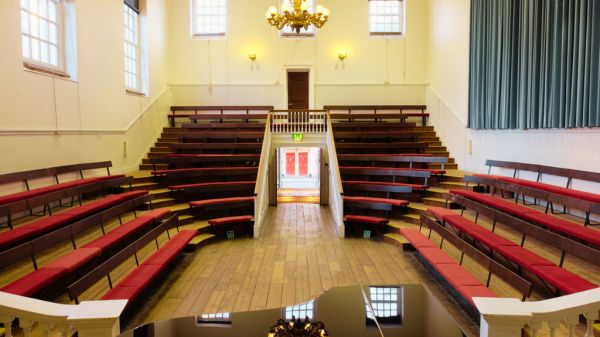
KalaSudha presents Indian classical music in Oxford at the Holywell Music Room on Holywell Street, part of Wadham College. The room dates from 1748, and Wadham calls it "the oldest custom-built concert hall in Europe".
The KalaSudha Oxford page lists each Oxford concert with its Book Tickets button; press Register for updates there to hear about new dates. For directions, see getting to the Holywell Music Room.
KalaSudha has presented Oxford Raga Unison at the Holywell Music Room.
Who is the flautist Pandit Ajay Prasanna, and what is his musical lineage?
Pandit Ajay Prasanna is a flute player from a musical family. He carries forward the legacy of his father, Bholanath Prasanna, a flute master whose students include Hariprasad Chaurasia. He plays in the style of the Banaras gharana. He has performed across India and abroad, including at Queen Elizabeth Hall in London and at festivals in Asia and Europe. His honours include Grammy nominations, the Global Indian Music Award for his album Cinema, the Sangeet Ratna Award and the Surmani Award.
Who is the tabla player Kousic Sen, and where did he train?
Kousic Sen is a tabla player, born into a musical family in Calcutta and trained by masters of the Banaras gharana. He plays in classical concerts, accompanies dance and works in cross-cultural collaborations. He has been an Artist in Residence with Milapfest in Liverpool and has toured the USA, Canada, Europe and Asia.
What is a bansuri, how is it made, and how is it played?
A bansuri is a transverse flute cut from a single length of seasoned bamboo. It has no keys and no moving parts, only six finger holes, or seven in Pannalal Ghosh's style. The maker burns or drills the blow hole and the finger holes. The player controls pitch through the lips at the blow hole, breath pressure and half-holing, covering a finger hole in part, which gives the slides and bends of a raga. Until the 1940s it was not thought a concert instrument; Pannalal Ghosh made a larger bansuri for the classical stage.
What is the Benares (Banaras) gharana of tabla, who founded it, and what does it sound like?
The Benares gharana is a school of tabla playing named after Benares (Varanasi), where Ram Sahai founded it in the late 18th or 19th century. Gharana accounts say he studied in Lucknow, so the school descends from the Lucknow tabla gharana. Its sound is powerful and open, built on resonant strokes such as na and din, and its players favour full-hand strokes. Lineage accounts say Ram Sahai wanted a style that could carry a solo and accompany singing, instrumental music and Kathak. Kousic Sen trained with masters of the gharana.
Have more questions? Contact our support team and we'll be happy to help!