

Flute
(बांसुरी)The bansuri is a keyless bamboo flute linked with Krishna. Pannalal Ghosh made it a Hindustani concert instrument in the 1940s, and Hariprasad Chaurasia carried it worldwide.
1
6
£250 - £500
Student bansuris start at £250, and concert-grade instruments from established makers in India cost up to £500, depending on key, bore size and maker reputation.

Explore the discipline
Meet the musical tradition, its practitioners and ways to learn.
History & Origins
What is a bansuri?
The bansuri is the side-blown bamboo flute of Hindustani classical music, and ours suits the learner on a first raga and the performer playing a full alap. It is cut from a single length of seasoned bamboo, with no keys and six finger holes, or seven in Pannalal Ghosh's style, so every note comes from breath and fingers.
What makes a great bansuri
Concert flutes come from dense, even-walled bamboo of Assam and Bengal, seasoned so the tube holds its tuning. Hole placement is the maker's critical craft: an experienced maker tunes each hole against a reference pitch and sands it true, because a misplaced hole cannot be fixed without spoiling its neighbours. Concert bansuris come in keys from C to A, most often G or C, and a longer, wider flute sounds lower and fuller.
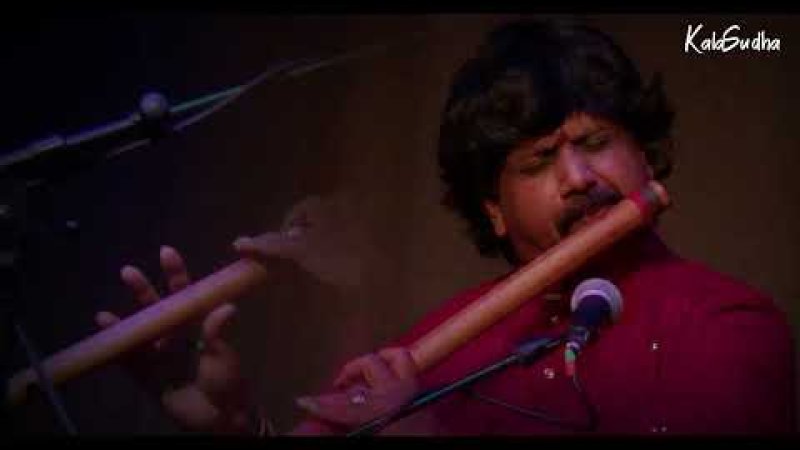
Where the Western concert flute uses keys, the bansuri player shapes pitch with the embouchure (lips at the blow hole), breath pressure and half-holing. Covering part of a hole gives komal and tivra notes, microtones and meend, the glide of raga. The unmetered alap asks for long, quiet phrases and efficient breath, maximum tone from minimal air, with rests placed at points of musical structure; some players use circular breathing. Long alap is the bansuri's hardest discipline, because tone and pitch rest on breath alone. Hariprasad Chaurasia's Vrindaban Gurukul in Mumbai trains new players.
Sanskrit texts name the venu and vamsha, bamboo flutes, as instruments of celestial musicians and of Krishna. For over two thousand years, well before medieval notation, sculpture across South and Southeast Asia has shown the flute with gods, gandharvas, court musicians and cowherds. The Natyashastra (2nd century BCE to 2nd century CE) groups flutes of various sizes and materials among the susira (hollow, wind) instruments of drama.
Folk and devotional players kept it. The Mughal-era classical stage, held by sarangi, sitar and sarod, thought it too narrow and too quiet. In the 1940s Pannalal Ghosh built a longer, wider-bore bansuri in G, opened a third octave and proved it on All India Radio and on record.
Hariprasad Chaurasia trained in vocal music, then with Annapurna Devi, daughter of Ravi Shankar's guru Allauddin Khan, and from the 1950s built a style of full tone and long, singing phrases. His Yaman, Bhairavi and Darbari became reference recordings; he worked with John McLaughlin in Shakti and with Shyam Benegal, and drew new audiences at festivals in India, Europe and North America. The venu, carried by T. R. Mahalingam and Shashank Subramanyam, grew in parallel: one build, different vocabulary, ornament and practice.
Construction & Craftsmanship
Construction Process
A concert bansuri starts as a single internode of bamboo, the length between two nodes, from mature plants of three to five years with dense, even walls and straight grain. Assam and West Bengal give the best; a Horniman Museum murali from Assam uses bijuli bamboo (Bambusa pallida). The culm seasons for months or years, because unseasoned bamboo shrinks, shifts the holes and changes pitch.
A cork stops one end. The maker cuts or burns the blow hole just in from the node, drills pilot finger holes and enlarges them step by step against a shruti box or tanpura, sanding until each note is true. Each hole affects its neighbours, so the maker balances the whole flute, and a concert bansuri in G or C can take days to tune. Wall thickness shapes tone, range and octave tuning, and tuning varies between flutes.
Thread, silk, nylon or ribbon bindings protect the ends, and the bore may be lightly oiled. Keys run from C to A in several bores: a larger bore gives volume and a fuller low register, a narrower one a brighter, more agile sound.
Maintenance & Care
- After playing: Breath condenses in the bore, so wipe it with a soft cloth or cleaning rod, then a dry cloth. Stand a played flute upright, head up, until it dries, then store it flat in a cloth bag or padded case, away from sun and heaters. Warm a cold flute to room temperature first.
- Humidity: Rapid changes split bamboo along the grain, and the monsoon is the riskiest time in India. Avoid air-conditioning vents and sudden moves from cool rooms to humid air.
- Oiling: Oil the outside every few months with almond or mustard oil. Oil the dry bore no further than the blow hole, with mustard or walnut oil on a cloth, then wipe off the excess.
- Cracks: Bind a small crack tight with fine thread set in shellac or resin; this slows the split but will not bring back the original tone. If pitch or tone changes, ask us; on cheaper flutes replacement often makes more sense.
Technical Specifications
Detailed specifications for the Flute
Physical dimensions
| Specification | Value |
|---|---|
| Length (G concert bansuri) | ~650mm |
| Length (C concert bansuri) | ~380mm |
| Bore diameter (concert) | 19–25mm |
| Wall thickness | 3–6mm |
| Weight | 80–150g (typical concert bansuri) |
Material and bore
| Specification | Value |
|---|---|
| Primary material | Seasoned bamboo (Bambusoideae subfamily), one internode |
| Preferred source | Assam and West Bengal, India |
| Seasoning period | 6 months to 2+ years post-harvest |
| Bore profile | Cylindrical (untapered) |
| Blow hole shape | Oval or elliptical |
| Finger hole count | 6 (standard) or 7 (Ghosh-style) |
Finger hole placement and tuning
| Specification | Value |
|---|---|
| Tuning method | Maker plays each hole against a shruti box or tanpura during construction; adjusts by sanding |
| Temperament | Just intonation (not equal temperament) |
| Microtonal technique | Half-holing produces komal/tivra variants and continuous meend (glide) |
| Full chromatic access | Via half-holing across all six or seven holes |
| Available keys | C, D, E, F, G, A (and intermediate variants) |
Tonal range
| Specification | Value |
|---|---|
| G concert bansuri range | G3 to D6 (~3 octaves) |
| C concert bansuri range | C4 to G6 (~3 octaves) |
| Usable octaves in performance | 2.5–3 octaves |
| Third octave access | Advanced embouchure control and increased breath pressure required |
Acoustic characteristics
| Specification | Value |
|---|---|
| Frequency range (G bansuri) | ~196 Hz (G3) to ~1,175 Hz (D6) |
| Volume | Soft to moderate; amplification common in concert settings |
| Tonal character | Warm, breathy; strong fundamental with soft overtones |
| Dynamic control | Via breath pressure and embouchure angle; very fine gradations possible |
| Sustain | Notes sustain for breath duration only; no mechanical sustain |
Available Instruments
Browse our curated selection of Flutes
Showing 1 instruments

Looking for Something Unique?
Contact us for custom-made instruments tailored to your specific requirements
Contact for Custom OrderYour Journey to Flute Mastery
Follow this structured path from absolute beginner to accomplished performer
Embouchure and first tones
Beginners start here, at Foundation, in KalaSudha's courses. Hold the flute level, angled down to the right, with three fingers of each hand over the holes and the thumbs and little fingers supporting it. Set the blow hole against the lip and direct the airstream across it until a clear tone sounds. Build steady embouchure control before moving on to finger technique.
Scale practice and sargam
Gamaka and half-holing
Raga alap and composition
Concert repertoire and improvisation
Media Gallery
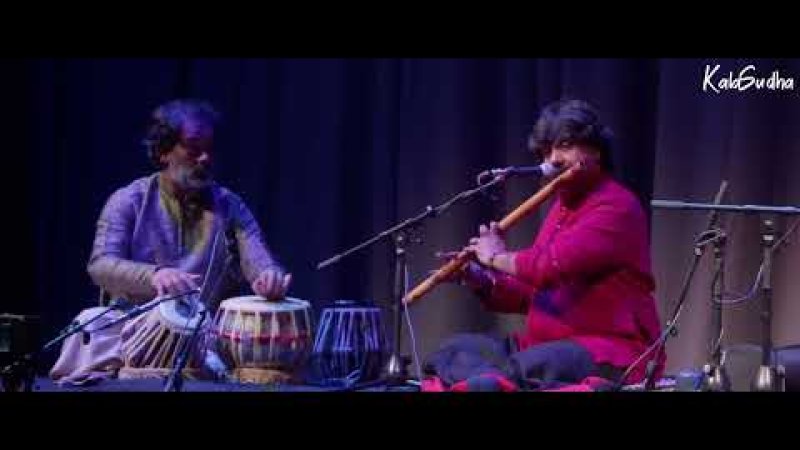
Watch performances, see details, and explore the Flute in action



Featured Artists
Renowned Flute players and performers
Ajay Prasanna

Past Events
Browse our archive of past performances

Oxford Raga Unison: Duet of Winds and Drums


Bansuri Workshop in London with Pandit Ajay Prasanna

London Ragas: Breath into Sound | Pandit Ajay Prasanna
Frequently Asked Questions
What is a bansuri, how is it made, and how is it played?
A bansuri is a transverse flute cut from a single length of seasoned bamboo. It has no keys and no moving parts, only six finger holes, or seven in Pannalal Ghosh's style. The maker burns or drills the blow hole and the finger holes. The player controls pitch through the lips at the blow hole, breath pressure and half-holing, covering a finger hole in part, which gives the slides and bends of a raga. Until the 1940s it was not thought a concert instrument; Pannalal Ghosh made a larger bansuri for the classical stage.
How can a beginner, a child or an adult coming back after a long break start learning the bansuri flute?
KalaSudha teaches the bansuri online and in workshops, and every beginner starts at Foundation level. You begin with the embouchure, the shape of the lips at the blow hole, until a clear first tone sounds. Children learn with us as well as adults: ask us about a starting age, and about a flute size for a younger learner.
If you are taking up the bansuri again after a long break, our courses run in levels. Your teacher reviews where you stand, then you start again where you left off.
Who made the bansuri a Hindustani classical concert instrument?
Pannalal Ghosh (1911 to 1960) is generally credited with popularising the bamboo flute, the bansuri, in modern Hindustani classical music. No Hindustani classical bansuri tradition appears to have existed in the 1930s and 1940s. Ghosh lengthened the flute, added a seventh finger hole and devised a bass flute for exploring the lower octave in ragas such as Darbari.
How many finger holes does a bansuri have?
A Hindustani bansuri has six finger holes in line with the blow hole. Pannalal Ghosh added a seventh, played with the little finger of the lower hand, which his circle uses for tivra Ma in the lower octave. Britannica describes six or seven finger holes. Both are keyless bamboo flutes, but the Carnatic venu has eight finger holes, with Sa fingered on the first two holes closed, and its eighth hole stays open except in special fingerings.
What range does a bansuri have?
Sources give different figures for the bansuri's range. A six-hole bansuri covers about two and a half octaves and a seven-hole about three, while an enthusiast reference gives about two octaves as the working range. On the flute as Pannalal Ghosh used it, the comfortable range was just over two octaves, and the upper register projects strongly.
What should I check before buying a bansuri?
Tuning varies between flutes, so check the tuning of each bansuri. Hole position and diameter set each note's pitch, and wall thickness affects tone, range and octave tuning. Look for cracks too: they come mostly from extreme temperatures, humidity and knocks, and can spread along the bamboo.
How do I choose between a student bansuri and a professional bansuri, and what should I check?
A student bansuri and a professional bansuri differ in the bamboo and in how finely the holes are tuned; the key is a separate choice. Makers cut a concert bansuri from dense, even-walled bamboo, seasoned so the tube holds its pitch, and tune each hole against a reference note. Lower keys need longer flutes: a G-natural bansuri in the Horniman Museum's collection is 650 mm long. Ask your teacher which key suits your hands.
KalaSudha sells student bansuris and concert-grade flutes from established makers in India. Ours suit the learner on a first raga and the performer playing a full alap. Ask us for a quote, or for a flute made to order.
Where can I buy a bansuri outside India, with international shipping and repair or service where I live?
You can order a bansuri from KalaSudha wherever you live: we sell by quote or made to order and deliver worldwide. We pack every flute for international shipping; ask us about cases and insurance.
Bring us any bansuri for service or repair, wherever you bought it and wherever you live. Ask us for spare parts too. For help with your flute once it arrives, use the chat on any page or email [email protected]. Gift vouchers, class sets for schools and flight cases for travel are available as well, on request.
What can I give someone who is learning to play an Indian classical instrument?
A good gift for someone learning an Indian classical instrument suits the instrument they play and the stage they have reached, so ask their teacher if you are unsure. An instrument of their own, or a better one, also makes a gift: KalaSudha sells every instrument by quote or made to order. For something smaller, ask us for a case, or for strings and spare parts to suit their instrument.
Lessons make a gift as well. KalaSudha teaches online and in workshops, and beginners start at Foundation level: see our courses.
Ask us about gift vouchers.
Why do bamboo flutes crack, and how can I prevent it?
Bamboo flutes such as the bansuri crack mostly from extreme temperatures, humidity and hard knocks, and a small crack can spread along the bamboo. Bring the flute to room temperature before playing, avoid playing outdoors in the cold, and wipe the bore dry after each session. Store a played flute upright, out of its case or bag, while it dries.
Can a cracked bansuri be repaired?
Yes, a cracked bansuri can be repaired. Work early, on a cold flute: run low-viscosity cyanoacrylate glue along the crack and press it closed for about 30 seconds. After about five minutes, wipe off the excess and rebind the section with thread. Keep the flute bound at both ends and in the middle.
Is the bansuri played in Indian folk music?
Yes, the bansuri remains a folk instrument as well as a classical one. A five-hole bamboo bansuri from Rajasthan, 210 mm long and collected in 1987 for a Cambridge museum, is played at seasonal dances and at Holi. In Assam the murali serves dance and song in several communities, and a Horniman example is made of bijuli bamboo. Museums file both as side-blown flutes.
How do I book a bansuri flute player for a concert, a private event or a recording session?
You can book a bansuri player through KalaSudha for a concert, event or recording: ask us through our page to book Indian classical musicians. KalaSudha's recordings and concert videos let you hear our artists before you choose.
Have more questions? Contact our support team and we'll be happy to help!
Ready to start learning Flute?
Get personalized quotes and explore courses