

Flute
(बांसुरी)The bansuri, a keyless bamboo transverse flute associated with Krishna, was transformed into a Hindustani concert instrument by Pannalal Ghosh in the 1940s and carried to global recognition by Hariprasad Chaurasia.
1
6
£30 - £500
Student bansuris start around £30. Concert-grade instruments from established makers in India range from £80 to £500 depending on key, bore size, and maker reputation.

History & Origins
The Bansuri: Bamboo and Breath
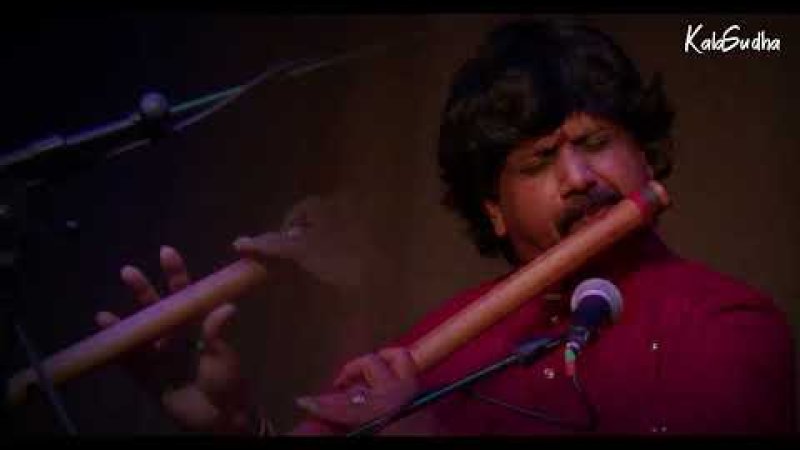
The bansuri is a transverse flute cut from a single length of seasoned bamboo. It has no keys, no mechanism, and no moving parts, only six or eight finger holes drilled at calculated intervals along the tube. Pitch is controlled through embouchure (the shape and angle of the lips at the blow hole), breath pressure, and the partial covering of finger holes, which allows the gamakas (ornamental slides and bends) that define classical Indian melodic language. The bansuri's simplicity is its expressive power: everything it says comes from breath and fingers alone.
Krishna and the Ancient Tradition
The flute is among the oldest instruments in Indian culture. Depictions of Krishna playing a transverse flute appear throughout Sanskrit literature and temple sculpture, embedding the instrument in devotional and mythological tradition. The Natya Shastra, Bharata's treatise on performing arts from around the 2nd century BCE to 2nd century CE, describes flutes of various sizes and materials. Bamboo flutes appear in South Asian iconography across two millennia, in the hands of celestial musicians (gandharvas) and cowherd boys alike. This long cultural presence gave the instrument deep associative resonance before it entered the formal Hindustani concert stage.
Pannalal Ghosh and the Concert Stage
Until the 1940s, the bansuri was not considered a concert instrument in Hindustani classical music. It was associated with folk traditions and devotional contexts, thought too limited in range and too soft in projection for the classical stage. Pannalal Ghosh changed this. He developed a larger-bore, longer bansuri in the key of G, extending the instrument's range and volume to match the demands of concert performance alongside tabla and tanpura. He refined the technique of producing a third octave through embouchure control and established the bansuri as a vehicle for full raga elaboration: alap, jor, jhala, and gat. Ghosh performed and recorded through the 1950s and demonstrated that bamboo could sustain the long-form development required of Hindustani classical music.
Hariprasad Chaurasia and Global Reach
Hariprasad Chaurasia extended what Ghosh established and carried the bansuri to global recognition. Trained in vocal music and then under Annapurna Devi (daughter of Ravi Shankar's guru Allauddin Khan), Chaurasia developed a playing style of exceptional tonal richness and lyrical sweep. His recordings of ragas such as Yaman, Bhairavi, and Darbari became reference recordings for students worldwide. He collaborated with Western musicians, including guitarist John McLaughlin in the Shakti ensemble, and with filmmakers including Shyam Benegal. His school, Vrindaban Gurukul in Mumbai, trains students who continue to shape the instrument's practice.
Construction: Bamboo, Bore, and Finger Holes
A concert bansuri is made from a single internode of bamboo — the section between two nodes — selected for wall thickness, straightness, and tonal density. Bamboo from the Assam and Bengal regions gives the densest walls and best tonal character. The maker burns or drills the blow hole and finger holes at positions calculated to produce the instrument's intended pitch scale. Hole placement is the critical craft variable: a hole even slightly out of position produces a note that cannot be corrected without compromising adjacent notes. Concert-grade bansuris are tuned by a maker with years of experience, playing each note against a reference pitch and adjusting hole placement or diameter by sanding.
Technique: Embouchure, Half-Holing, and Gamaka
Bansuri technique differs from Western flute technique in fundamental ways. The Western concert flute uses a closed key mechanism that allows precise pitch with minimal embouchure adjustment. The bansuri player controls every pitch variation through embouchure angle, lip tension, and breath pressure — and through half-holing, the technique of covering a finger hole in part to produce microtonal pitches that fall between the instrument's natural scale degrees. Half-holing produces the komal (flat) and tivra (sharp) variants of scale degrees and enables the meend (continuous glide) between pitches that is characteristic of raga expression. A player proficient in half-holing can navigate the full chromatic range and produce the microtonal inflections that raga demands.
Breath Management and the Long Alap
Raga performance begins with an unmetered alap — a slow, meditative exploration of the raga's notes and character, without tabla accompaniment. In alap, a bansuri player may sustain phrases for many seconds and navigate long melodic arcs at low volume. This requires breath management that differs from standard wind playing: circular breathing (drawing breath through the nose while expelling air through the mouth) is used by some players to sustain phrases without audible gaps, though not all classical players employ it. More common is very efficient breath use — producing maximum tone with minimal air volume, and placing rests at structurally meaningful moments rather than at points of breath necessity. Long alap playing is the hardest discipline the bansuri demands, and it is where the instrument's expressive depth most clearly reveals itself.
The transverse flute appears in Indian iconography and textual sources across more than two thousand years. Sanskrit texts describe venu and vamsha — bamboo flutes — as instruments of celestial musicians and as the instrument most associated with Krishna. Temple sculptures across South and Southeast Asia depict the transverse flute in the hands of divine figures and court musicians, establishing its presence in the subcontinent's musical culture well before the classical notation systems of the medieval period. The Natya Shastra classifies flutes among the susira (hollow, wind-blown) category of instruments and describes their construction and use in dramatic performance.
Through the medieval and early modern periods, bamboo flutes circulated across folk and devotional contexts but were not part of the formal Hindustani classical tradition as it developed under the court music systems of the Mughal period. The sarangi, sitar, and sarod dominated the classical stage. This changed in the 20th century through the work of Pannalal Ghosh, who in the 1940s developed a longer, wider-bore concert bansuri capable of the dynamic range and pitch clarity needed for formal raga performance. Ghosh's All India Radio performances and recordings demonstrated the instrument's classical potential and opened the path for later players.
Hariprasad Chaurasia, beginning his career in the 1950s and 1960s, built on Ghosh's foundation and established the bansuri as an internationally recognised classical instrument. His recordings, film music collaborations, and performances at major festivals in India, Europe, and North America brought the instrument to audiences who had no prior contact with Hindustani classical music. The South Indian parallel, the venu (Carnatic flute), has its own major lineage through players such as T.R. Mahalingam and Shashank Subramanyam. The Hindustani bansuri and Carnatic venu represent two distinct bamboo flute traditions that developed in parallel, sharing the same basic instrument construction but developing different melodic vocabularies, ornament types, and performance conventions.
Construction & Craftsmanship
Construction Process
A concert bansuri begins as a single internode of bamboo — the section of culm between two growth nodes. Makers select bamboo with dense, even walls and straight grain, harvested after the plant has fully matured, typically three to five years old. Bamboo from Assam and West Bengal gives the densest walls and best tonal character. After harvesting, the culm seasons for months, sometimes years, to reduce moisture content and stabilise the wood. Unseasoned bamboo shrinks as it dries, shifting hole positions and changing pitch; a seasoned instrument holds its tuning across seasonal humidity changes.
The blow hole is cut or burned at one end of the internode, slightly inward from the node. Finger holes are placed along the tube at positions calculated to produce the intended pitch series when each hole is fully open. The maker drills pilot holes and then enlarges them by increments, checking each hole against a reference pitch — typically a shruti box or tanpura — and adjusting diameter or position by sanding until the note is correct. Because each hole's position affects adjacent notes through the tube's resonant coupling, the maker must balance the entire instrument rather than tuning each hole in isolation. A concert bansuri in G or C may take days to tune from initial drilling to finished condition.
The finished bansuri is often wrapped with thread at the blow hole end to reinforce the bamboo against splitting, and the interior may be lightly oiled to protect the bore from moisture absorption during playing. Concert instruments are made in a range of keys — C, D, E, F, G, A — and in different bore sizes; a larger bore produces greater volume and a fuller lower register, while a narrower bore gives a brighter, more agile sound suited to faster passages. Many players own multiple bansuris in different keys and choose the appropriate instrument for the raga and its pitch requirements.
Maintenance & Care
- After playing: Moisture from breath condenses inside the bore. Wipe the interior using a soft cloth or cleaning rod after each session, then pass a dry cloth through. Store the bansuri horizontally in a cloth bag or padded case, away from direct sunlight and heating vents.
- Humidity and cracking: Rapid humidity changes cause bamboo to crack along its grain. Apply a thin coat of almond or mustard oil to the exterior every few months to slow moisture exchange. Oil the interior bore periodically: dampen a cloth on the cleaning rod with oil, insert and rotate, then pass a dry cloth through to remove excess. Keep the instrument away from air conditioning vents and avoid moving it abruptly from a cool room to humid outdoor air. In India, the monsoon transition is the highest-risk period.
- Crack repair: Small cracks along the bamboo grain can be stabilised by wrapping the cracked section with fine thread, bound tight and secured with shellac or natural resin. This slows further splitting but does not restore original tonal character. A cracked bansuri that produces inconsistent pitch or altered tone across registers should be assessed by the maker. For instruments in the lower price range, replacement is often more practical than repair.
Technical Specifications
Detailed specifications for the Flute
Physical Dimensions
| Specification | Value |
|---|---|
| Length (G concert bansuri) | ~650mm |
| Length (C concert bansuri) | ~380mm |
| Bore Diameter (concert) | 19–25mm |
| Wall Thickness | 3–6mm |
| Weight | 80–150g (typical concert bansuri) |
Material & Bore
| Specification | Value |
|---|---|
| Primary Material | Seasoned bamboo (Bambusoideae subfamily) |
| Preferred Source | Assam and West Bengal, India |
| Seasoning Period | 6 months to 2+ years post-harvest |
| Bore Profile | Cylindrical (untapered) |
| Blow Hole Shape | Oval or elliptical |
| Finger Hole Count | 6 (standard) or 8 (extended range) |
Finger Hole Placement & Tuning
| Specification | Value |
|---|---|
| Tuning Method | Maker plays each hole against a shruti box or tanpura during construction; adjusts by sanding |
| Temperament | Just intonation (not equal temperament) |
| Microtonal Technique | Half-holing produces komal/tivra variants and continuous meend (glide) |
| Full Chromatic Access | Via half-holing across all six or eight holes |
| Available Keys | C, D, E, F, G, A (and intermediate variants) |
Tonal Range
| Specification | Value |
|---|---|
| G Concert Bansuri Range | G3 to D6 (~3 octaves) |
| C Concert Bansuri Range | C4 to G6 (~3 octaves) |
| Usable Octaves in Performance | 2.5–3 octaves |
| Third Octave Access | Advanced embouchure control and increased breath pressure required |
Acoustic Characteristics
| Specification | Value |
|---|---|
| Frequency Range (G bansuri) | ~196 Hz (G3) to ~1,175 Hz (D6) |
| Volume | Soft to moderate; amplification common in concert settings |
| Tonal Character | Warm, breathy; strong fundamental with soft overtones |
| Dynamic Control | Via breath pressure and embouchure angle; very fine gradations possible |
| Sustain | Notes sustain for breath duration only; no mechanical sustain |
Your Journey to Flute Mastery
Follow this structured path from absolute beginner to accomplished performer
Embouchure & First Tones
Scale Practice & Sargam
Gamaka & Half-Holing
Raga Alap & Composition
Concert Repertoire & Improvisation
Media Gallery
Watch performances, see details, and explore the Flute in action





Featured Artists
Renowned Flute players and performers
Ajay Prasanna

Past Events
Browse our archive of past performances

Oxford Raga Unison: Duet of Winds and Drums


Bansuri Workshop in London with Pandit Ajay Prasanna

London Ragas: Breath into Sound | Pandit Ajay Prasanna
Ready to start learning Flute?
Get personalized quotes and explore courses