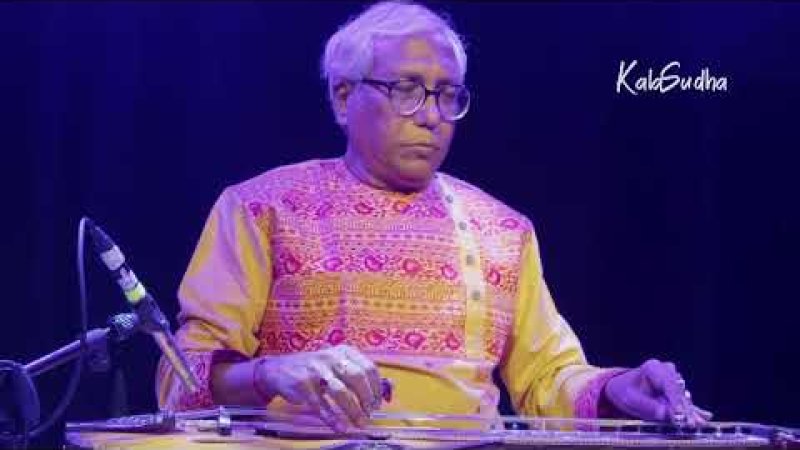
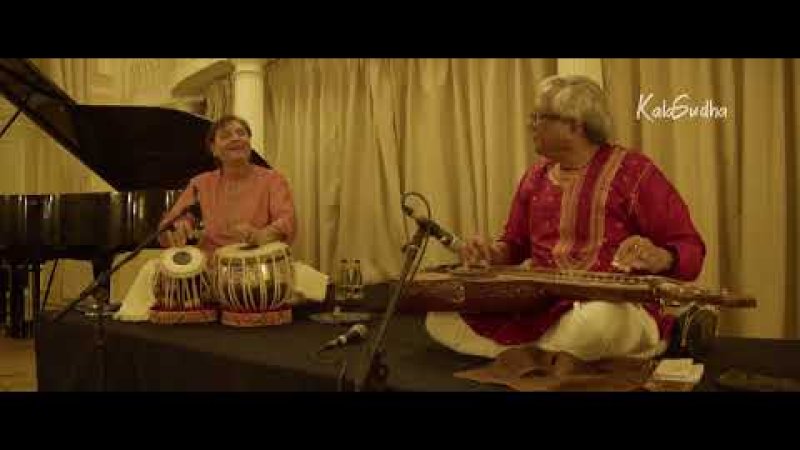
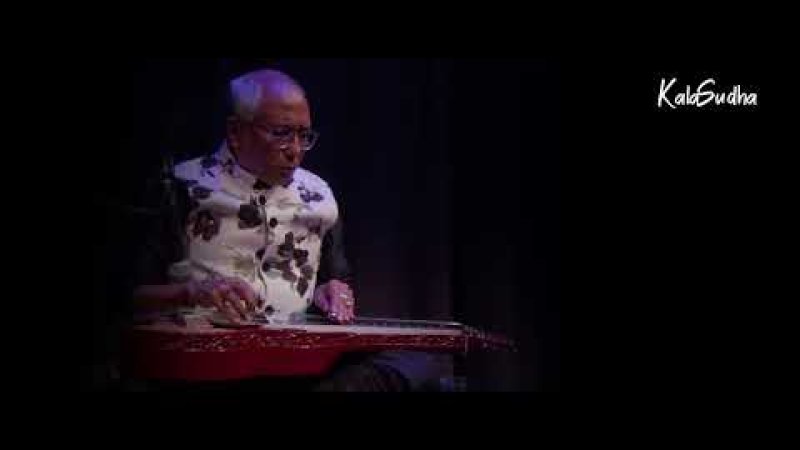
A Hundred Strings in Oxford: Two Strings, One Pulse
Adnan Khan · Vinay Desai · Akram Khan
Holywell Music Roomवाद्य
Raga and tala voiced through string, wind, and drum.
Indian classical instrumental music, or vadya, spans strings, wind, and percussion across the Carnatic and Hindustani traditions, each instrument shaped to carry raga and tala.
Instrumental music in India grows from the same roots as its song and dance. The earliest systematic account comes from the Natya Shastra of Bharata Muni, which sorts instruments into four acoustic families and gives them a place in performance. The 13th-century Sangita Ratnakara of Śārṅgadeva later set out the threefold art of song, instrument, and dance, and both the Hindustani and Carnatic traditions still treat it as a founding text. Around the 12th century the music split along regional lines, as Persian and Islamic influence shaped the north into the Hindustani style while the south kept and developed the Carnatic style. In the 18th century the Carnatic Trinity of Tyagaraja, Muthuswami Dikshitar, and Syama Sastri composed a repertoire that instrumentalists still play, and in the 1930s Ariyakudi Ramanuja Iyengar fixed the modern concert order. Across these centuries the instrument kept its task: to carry a raga with the expression of a human voice.
An Indian classical instrument is treated as a voice rather than a machine for notes. The player's aim is to make a string or a reed sing a raga the way a vocalist would, with the same slides, pauses, and ornaments. This is why so much instrumental training begins with listening to singers and learning their phrasing. Raga gives the musician a fixed grammar of notes and moods; tala gives a fixed cycle of time. Inside those two frames the player is free, and the heart of a performance is manodharma, the improvisation that happens in the moment and is never the same twice. Mastery is measured less by speed than by how truthfully a player can reveal the character of a raga. The bond between teacher and student matters as much as the instrument, because tone, touch, and judgement pass from hand to hand rather than from a page.
Experience live performances and concerts celebrating Instrumental
Adnan Khan · Vinay Desai · Akram Khan
Holywell Music Room
Adnan Khan · Vinay Desai · Akram Khan
Holywell Music Room
Adnan Khan · Vinay Desai · Akram Khan
Holywell Music Room
Adnan Khan · Vinay Desai · Akram Khan · Shahbaz Hussain
The Stoller Hall
Adnan Khan · Vinay Desai · Akram Khan · Shahbaz Hussain
The Stoller Hall
Adnan Khan · Vinay Desai · Akram Khan · Shahbaz Hussain
The Stoller HallDive deeper into specific aspects of this discipline
Popular sub-disciplines within this tradition

The Mridangam is the essential two-headed percussion instrument of Carnatic music, carved from jackwood and featuring a complex system of strokes (sollukattu) for both accompaniment and virtuosic solo display.

An indispensable pillar of Carnatic music, the Violin is revered for its ability to replicate the human voice and complex gamakas through unique seated techniques and specialised tuning.
The Sursingar is a rare, nearly extinct bass plucked instrument from the dhrupad tradition, developed in the 19th century as a larger version of the sarod with a deep, meditative voice.

A 21-stringed fretless lute, the Chitraveena mimics the human voice with unparalleled precision. It is a cornerstone of Carnatic classical music, demanding immense skill and microtonal accuracy.
Audio and video performances
Discover renowned Instrumental performers and maestros

Pakhawaj

Tabla

Sitar

Piano

Indian Slide Guitar

Tabla
Explore our archive of Instrumental performances

Satwinder Pal Singh · Shahbaz Hussain
The Great Hall, Reading
Satwinder Pal Singh · Shahbaz Hussain
The Great Hall, Reading
Ajay Prasanna · Kayam Hussain
The Tate Institute
Ajay Prasanna · Kayam Hussain
The Tate Institute

Shakir Khan · Shahbaz Hussain
Royal Wharf Community Dock
Shakir Khan · Shahbaz Hussain
Royal Wharf Community Dock
It seems that you are in
Visit KalaSudhaWe usually reply within a few hours
Loading article…
We could not load this article. Please try again later.
Was this helpful?
Thanks for the feedback
Still need help?
This conversation is resolved — reply to reopen
Topic