

Sitar
(सितार)A concert sitar hand-built from seasoned toon and Miraj gourds, with 18 to 21 strings, movable frets for microtonal bends and a hand-voiced jawari, serviced worldwide.
4
1
6
£250 - £3,000
Student sitars start at £250; professional concert-grade models by master makers cost £3,000 or more. Prices rise with engraving and gourd size. Before you buy, inspect the gourd, pegs and neck joint in daylight, and squeeze the gourd lightly to reveal cracks.

Explore the discipline
Meet the musical tradition, its practitioners and ways to learn.
History & Origins
The sitar is the long-necked lute of Hindustani music, and ours suits the serious student and the professional. For the tumba resonator we source our calabash gourds (Lagenaria siceraria) exclusively from the Miraj region of Maharashtra, whose soil and climate give the thick, even walls that project. Our luthiers hand-carve the tabli soundboard from toon (Indian mahogany) aged at least 15 years. They graduate it with hand planes, so it is strong enough to bear a bridge under 20-plus strings yet free to answer the lightest touch.
The buzz comes from the jawari, a camel bone or deer antler bridge whose curve the string grazes, adding upper harmonics. Open jawari (Ravi Shankar) sounds brighter, closed (Vilayat Khan) warmer. We voice each bridge to your gharana, work that makes us an authority for North and South Indian specialists. The sitar's strings are steel, brass and bronze. The main string, high-tensile steel, takes bends of up to five semitones on a fret; the taraf strings ring with the raga.
String quality and accurate kunti pegs matter most: ours are rosewood or ebony, friction-fitted to hold tune under stage lights. Gourd, wood, bone and silk react to humidity, so our care guide stresses digital hygrometers and specialised cases. For UK and international buyers we acclimatise sitars to lower humidity, so the tumba does not crack or the tabli warp, and reinforce the gulu neck joint for travel.
The name sitar comes from the Persian setar, "three strings", and in the early 18th century it named a three-string long-necked lute. The word first appears in writing in 1739, according to Allyn Miner's Sitar and Sarod in the 18th and 19th Centuries.
Legend credits the poet Amir Khusrau, born in 1253, with inventing it. Miner points to a second Khusrau of the 18th century and weighs claims of Central or West Asian influence against claims of Sanskrit roots. Britannica dates the present form to the 18th century; Durham University's Oriental Museum dates the modern classical form to the 19th, when chikari and then taraf strings arrived.
Nikhil Banerjee credited Allauddin Khan with adding the low kharaj string, which Ravi Shankar championed. Vilayat Khan removed the low melody string to leave room for long vocal-style bends. After 1947 both men carried the sitar to Western audiences, and The Beatles and The Rolling Stones used it on pop records. Other well-known sitarists include Imrat Khan, Abdul Halim Jaffer Khan, Budhaditya Mukherjee and Anoushka Shankar. In recital the sitarist explores a raga slowly, then plays a composed gat with tabla.
Construction & Craftsmanship
Materials Used
Construction Process
A professional sitar is a slow, hand build. It starts with the tumba, a large dried calabash gourd (Lagenaria siceraria) grown around Miraj, Maharashtra, for thick, even walls; the top is cut away and the tabli soundboard closes it. A carved shoulder joins it to the hollow neck, the dandi. Makers hand-carve neck and tabli from toon (Indian mahogany), seasoned for years so they do not warp under 20-plus metal strings. Teak appears on rarer vintage models. The neck joint, the gulu, carries the most stress, so makers reinforce it and carve it as the instrument's centrepiece.
Two bridges sit on the tabli, a main bridge for the played strings and a smaller one for the taraf. The jawari is a fine slope carved into camel bone or deer antler. The luthier sands it for hours by ear. Arched frets of brass or German silver sit under thread ties, and wooden friction pegs hold the strings. A French polish of shellac protects the wood and lets it resonate. Miraj received a Geographical Indication for its sitars on 30 March 2024, and its artisans do 85% to 90% of the work by hand over 15 to 30 days.
Maintenance & Care
A professional sitar is a high-value instrument of gourd, thin tonewood, bone and silk, so humidity control matters most. Every KalaSudha sitar comes with our care guide.
- Humidity: Keep the room at a relative humidity of 45-55%, checked with a digital hygrometer. Dry air makes the gourd brittle and can crack it; monsoon damp swells the wood, chokes the sound and can warp the bridge.
- Storage: Keep the sitar in its case and never stand it on its gourd. Check stored sitars for termites.
- Cleaning: Wipe the strings with a soft, dry cloth after every session to stop corrosion.
- Frets and pegs: Check that the thread ties hold the pardas firm, and add a drop of mineral oil to the kuntis so they turn and hold tune. Look for cracks around the peg holes.
- Jawari and gourd: String wear cuts grooves into the bridge and the tone turns tinny. We recommend an annual setup with us, sooner if grooves deepen; open jawari wears faster. If a gourd crack buzzes, bring the sitar to us for repair; hairline cracks can often stay.
Playing Techniques
Mizrab Bol (Plectrum Strokes)
BeginnerMastering the fundamental inward (Da) and outward (Ra) strokes using the wire plectrum to create rhythmic clarity.
Meend (Lateral Pulling)
IntermediateMastering the art of the continuous slide between notes to achieve vocal-like continuity and microtonal precision.
Krintan (Hammer-on/Pull-off)
IntermediateA finger-plucking technique where the left hand produces notes without a plectrum stroke, essential for rapid, ornamented passages.
Gamaka (Oscillation)
AdvanceExecuting traditional microtonal oscillations and ornaments essential to the authentic character of a Raga.
Jhala (Rhythmic Climax)
AdvanceA high-speed technique involving rapid-fire striking of the Chikari (drone) strings in coordination with the main melody to build a rhythmic crescendo.
Zamzama (Grace Notes)
AdvanceExecuting rapid, sharp clusters of notes in quick succession to add intricate texture and "sparkle" to a phrase.
Technical Specifications
Detailed specifications for the Sitar
Physical dimensions
| Specification | Value |
|---|---|
| Overall length | 1220mm – 1270mm (approx. 48 – 50 inches) |
| Tabli (soundboard) width | 330mm – 360mm |
| Tumba (resonator) diameter | 300mm – 350mm |
| Neck (dandi) width | 85mm – 95mm |
| Total weight | 3.5kg – 5kg (depending on wood density and second resonator) |
Material composition
| Specification | Value |
|---|---|
| Main resonator (tumba) | Dried Miraj calabash gourd (Lagenaria siceraria) |
| Neck and tabli | Seasoned toon wood (Indian mahogany, aged 15+ years); teak on some models |
| Bridge material | Hand-polished camel bone or deer antler |
| Tuning pegs (kuntis) | Hand-turned rosewood or ebony |
| Frets (pardas) | High-tensile spring brass, stainless steel or German silver |
| Inlays | Celluloid or ethically sourced bone |
| Adhesive | Traditional hot hide glue or natural resin-based binders |
| Surface finish | Natural French polish (shellac-based) |
Bridge and setup (jawari)
| Specification | Value |
|---|---|
| Main bridge (bada ghora) | Flat jawari slope that the played strings graze, for harmonic resonance |
| Sympathetic bridge (chota ghora) | Secondary bone bridge carrying the 11 to 13 taraf strings |
| Jawari profile | Open (khula: deep, buzzing) or closed (band: clear, bell-like), by gharana |
| Action height | 10mm – 12mm at the 12th fret (to allow for lateral pulling, meend) |
| Fret type | Curved, movable pardas hand-tied with silk or nylon thread |
String and tuning
| Specification | Value |
|---|---|
| Total string count | 18 – 21 (depending on model) |
| Main playing strings | 6 – 7 (steel, brass and bronze) |
| Sympathetic strings (taraf) | 11 – 13 (high-tensile steel) |
| Main tuning (kharaj-pancham) | Ma-Sa-Pa-Sa-Pa-Sa-Sa |
| String gauges | Main steel (0.012"), kharaj (0.028" – 0.032" bronze) |
Acoustic characteristics
| Specification | Value |
|---|---|
| Primary timbre | Complex harmonic richness with a characteristic buzz |
| Sustain duration | 8 – 12 seconds on the main playing string |
| Microtonal capability | Up to 5 semitones of lateral pull (meend) on a single fret |
| Sympathetic feedback | High (self-resonating harmonics from taraf strings) |
Available Instruments
Browse our curated selection of Sitars
Showing 1 instruments

Looking for Something Unique?
Contact us for custom-made instruments tailored to your specific requirements
Contact for Custom OrderYour Journey to Sitar Mastery
Follow this structured path from absolute beginner to accomplished performer
Foundation: posture and the mizrab
Beginners start here, at Foundation level with KalaSudha. Build the groundwork for Hindustani performance. Sit cross-legged with the gourd on the floor and the neck at about 45 degrees, following your teacher's setup. Wear the mizrab, the wire plectrum, on the right index finger and practise even strokes on the main string while the left hand learns to stop it on the frets.
Scale practice (sargam)
Develop accurate notes and finger positions. Play sargam, the Indian sol-fa, across the frets until every note sounds clean. The frets give a chromatic scale with a gap or two in each octave, so learn which frets to move when a raga needs a different note, and set Sa to suit your instrument.
Meend & raga fundamentals
Learn meend, the sideways pull of the string across a fret that bends one note into the next, and the foundations of raga. Use meend to shape the phrases of a first raga, with the taraf strings tuned to that raga's notes.
Gat & compositions
Apply your technique to fixed compositions within a taal, a rhythmic cycle. Learn a gat, a composed piece, and play it with tabla, keeping its first line steady against the cycle.
Advanced: jhala and gayaki ang
Move into professional improvisation and the fast rhythmic climax of jhala. Study gayaki ang, the vocal style of sitar playing credited to Vilayat Khan in his 2004 obituaries. Set his recordings beside Ravi Shankar's and listen for how each player shapes a raga.
Media Gallery
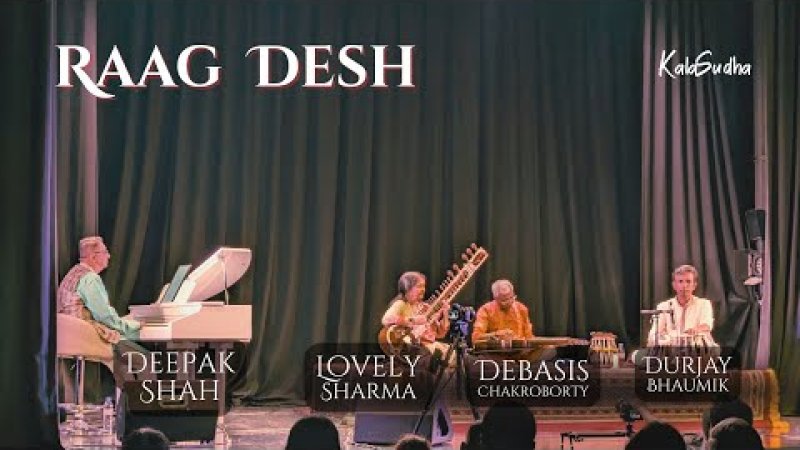
Watch performances, see details, and explore the Sitar in action





Featured Artists
Renowned Sitar players and performers
Jonathan Mayer

Shakir Khan

Adnan Khan

Dr Lovely Sharma

Learning Courses
Master the Sitar with expert-led courses

Sitar
Upcoming Events
Experience live Sitar performances

A Hundred Strings in Oxford: Two Strings, One Pulse
A Hundred Strings in Bournemouth: Ragas by the Sea
A Hundred Strings in London: Plucked and Struck
Past Events
Browse our archive of past performances

Music Without Boundaries


An Instrumental Journey Through the Nature

Dartington Ragas Festival: Strings, Voices & Rhythms

Sitar Workshop in London with Maestro Shakir Khan
Sitar Workshop in London with Maestro Shakir Khan

London Ragas: Shakir Khan & Shahbaz Hussain

Related Instruments
Explore similar instruments you might be interested in

Frequently Asked Questions
What is a sitar?
A sitar is a long-necked lute with a gourd body, movable curved frets, and a set of sympathetic strings running beneath the playing strings.
The curved frets let a player pull a string sideways and bend one note into another. Players call that bend the meend, and the sympathetic strings keep ringing behind it.
How can a complete beginner, a child or an adult returning after a long break start learning the sitar?
You can learn the sitar with KalaSudha online and in workshops, and beginners start at Foundation level. That first stage covers posture and the mizrab, the wire plectrum worn on the right index finger. We teach children as well as adults, so ask us about a starting age and a sitar sized for a younger learner.
If you are going back to the sitar after a long break, our courses run in levels. You start again where you left off, once your teacher has reviewed where you stand.
What materials is a sitar made from?
A sitar's resonator is a gourd with its top cut away, closed by a wooden soundboard, the tabli. The long, hollow neck and the body are usually tun (toon) or teak. Two bone bridges sit on wooden bases, the arched frets are brass or German silver, and wooden friction pegs hold the metal strings.
How many strings does a sitar have, and what do they do?
Documented sitars carry 18 to 21 metal strings. Six or seven run over the main bridge: melody strings that the player stops on the frets, and chikari strings struck for rhythm. Another 11 to 13 sympathetic strings, the taraf, run beneath the frets over a smaller bridge, are tuned to the notes of the raga and ring in response to the played strings.
How is a sitar tuned for a raga?
A sitar has no fixed pitch for Sa, the tonic, so the player sets it; Grinnell's example sets Sa at C4. The main playing string (baaj) is tuned to Ma, a fourth above Sa, and the second string (jod) to Sa. The sympathetic strings run beneath the frets and are tuned to the notes of the raga.
What gives the sitar its buzzing sound?
A sitar buzzes because its main bridge has a broad, gently curved top. As the string vibrates, it grazes that surface, and the length of string that vibrates keeps changing. The physicist C. V. Raman identified the effect in 1921. Makers set the tone through jawari, the shaping and re-filing of the bridge surface.
What is the difference between open and closed jawari on a sitar?
On a sitar, open (khula) jawari gives a brighter, louder and buzzier tone. Closed (band) jawari gives a warmer, plainer tone with more sustain, and round (ghol) jawari sits between them. Ravi Shankar's sitar is the usual open example; Nikhil Banerjee's and Vilayat Khan's are cited as closed. Open jawari also wears faster and needs re-filing sooner.
What should I check before buying a sitar?
When buying a sitar, inspect it in daylight. Squeeze the gourd gently to reveal cracks, check the seven main pegs and their holes for cracks, and check the joint between neck and soundboard by the last fret. Expect even a new sitar to need a setup. Hairline gourd cracks can often be left alone, but visible cracks that buzz need repair. Ask us: we repair any sitar, wherever you bought it.
How do I choose between a student sitar and a professional sitar, and what should I look for?
A student sitar and a professional sitar differ in the gourd and the hand work on the bridge and frets. A 2001 article on a Delhi workshop in the journal American Lutherie calls for a smooth, symmetrical gourd, neither flimsy nor heavy. Finer sitars carry a jawari, the buzzing bridge, of antler where most use camel bone. Makers place the frets to suit each soundboard, and the article reports bad results from necks pre-drilled for mass production.
KalaSudha sells student sitars and concert-grade sitars by master makers. We voice each jawari by hand to your gharana. Ask us for a quote, or for a sitar made to order.
Where can I buy a sitar outside India with international shipping, and have it serviced or repaired where I live?
You can buy a sitar from KalaSudha wherever you live: we sell it by quote or made to order, and we deliver worldwide. We pack every instrument for international shipping; ask us about cases and insurance.
We also service and repair any sitar, wherever you bought it, anywhere in the world, and we supply strings and spare parts. For help with your sitar after it arrives, use the chat on any page or email [email protected]. Ask us, too, about gift vouchers, class sets for schools or a flight case for travel.
Where can I get a sitar or a tabla serviced or repaired if I live outside India?
KalaSudha services and repairs any sitar or tabla outside India, wherever you bought it and wherever you live: ask us. On a sitar, that includes the setup and the jawari, the buzzing bridge. On a tabla, we re-face worn heads and renew the syahi, the black paste on each head.
We pack every instrument for international shipping, so ask us about a case and insurance for the trip. For help with your instrument, use the chat on any page or email [email protected].
How do I protect a sitar from humidity, dry air and damage?
High humidity swells a sitar's wooden parts and weakens the sound, while hot, dry conditions shrink materials and cause cracks and loose parts. Strings and frets can corrode too. Always keep the sitar in a case and never leave it standing on its gourd. Termites can damage gourds, so check an instrument that has been in storage.
How do I take a sitar or another large Indian instrument on a flight, in the cabin or in the hold?
To fly with a sitar or another large Indian instrument, ask your airline before you book. Find out whether it can fly in the cabin on its own seat, or must go in the hold. A cabin seat keeps the instrument beside you.
Either way, pack it so nothing moves inside its case, and pad fragile parts such as a sitar's gourd and bridge. If it goes in the hold, pack it for rough handling. KalaSudha reinforces the neck joint of each sitar it sells outside India, for travel. Ask us about a flight case and help with your trip.
Which wood makes a better sitar, teak or tun?
Sources treat tun (toon) and teak as the usual woods for a sitar's body, neck and soundboard. Teak appears on prominent modern concert sitars, including the Met's 1997 Murari Adhikari sitar and the 1961 Nodu Mullick sitar made for Ravi Shankar. Current Miraj makers use wood from Karnataka forests, reported as red cedar, for the neck and frame.
How can I book a sitar player for a concert, a private event or a recording session?
You can book a sitar player through KalaSudha for a concert, an event or a recording session. Ask us through our booking service for Indian classical musicians. To hear our artists before you decide, listen to KalaSudha's recordings and watch our concert videos.
Have more questions? Contact our support team and we'll be happy to help!
Ready to start learning Sitar?
Get personalized quotes and explore courses
1 course available
View Courses