

Oxford Raga Unison: Duet of Winds and Drums
- #Oxford
- #Presencial
- NOV 13, 2025
- Jueves
- 7:00 PM
- 1 hora, 30 minutos
- Holywell Music Room
- Oxford, Reino Unido
Consiga sus entradas

Resumen del evento
Artistas participantes
Artistas participantes
-
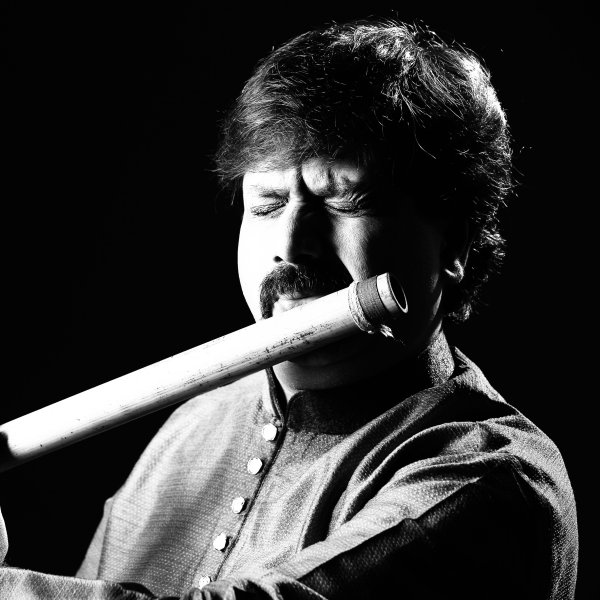 Ajay Prasanna
-
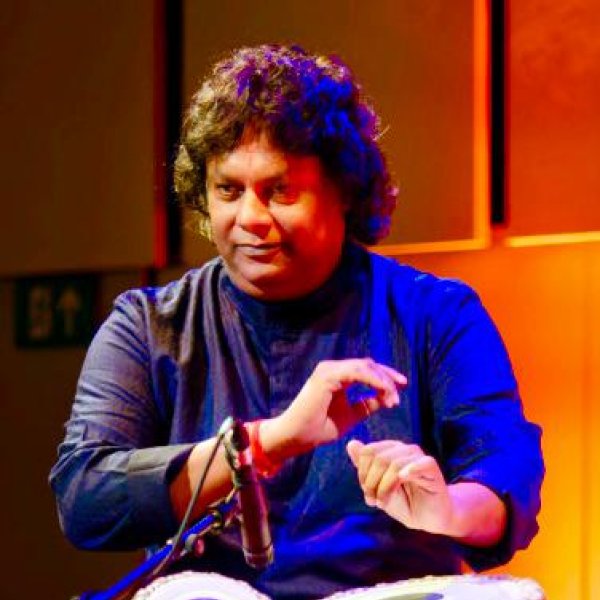 Kousic Sen


Detalles del evento
Amantes de la música de Oxford, este otoño traemos algo poético a nuestra hermosa ciudad. Una velada mágica de ragas clásicas indias con flauta tendrá lugar en la Sala de Música Holywell el 13 de noviembre.
Ven a experimentar Oxford Raga Unison: Duet of Winds and Drums, una velada trascendental de música clásica indostánica con Pandit Ajay Prasanna, tres veces nominado al Grammy y virtuoso del bansuri aclamado internacionalmente conocido por su innovadora Sinfonía para flauta de varios géneros, con Kousic Sen, uno de los principales intérpretes de tabla de su generación.
Nacido en una familia musical de Calcuta y formado por grandes maestros de la Banaras Gharana, Kousic es admirado mundialmente por su potente y a la vez sensible interpretación de la tabla. Sus enérgicas interpretaciones revitalizan el escenario, ya sea en conciertos clásicos, acompañamiento a la danza o colaboraciones interculturales. Como artista residente del Milapfest de Liverpool, y a través de giras por Estados Unidos, Canadá, Europa y Asia, ha compartido su maestría rítmica con el público en muchos de los escenarios más famosos del mundo.
Juntos, la flauta meditativa de Ajay y el vibrante diálogo de tabla de Kousic crearán paisajes sonoros profundamente restauradores, haciéndose eco de la creencia eterna en el poder de la música para la atención plena, el equilibrio emocional y la salud mental.
Esto no es solo un concierto; es una oportunidad para que nuestra comunidad experimente algo único en nuestra ciudad, ya que las tradiciones centenarias de la música del sur de Asia nos unen aquí en Oxford. Las investigaciones indican que esta música curativa puede calmar la mente, aliviar el estrés y promover una sensación de bienestar.
Traiga a sus amigos, pase una velada inolvidable y añada otra noche memorable a la rica vida cultural de nuestra ciudad.
Las puertas se abren a las 6:30 p. m. y la música comienza a las 7:00 p. m.
Política de audiencia:
- No se permite filmar ni fotografiar sin autorización .
- No se permite el uso de teléfonos móviles (incluidos mensajes de texto y modo silencio) durante el evento . Les solicitamos su cooperación. ¡Gracias!
¡Nos vemos allí, Oxford!
Venue information
Attendee reviews
Ratings describe the event experience.
-
Event Attendee
Event experience 5/5
I go to a lot of concerts, all kinds of music, mostly classical. The music I like best is probably string quartets. The other day I heard a very fine performance of Beethoven's late quartet, the number, Op. 130, with the Grosse Fuge, which was very fine. But tonight's concert is a completely different kind of music, two extraordinary virtuosos, or Virtuosi but the great quality they had was simple joyfulness astonishing virtuosity but what is virtuosity without the joyfulness and that music really leaves me with a feeling that is not going to leave me for a good few hours and probably I'll still be feeling it tomorrow I know this from great concerts and that was Wonderful, wonderful music. I can say no more.
-
Event Attendee
Event experience 5/5
I have to say thank you for making this an outstanding evening.
-
Event Attendee
Event experience 5/5
My mum played flute in this building many times like 60, 70 years ago and so it was a delight to come and watch a completely different musical tradition but still the flute is such an amazing instrument and we really witnessed a virtuoso tonight, it was quite incredible, really amazing.
-
Event Attendee
Event experience 5/5
I just started to play. Oh yeah? Yeah! And actually the guy who's making me my first flute, he was a student under Harry Prasad. Yep. So I think the same lineage, I think. Yep. Smaller. Yeah, he always takes me to another place, this music. Yep. And... The fun of it as well, the conversation between the two instruments and involving the crowd. It's just so beautiful, man. Such a break from normal life, you know. The thing about the breath, you know, that somehow takes you out of your head into the body.
-
Event Attendee
Event experience 5/5
Well, I think it was mesmerising, absolutely beautiful, complete serenity for an hour and a half and a complete stillness of intrusive thoughts. It was just all about being in this moment and being enraptured by that music. It really was. We have an emerging Indian flute player here. It should be prescribed on the NHS, seriously, for mental health, it really should. It's just, I think I'm going to sleep better than I have in a long time tonight.
Showing 3 of 5 reviews
Preguntas frecuentes
How do I get to the Holywell Music Room on Holywell Street in Oxford, and who do I ask about parking or step-free access?
To reach the Holywell Music Room, head for Holywell Street in Oxford city centre, postcode OX1 3SB. The room is part of Wadham College, which lists it at https://events.wadham.ox.ac.uk/holywell-music-room. If you need parking or step-free access, write to [email protected] before you book, or read who to talk to about access needs. To book a seat, see how to find and book KalaSudha concerts in Oxford.
Is the Holywell Music Room in Oxford accessible for wheelchair users and people with other access needs, and who should I contact about it?
The Holywell Music Room has a ramped main entrance on a loose gravel path, level access to the auditorium and one accessible toilet, according to the Oxford University AccessGuide.
Wheelchair spaces and hearing-loop provision are limited. If you need either, or have other access needs, contact KalaSudha before you book.
Where can I hear live Indian classical music in Oxford, and where are KalaSudha's Oxford concerts listed?
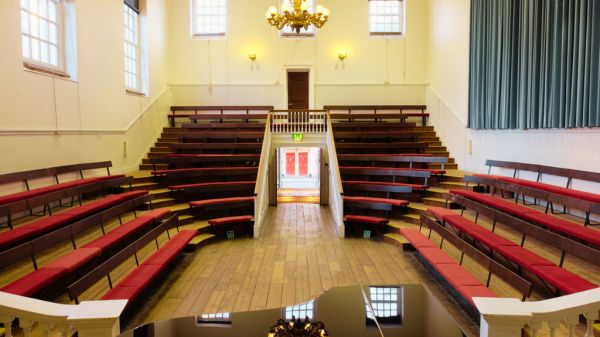
KalaSudha presents Indian classical music in Oxford at the Holywell Music Room on Holywell Street, part of Wadham College. The room dates from 1748, and Wadham calls it "the oldest custom-built concert hall in Europe".
The KalaSudha Oxford page lists each Oxford concert with its Book Tickets button; press Register for updates there to hear about new dates. For directions, see getting to the Holywell Music Room.
KalaSudha has presented Oxford Raga Unison at the Holywell Music Room.
Who is the flautist Pandit Ajay Prasanna, and what is his musical lineage?
Pandit Ajay Prasanna is a flute player from a musical family. He carries forward the legacy of his father, Bholanath Prasanna, a flute master whose students include Hariprasad Chaurasia. He plays in the style of the Banaras gharana. He has performed across India and abroad, including at Queen Elizabeth Hall in London and at festivals in Asia and Europe. His honours include Grammy nominations, the Global Indian Music Award for his album Cinema, the Sangeet Ratna Award and the Surmani Award.
Ajay Prasanna learned the flute from his father, who was also his guru. He is a top-grade classical artist at All India Radio, plays bansuri on the Gorillaz album The Mountain and is a four-time Grammy nominee. He advises on KalaSudha's bansuri course and teaches it.
Who is the tabla player Kousic Sen, and where did he train?
Kousic Sen is a tabla player, born into a musical family in Calcutta and trained by masters of the Banaras gharana. He plays in classical concerts, accompanies dance and works in cross-cultural collaborations. He is an Artist in Residence with Milapfest in Liverpool and has toured the USA, Canada, Europe and Asia.
What is a bansuri, how is it made, and how is it played?
A bansuri is a transverse flute cut from a single length of seasoned bamboo. It has no keys and no moving parts, only six finger holes, or seven in Pandit Pannalal Ghosh's style. The maker burns or drills the blow hole and the finger holes. The player controls pitch through the lips at the blow hole, breath pressure and half-holing, covering a finger hole in part, which gives the slides and bends of a raga. Until the 1940s it was not thought a concert instrument; Pannalal Ghosh made a larger bansuri for the classical stage.
What is the Benares (Banaras) gharana of tabla, who founded it, and what does it sound like?
The Benares gharana is a school of tabla playing named after Benares (Varanasi), where Ram Sahai founded it in the late 18th or 19th century. Gharana accounts say he studied in Lucknow, so the school descends from the Lucknow tabla gharana. Its sound is powerful and open, built on resonant strokes such as na and din, and its players favour tete played with the full hand. Lineage accounts say Ram Sahai wanted a style that could carry a solo and accompany singing, instrumental music and Kathak. Kousic Sen trained with masters of the gharana.
Have more questions? Contact our support team and we'll be happy to help!