

London Ragas : le récit et les pas
- 11 Oct 2026
- Dimanche
- 5:00 PM – 7:00 PM
- 2 heures
- Royal Wharf Community Dock
- Londres, GB
Billets

Résumé de l'événement
Artistes sur scène
Temps forts de l'événement
Jaipur et Lucknow
Expliqué, puis dansé
Paramparagat Kathak Nritya
Un baithak intime à Royal Wharf
Artistes sur scène
-
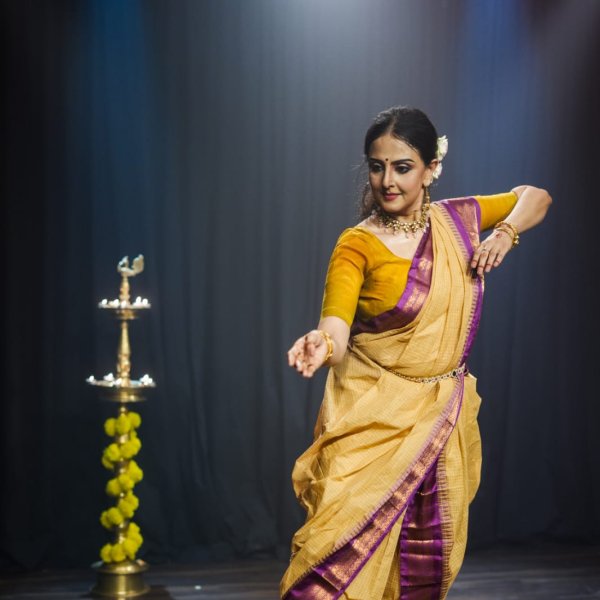 Alokparna Guha

Détails de l'événement
Alokparna Guha danse le kathak en octobre à notre baithak mensuel London Ragas, au Royal Wharf Community Dock, à Silvertown. Debipriya Sircar chante, accompagnée d'un tabla en direct.
Guha a commencé le kathak à cinq ans auprès de Sri Pradipta Neogi, puis s'est formée auprès du Dr Malabika Mitra. Elle travaille dans les deux styles, Jaipur et Lucknow, et détient un Senior Diploma du Prayag Sangeet Siksha Samiti ainsi qu'une médaille d'or de l'université Rabindra Bharati. Elle a fondé la PUSHPAK Academy of Dance, qui enseigne à Calcutta et à Toronto et qui est affiliée au Pracheen Kala Kendra. Elle a dansé au festival de danse Uday Shankar et au festival de danse de Konark, ainsi qu'à Londres, Birmingham, Barcelone et Toronto.
La soirée se déroule en deux parties. Elle donne d'abord deux courtes conférences-démonstrations : l'une sur les origines du kathak, l'autre sur le tabla, qu'elle tient pour indispensable à cette forme. Après l'entracte, elle ouvre par une vandana, puis danse le paramparagat Kathak Nritya dans toute son étendue.
C'est cet ordre qui fait la soirée. La plupart des gens qui viennent voir du kathak regardent quelque chose que personne ne leur a appris à lire : les pieds qui comptent un cycle rythmique, le visage qui raconte une histoire. Ici, elle vous dit d'abord quoi regarder, puis elle le danse. Si vous vouliez faire découvrir cette musique à quelqu'un sans savoir par où commencer, commencez par cette soirée.
London Ragas est notre baithak mensuel : une seule salle, 160 places, et aucune scène qui éloigne les artistes du public. Asseyez-vous devant si vous le pouvez.
Si vous êtes à Londres ou dans les environs, venez. Pour tout besoin d'accessibilité, contactez-nous.
Ouverture des portes à 16h45. Le spectacle commence à 17h00 et se termine à 19h00.
Règlement du public :
- Il est interdit de filmer sans autorisation.
Informations sur le lieu

Frequently Asked Questions
What time does it start, and when will it finish?
Doors open at 4:45 PM and the music starts at 5:00 PM. The concert ends at 7:00 PM, with an interval between the two halves.
Seating is unreserved and the room holds 160, so come at doors if you want to sit close.
What do tickets cost?
£20 early bird until 5:00 PM on Sunday 4 October, then £25 general admission for the last week. Student tickets are £15 throughout, with valid ID at the door.
You can book here on this site or through Eventbrite. The price is the same either way, though Eventbrite adds its own booking fee at checkout.
What is London Ragas?
Our monthly baithak in London. One evening a month, a room of about 160, and no distance between the performers and the seats.
The 2026 series runs through the year: Shakir Khan and Ustad Shahbaz Hussain in July, Pandit Debasis Chakroborty with Ustad Akram Khan on 26 September, and this Kathak evening in October.
Do I need to know anything about Kathak before I come?
No, and this evening is built for that. Alokparna Guha opens with two short lecture-demonstrations, one on where Kathak comes from and one on tabla, before she dances anything.
By the interval you will know what the footwork is doing and what the hands and face are telling you. The second half is the dance itself.
Comment recevoir mon billet ?
Votre e-mail de confirmation contient le billet. Présentez-le sur votre téléphone à l'entrée de la salle, ou apportez une version imprimée si vous préférez le papier.
Si l'e-mail n'est pas arrivé, vérifiez d'abord votre dossier de courrier indésirable. S'il reste introuvable, écrivez-nous à [email protected] et nous vous le renverrons.
I can no longer attend. Can I have a refund?
Ticket sales are final once confirmed. If something has come up, write to [email protected] at least 7 days before the event and tell us what happened.
We look at each request on its own merits. A refund is not guaranteed, and we cannot consider requests inside the last week.
What happens if the event is cancelled or moved to another date?
You choose between a full refund and a transfer to the new date or an equivalent concert.
Refunds for a cancelled event go back to your original payment method within 7 to 14 business days. You do not need to claim them.
Can I photograph or film the performance?
No, not during the performance. The musicians improvise, and a raised phone or a lit screen pulls the room out of the music. Put the camera away and stay with the sound.
If you are covering the concert for press, or need to record for another reason, write to [email protected] before the day. Filming without that permission is not allowed.
I have access needs. Who do I talk to?
Write to [email protected] before you book and tell us what you need.
Wheelchair spaces and seats near the stage need arranging with the venue in advance, so the earlier you write, the more we can do.
I have never been to an Indian classical concert. Will I follow it?
Yes. You do not need to recognise a raga or count a taal to follow what happens on stage.
The music opens at a crawl with no pulse at all, then the tabla enters and the rhythm takes hold. That shape repeats through the evening, and most people read it by the second piece. Sit close and give the opening time.
What is a baithak?
A baithak is the room this music grew up in. The audience sits close, the musicians play at the same level, and nothing stands between the player and the listener.
We build our concerts that way because the detail of a raga carries best at short range. You hear the string under the slide and the fingertip on the tabla skin, not just the note.
When should I arrive?
Come at the door time on the event page rather than at the start time. It gives you room to find a seat and settle.
The concert opens with an alap, the slowest and quietest stretch of the evening. Walking in during it costs you the part that sets up everything after.
Is there an interval?
Yes. The concert runs in two halves with a short interval between them.
The first half holds the classical raga set. The second opens out, and on most of our bills it changes either the players or the form.
What should I wear?
Whatever you are comfortable sitting in for a couple of hours.
Our audiences turn up in jeans and in saris on the same night, and neither looks out of place.
Is seating allocated?
No. Seating is unreserved, so pick any free seat when you arrive.
Arriving at doors rather than at the start gets you the closer rows, which is where this music rewards you most.
What is a tabla?
A pair of hand drums. The smaller wooden one sits under the right hand and carries the pitch. The larger metal one under the left hand supplies the bass and bends it, by pressing the heel of the palm into the head while striking.
The black circle on each head is what makes the sound recognisable. It weights the skin so the drum rings at a definite pitch rather than thudding.
What is Kathak?
One of the eight classical dance forms of India, from the north. It runs on two things: chakkars, fast spins taken on the heel, and abhinaya, the storytelling carried in the face and hands.
Ankle bells mark the footwork, so the dancer works as a percussionist too, trading rhythmic patterns with the tabla in the same cycle.
Have more questions? Contact our support team and we'll be happy to help!