

Kirwani
किरवानी
S R g m P d N S' | S' N d P m g R S
Origini e contesto
Raag Kirwani mostra come la musica indiana possa fluire tra le tradizioni. È iniziato come un'importante scala genitore nella musica carnatica dell'India meridionale. Successivamente, i musicisti dell'India settentrionale hanno iniziato a usarlo, aggiungendo nuove sfumature e profondità al raga. Kirwani è di solito suonato a tarda notte, verso mezzanotte, perché il suo suono fa riflettere le persone in silenzio e sentire una leggera tristezza. Questo raga è un promemoria per noi che la musica può attraversare i confini e toccare i cuori ovunque. Come dice un noto proverbio, "Dove le parole falliscono, la musica parla".
Kirwani è notevole per la sua simmetria, poiché entrambe le metà della scala si specchiano l'una sull'altra con precisione matematica. Questo equilibrio gli conferisce un carattere occidentale e lo rende popolare nelle collaborazioni interculturali. A KalaSudha, consideriamo Kirwani come un raga di pura emozione, affidandosi alla qualità espressiva dei suoi intervalli minori piuttosto che ai movimenti complessi.
Dettagli tecnici
Struttura melodica e schemi di movimento
Aroha (salita)
S R g m P d N S'
Avroh (discesa)
S' N d P m g R S
Pakad (frase caratteristica)
g m P, d P, m g R S, .N R S
Tanpura Tuning
P—S—S—Sa
Additional Notes
Phraseologies
Il movimento è fluido e lirico, muovendosi dolcemente attraverso le ottave senza svolte contorte.
- Il Gancio Malinconico: g m P, d P, m g R S
- Il Raggiungimento Ascendente: m P d N S'
- La Risoluzione Caratteristica: .N R S (La nota principale N che si risolve in S).
- Chalan: S R g m P, d P, m P d N S', S' N d P m g R S, .N R S
Registrazioni ed esibizioni
Ascolta grandi maestri eseguire questo raga
Video


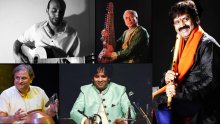
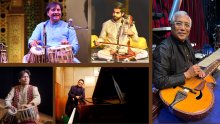
Master Performers
Artists renowned for their renditions of Kirwani

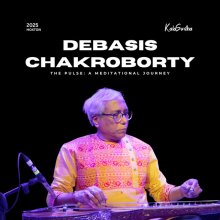
Debasis Chakroborty
Indian Slide Guitar

Deepak Shah
Piano

Giuliano Modarelli
Guitar

Hanif Khan
Tabla

Shahbaz Hussain
Tabla
Classifiers
Swara geometries, relationships, and classifications
Swara Geometries
Struttura
Around the World
Global connections and equivalent scales
Kirwani è probabilmente il raga indiano più riconoscibile alle orecchie occidentali.
Harmonic Minor
C−D−Eb−F−G−Ab−B
The quintessential scale for drama and tension in Western classical music.
Domande frequenti
Where can I hear Raag Kirwani played live in concert?
You can hear Raag Kirwani at KalaSudha's concerts in the UK, Europe and India. The raga pianist Deepak Shah played it at Kala Festival, a touring festival, at The Great Hall of the University of Reading, with the tabla player Hanif Khan. Pandit Debasis Chakroborty and the guitarist Giuliano Modarelli played it at the Assembly Rooms in Edinburgh, with Ustad Shahbaz Hussain on tabla. Coming concerts are on the events page.
Which recordings of Raag Kirwani should I listen to first?
KalaSudha's recordings of Raag Kirwani include Meditative Vibe, on which Pandit Debasis Chakroborty plays the raga on solo Indian slide guitar. Video releases show the raga pianist Deepak Shah's Kirwani at Kala Festival in Reading and Pandit Debasis Chakroborty's duet with the guitarist Giuliano Modarelli in Edinburgh.
What is the difference between Raag Kirwani and Raag Charukesi?
Raag Kirwani and Raag Charukesi both use all seven notes with komal, or lowered, Dha, but they swap two notes. Kirwani takes komal Ga with shuddha, or natural, Ni, while Charukesi takes shuddha Ga with komal Ni. Both came from Carnatic music: George Howlett traces Kirwani to Keeravani, the 21st melakarta, or parent scale, and Charukesi to the 26th.
What is the Carnatic equivalent of Raag Kirwani?
Raag Kirwani comes from the Carnatic raga Kiravani, also written Keeravani, the 21st melakarta, or parent scale, with the same seven notes. George Howlett writes that Kirwani was popularised in Hindustani music chiefly through Pandit Ravi Shankar's borrowings from the South. With Sa on C, the scale is the Western harmonic minor, which Howlett notes as congruent with Kirwani.
Which film songs are based on Raag Kirwani?
Hindi film songs that David Courtney lists in Raag Kirwani include Ankhon Se Jo Utari, from Phir Wohi Dil Laaya Hoon, which he calls "a surprisingly good example". His list also includes Anewala Pal, Janewala Hai, from Golmaal, and Ek Radha Ek Meera, from Ram Teri Ganga Maili.
How can I learn a raga online?
You can learn a raga online with the KalaSudha Academy, in live one-to-one lessons with a teacher or in a structured course, from foundation to advanced. Learners book lessons in their own time zone, and teachers teach live in their own language. Instructors and touring artists also lead in-person workshops and summer camps where enough learners register interest.
Have more questions? Contact our support team and we'll be happy to help!