

Yaman
यमन
.N R G M# P D N S' | S' N D P M# G R S
Origini e contesto
Raag Yaman è spesso chiamato l'"Imperatore" della musica hindustana, specialmente per le ore serali. È solitamente il primo raga che gli studenti imparano, ma sfida ancora anche i musicisti esperti. Yaman appartiene al Kalyan Thaat ed è suonato durante la prima parte della notte, un momento in cui il giorno finisce e la sera inizia. Il raga è noto per il suo carattere pacifico, gioioso e costante.
Storicamente, questo raga esibisce una miscela di culture ed è frequentemente associato con il poeta e musicista sufi del XIII secolo Amir Khusrau. Le sue radici sono nella vecchia scala indiana Kalyan, ma si crede che Khusrau abbia aggiunto idee musicali persiane e l'abbia chiamato per primo "Aiman." Alcuni studiosi pensano che il nome derivi da "Yavanon-ka-Kalyan", un termine usato dai musicisti hindu per la versione suonata dagli artisti persiani o "Yavana", che poi divenne Yaman.
Mostra altroMostra meno
Yaman si distingue per il suo uso del Teevra Ma (quarta aumentata), una nota acuta che cambia una scala di base in qualcosa di contemplativo e bello. La sua natura multipurpose lo ha reso il raga più registrato ed eseguito nella musica classica hindustana. I registri di gruppi come il Sangeet Natak Akademi e varie trasmissioni mostrano che Yaman è suonato nei concerti più spesso di quasi ogni altro raga, spesso come il pezzo principale per le esecuzioni serali.
La famosa cantante hindustana Prabha Atre una volta ha parlato di quanto sia importante Yaman. Il suo insegnante le ha fatto praticare Yaman per un anno intero perché, come lei ha detto, "il pieno comando di Yaman semplificherà la comprensione e l'apprezzamento di altri raga." Ustad Vilayat Khan ha condiviso una visione simile, dicendo che se un musicista conosce veramente il suo raga, "si aprirà a te come un essere divino." Questo mostra la profonda concentrazione e la fermezza necessarie per padroneggiare le note pure di Yaman.
Nella cultura popolare, Yaman ha fornito la spina dorsale melodica per alcuni dei capolavori più duraturi del cinema indiano. La sua capacità di bilanciare il desiderio romantico con la dedizione spirituale è meglio ascoltata nell'ossessionante "Man Re Tu Kahe Na Dheer Dhare" dal film Chitralekha, una canzone spesso votata dai compositori come uno dei migliori esempi di musica cinematografica basata su raga. L'umore serale del raga è catturato letteralmente nel classico "Jab Deep Jale Aana" da Chitchor, mentre il suo romantico "Shringar" rasa brilla in "Chaudhvin Ka Chand Ho." Anche nel cinema contemporaneo, il raga continua ad essere rilevante, come dimostrano canzoni come "Laal Ishq" da Ram-Leela che l'antica "Architettura della Grazia" risuona ancora con il pubblico moderno. Per mezzo di un'esecuzione complessa da record di 15 bandish o una semplice canzone cinematografica di tre minuti, Yaman rimane il suono definitivo della sera indiana.
Dettagli tecnici
Struttura melodica e schemi di movimento
Aroha (salita)
.N R G M# P D N S'
Avroh (discesa)
S' N D P M# G R S
Pakad (frase caratteristica)
.N R G R S, P M# G R S
Chalan (Movement)
.N R G, R S, .N R G M# P, M# G, R S, P M# D N S', S' N D P, M# G R S
Tanpura Tuning
P — S — S — Sa
Additional Notes
Phraseologies
Il movimento è espansivo e lineare, concentrandosi su "Nyasa" (riposo) su G e N.
- L'Inizio Sospeso: .N R G
- Il Glissando Lidio: G M# P
- La Discesa Maestosa: S' N D P, M# G R S
- Esempio di Frase: .N R G, R S, P M# G R S
Common Phrases
- L'Ascesa Caratteristica: .N R G
- Il Fulcro Lidio: G M# P
- La Risoluzione Classica: P M# G R S
- Il Raggiungimento dell'Ottava Alta: m# D N S'
Registrazioni ed esibizioni
Ascolta grandi maestri eseguire questo raga

Tracks
Yaman, Pt. 1
Dr Lovely Sharma
Yaman, Pt. 2
Dr Lovely Sharma
Yaman, Pt. 3
Dr Lovely Sharma
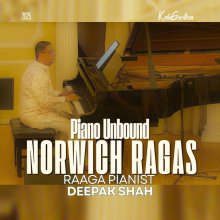
Raag Yaman - Alap - Live from Kala Festival 2025
Deepak Shah
Raag Yaman - Jhala - Live from Kala Festival 2025
Deepak Shah
Raag Yaman - Jod - Live from Kala Festival 2025
Deepak Shah
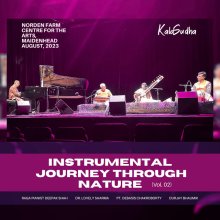
Dhun basata su Raag Yaman, Pt. 2 - Kala Festival 2023
Debasis Chakroborty
Dhun sul Raag Yaman, Pt. 1 - Kala Festival 2023
Debasis Chakroborty
Dhun sul Raag Yaman, Pt. 3 - Kala Festival 2023
Debasis Chakroborty
Dhun sul Raag Yaman, Pt. 4 - Kala Festival 2023
Debasis Chakroborty
Dhun sul Raag Yaman, Pt. 5 - Kala Festival 2023
Debasis Chakroborty
Albums
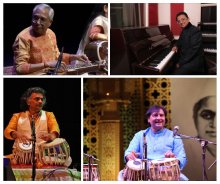
Master Performers
Artists renowned for their renditions of Yaman

Deepak Shah
Piano

Dr Lovely Sharma

Debasis Chakroborty
Indian Slide Guitar

Durjay Bhaumik
Tabla
Classifiers
Swara geometries, relationships, and classifications
Swara Geometries
Struttura
Around the World
Global connections and equivalent scales
Raag Yaman è il fratello spirituale del Modo Lidio nella musicologia occidentale. Storicamente considerato il "più brillante" di tutti i modi, la struttura lidia è usata nel cinema occidentale per evocare meraviglia, spazio e l'"Extra-terrestre" (usata famosamente da John Williams e Leonard Bernstein). Yaman rappresenta l'apice della Consonanza Tonale, una scala dove ogni nota sembra "corretta" e al suo giusto posto.
Domande frequenti
Where can I hear Raag Yaman played live in concert?
KalaSudha's musicians play Raag Yaman in concert, and have performed it live at Kala Festival, KalaSudha's touring festival. KalaSudha presents Hindustani musicians in the UK, Europe and India, in series such as London Ragas in London and Kala Concert in India. Yaman belongs to the first prahar, or three-hour watch, of the night. Coming concerts are on the events page.
Which recordings of Raag Yaman should I listen to first?
KalaSudha's recordings of Raag Yaman include the raga pianist Deepak Shah's alap, jod and jhala, recorded live at Kala Festival. They also include Dr Lovely Sharma's sitar performance with the tabla player Durjay Bhaumik. The alap is the unmetered opening, where the raga takes shape phrase by phrase. For a lighter piece, hear the ensemble of Pandit Debasis Chakroborty in a dhun based on Raag Yaman.
What is the difference between Raag Yaman and Raag Yaman Kalyan?
Raag Yaman Kalyan follows Raag Yaman closely but adds shuddha, or natural, Ma beside Yaman's tivra Ma. David Courtney calls that shuddha Ma weak, places it in the descent and says most accounts treat the two as different ragas. Rajan Parrikar writes that the shuddha Ma has no independent life in Yaman Kalyan and that its other contours match Yaman. He also notes that some musicians touch shuddha Ma while still calling the raga Yaman.
What is the Carnatic equivalent of Raag Yaman?
The Carnatic equivalent of Raag Yaman is Kalyani, the 65th melakarta, or parent scale, of Carnatic music. Kalyani uses the same seven notes as Yaman: Sa and Pa, shuddha Re, Ga, Dha and Ni, and tivra Ma, the raised fourth. Rajan Parrikar writes that Kalyan, a name often used for Yaman, shares its scale with Kalyani.
Is Raag Yaman a good raga for a beginner to learn?
Raag Yaman is often taught to beginners. The AUTRIM project of the National Centre for the Performing Arts and the University of Amsterdam links this to its simple melodic structure, which leaves wide room for improvisation. Rajan Parrikar writes that mastery of Yaman is held essential for any serious student. Prabha Atre recalled learning only Yaman for nearly two years with Sureshbabu Mane, in an interview with Bhushan Toshniwal.
Which film songs are based on Raag Yaman?
Film songs based on Raag Yaman include Ek Dil Ek Jaan from Padmaavat, which Archana Nathan, writing in Scroll, hears in Yaman. Nathan also hears it in Hamesha Tum Ko Chaha from Devdas and Jhonka Hawa Ka Aaj Bhi from Hum Dil De Chuke Sanam. Vipin Nair calls Jab Deep Jale Aana, from Chitchor, a Yaman-based composition. It is also described as set in Yaman Kalyan.
Which bandishes are well known in Raag Yaman?
Well-known bandishes, or set compositions, in Raag Yaman include Eri Aali Piya Bina, which Rajan Parrikar calls a very popular classical bandish, and Piharva Tihari, a well-known cheez in his account. Cheez is another word for a composition. Parrikar writes of Yaman under its other name, Kalyan. He also names Main Vari Vari Ja'oongi, a popular cheez of Vilayat Hussain Khan, and the traditional Mandara Mana Laye.
How can I learn a raga online?
You can learn a raga online with the KalaSudha Academy, in live one-to-one lessons with a teacher or in a structured course, from foundation to advanced. Learners book lessons in their own time zone, and teachers teach live in their own language. Instructors and touring artists also lead in-person workshops and summer camps where enough learners register interest.
Have more questions? Contact our support team and we'll be happy to help!