

Bansuri (Flute)Prepared by KalaSudha
Foundation Bansuri (Flute)
Foundation bansuri, prepared by KalaSudha: hold, breath and a first clear tone, Sa and the swaras, half-holing, alankars, a first raga and a first gat.
- モジュール
- 1A–1C
- Lessons
- One-to-one or in a group
- Ends in
- A KalaSudha certificate

概観
About Foundation
Foundation bansuri takes you from a first clear tone to a 4-minute prepared set, with no music or flute background needed. It is the first level of the Bansuri (Flute) course prepared by KalaSudha, taught in live online lessons. Your teacher names the key and length of your flute before you buy. You hear each phrase and play it back before you read it.
Module 1A covers hold, posture and a first sound at the blowing hole. You hold Sa with the top three holes closed, play long notes for breath and learn the middle octave swaras. Module 1B adds alankars, swara patterns played up and down, and half-holing for the komal, or flat, swaras. You learn sargam notation and mark the cycle: sam, the first beat, the clapped tali, the waved khali and the vibhag sections. Then you keep Keherwa and Dadra.
Read the full overview表示を減らす
Module 1C brings your first raga, such as the suggested Yaman, through its aroh, avaroh and pakad, the ascent, descent and catch phrase. You move into the upper octave, play a short alap and learn a first gat, an instrumental composition, in Teentaal. You also hear the bansuri's three teaching lines through labelled excerpts. Meend across two holes and live tabla come at Intermediate.
Each module has 14 topics, eight core and six electives, and your path is 12 of them. As a typical guide, Foundation takes 9–12 months, and you agree the pace with your teacher. In a cohort, you hear other learners play the same phrases, and each guided rehearsal and review becomes a short performance for the group. Foundation leads to a KalaSudha award (see certificates). Ask about Foundation in the Academy.
モジュール
The three Foundation modules
-
1A
Module 1A: Flute, breath and first sound
8 core + 4 teacher-setfrom 14 topics
Hold the flute without strain and keep a practice record. Sound a clear tone at the blowing hole, hold Sa with three holes closed and play long notes for breath. Play the middle octave swaras, hear a phrase and play it back, then present your long notes.-
Hold, posture and a practice recordコア
Hold the flute without strain in the hand position your teacher sets, and start a practice log.
-
First sound at the blowing holeコア
Direct a steady air stream across the blowing hole until a clear tone sounds.
-
Sa with three holes closedコア
Close the top three holes and hold Sa steady against the drone.
-
Long notes and breathコア
Breathe low and spend the breath evenly across long notes on Sa, Re and Ga.
-
Middle octave swarasコア
Finger and sound the shuddha swaras of the middle octave in ascent and descent.
-
Hear a phrase and play it backコア
Listen to a short sargam phrase once and play it back with the same swaras.
-
Guided rehearsal: flute, breath and first soundコア
Rehearse your long-note and swara sequence and correct one fault using teacher feedback.
-
Review and presentation: flute, breath and first soundコア
Present your long-note and swara sequence and discuss your preparation and corrections with the assessor.
-
Flute care選択
Learn the care routine your teacher approves for warming, drying and storing a bamboo flute.
-
Breath away from the flute選択
Practise a slow, counted exhale through the lips away from the instrument.
-
Recording the flute選択
Place a phone or microphone so your teacher can see both hands and hear the tone without wind noise.
-
The lower Pa選択
Close all six holes and sound the low Pa below Sa without forcing the breath.
-
Match a heard pitch選択
Find on the flute single pitches sung or played by your teacher.
-
Single tonguing選択
Start notes with a light tongue stroke and compare them with breath-started notes.
Your teacher fills 4 slots from the electives, their own topics or both.
-
-
1B
Module 1B: Swaras, alankars and the cycle
8 core + 4 teacher-setfrom 14 topics
Play alankars in the middle octave at a logged tempo. Half-hole for komal Re, Ga, Dha and Ni, and learn your teacher's tivra Ma. Mark sam, tali, khali and vibhag, keep Keherwa and Dadra, and read and write sargam notation.-
Review tone and set a tempoコア
Check long notes in your log and choose a pulse you can hold for alankars.
-
Alankars in the middle octaveコア
Play the first teacher-selected alankars, patterned swara exercises, at a steady pulse.
-
Half-holing for komal swarasコア
Part-cover holes to play komal Re, Ga, Dha and Ni, and the tivra Ma fingering your teacher shows.
-
Sam, tali, khali and vibhagコア
Mark a cycle with hand gestures and explain matra, avartan, sam, tali, khali and vibhag.
-
Keherwa and Dadraコア
Recite the thekas of the suggested Keherwa and Dadra and play an alankar over each.
-
Read and write sargam notationコア
Read swaras in sargam notation with beat numbers and write a short alankar from dictation.
-
Guided rehearsal: swaras, alankars and the cycleコア
Rehearse your alankar and hand-count set and correct one fault using teacher feedback.
-
Review and presentation: swaras, alankars and the cycleコア
Present your alankar and hand-count set and discuss your preparation and corrections with the assessor.
-
Alankars in dugun選択
Play one alankar at single and double density while the hand-count stays the same.
-
Finger independence drill選択
Practise lifting and closing each finger cleanly in a slow repeated pattern.
-
A sargam geet選択
Learn a short teacher-selected composition on swara names in a simple tala.
-
Two notation conventions選択
Compare Bhatkhande and Paluskar signs in a supplied line of sargam.
-
Find the cycle after silence選択
Keep the hand-count through a silent passage and re-enter playing on sam.
-
Play with a theka track選択
Play an alankar against a recorded Teentaal theka and keep your place in the cycle.
Your teacher fills 4 slots from the electives, their own topics or both.
-
-
1C
Module 1C: First ragas and a first gat
8 core + 4 teacher-setfrom 14 topics
Learn the aroh, avaroh and pakad of a first raga and move into the upper octave. Play a first gat in Teentaal and a short alap. Hear the bansuri's teaching lines through labelled excerpts, then present a 4-minute set.-
Review swaras and cyclesコア
Use your log to fix one weak alankar or cycle before starting raga work.
-
Aroh, avaroh and pakad of a first ragaコア
Learn the ascent, descent and catch phrase of the first raga (suggested: Yaman).
-
Into the upper octaveコア
Raise the air speed to carry the raga's phrases into the upper octave.
-
A first gat in Teentaalコア
Learn the sthayi and antara of a teacher-selected composition in Teentaal with a theka track.
-
A short alapコア
Play a short unmetred alap in the first raga before the composition.
-
Hear the bansuri's teaching linesコア
Listen to attributed recordings from the Maihar, Banaras and seven-hole teaching lines and compare two by sound.
-
Guided rehearsal: first ragas and a first gatコア
Rehearse your four-minute Foundation set and correct one fault using teacher feedback.
-
Review and presentation: first ragas and a first gatコア
Present your four-minute Foundation set and discuss your preparation and corrections with the assessor.
-
A second raga選択
Learn the aroh, avaroh and pakad of a second raga (suggested: Bhupali) and its contrast with the first.
-
First taans選択
Play short taans built from the raga's ascent and descent, returning to the mukhda.
-
A dhun or folk melody選択
Learn a short teacher-selected dhun or folk melody with a theka track.
-
Meend between neighbouring swaras選択
Slide a finger slowly off a hole to glide between two neighbouring swaras.
-
Recover a missed sam選択
Practise recovery after a deliberate missed entry in the gat.
-
A bansuri listening log選択
Keep a dated log of four attributed bansuri recordings and note what you hear in each.
Your teacher fills 4 slots from the electives, their own topics or both.
-
Why Foundation
What Foundation builds
-
Listen, then play
Hear each phrase and play it back before you read it. Your teacher hears whether your pitch is secure before working on the fingers. -
A clear tone first
Breath and a steady first tone come before speed. The checks listen for Sa held in tune, with no hole leaking and no breath noise covering the tone. -
Half-holing for komal swaras
Part-cover the holes to play komal Re, Ga, Dha and Ni, and learn the tivra Ma fingering your teacher shows you.
Lessons
Ways to learn
One-to-one
Learn at your own pace. You book online lessons through KalaSudha in your own time zone.
Register interest in 1:1 lessonsIn a group
Learn in a group on a timetable.
Ask about group lessonsTeachers
Teachers for Foundation
-
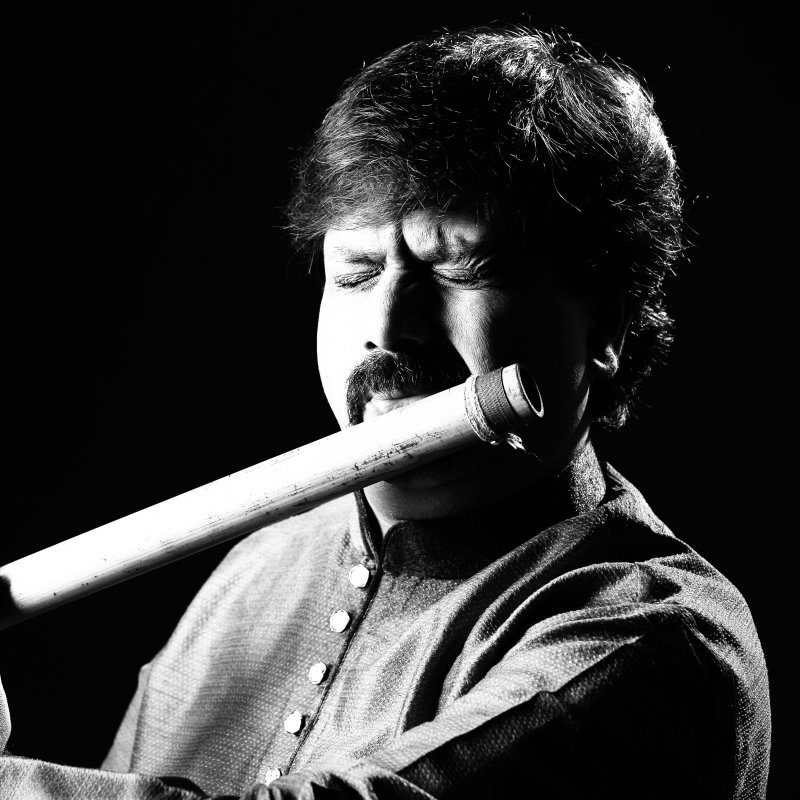
Flute
Pandit アジャイ・プラサナ
<p>パンディット・アジャイ・プラサンナは、名門音楽一家出身で、国際的に高く評価されているフルート奏者です。彼は、インドが生んだ最高のフルート奏者の一人である父、パンディット・ボラナート・プラサンナの血を受け継いでいます。彼の弟子には、パンディット・ハリ・プラサード・チャウラシアなどがいます。</p>
Teaches
Bansuri (Flute) -
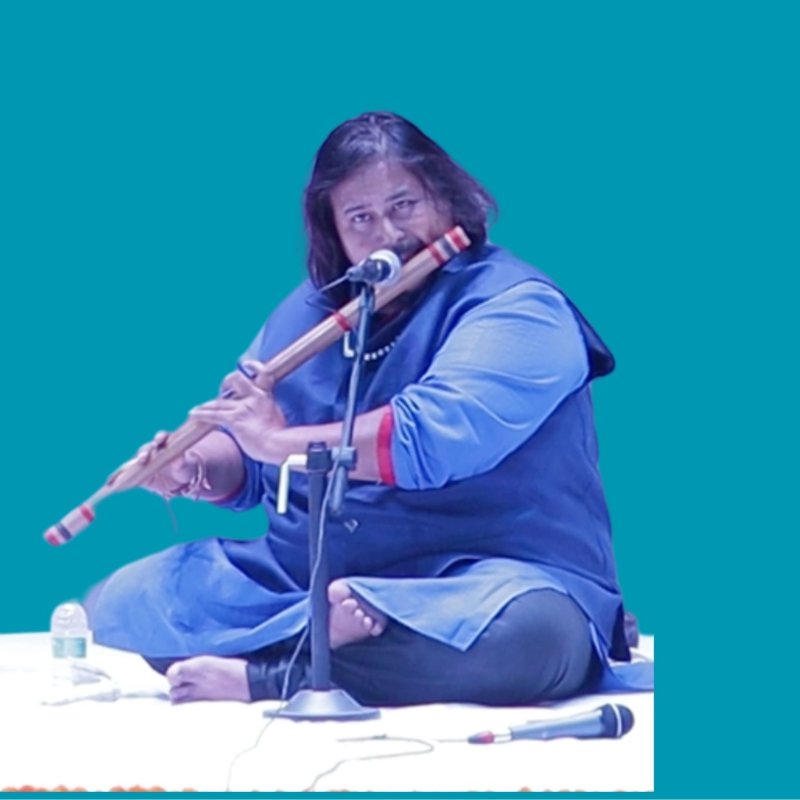
ギャーワーリー博士はバナーラス伝統のバンスリー奥者。ヴィノード・プラサンナとプラハラード・ナース博士に師事し、BHU博士号取得、インド全国放送「B High」グレード、ヤング・アーティスト奖学金受賞。
Teaches
Bansuri (Flute)


質問
Questions about Foundation
Entry, pace, assessment and what you show to finish the level.
On Foundation bansuri you get a first sound by directing a steady air stream across the blowing hole until a clear tone sounds. Your teacher shows you the hold first.
The topic closes when you sound a clear tone on three attempts out of four, each lasting 4 seconds without breath noise covering it. You then hold Sa with the top three holes closed.
On the KalaSudha Bansuri (Flute) course your teacher names the flute key and length before you buy a bansuri. A second flute comes in only as an elective or at Advanced.
Your teacher shows you the care routine before you practise on your own. To buy a bansuri from KalaSudha, see the flute page.
Komal swaras on the bansuri are played by half-holing, part-covering a hole, and Foundation bansuri teaches it in module 1B for komal Re, Ga, Dha and Ni. Your teacher shows you the tivra Ma fingering for your flute.
The topic closes when you play each altered swara in tune beside its shuddha form and identify four of five played by your teacher.
The Foundation level of the Bansuri (Flute) course is assessed through playing, listening and oral questions. Your teacher closes each topic when its completion check is met, and the level ends with a 4-minute prepared set.
In the set you play without losing the cycle, explain one choice and recover from any slip. A listening check asks you to match excerpts of the three teaching lines to supplied labels.
次のステップ
Foundation を始める準備はできましたか?
Tell us what you want to learn and where you are today. An academy advisor will help you find a good next step.