

ヤマン
यमन
.N R G M# P D N S' | S' N D P M# G R S
起源と背景
ラーグ・ヤマンは、特に夕方の時間において、ヒンドゥスターニー音楽の「皇帝」としばしば呼ばれています。これは通常、学生が最初に学ぶラーガですが、経験豊富な音楽家にとっても依然として挑戦的です。ヤマンはカリヤーン・タートに属し、夜の最初の部分、つまり昼が終わり夕方が始まる時間に演奏されます。このラーガは、その平和的で、喜びに満ち、安定した性格で知られています。
歴史的に、このラーガは文化の融合を示しており、13世紀のスーフィー詩人であり音楽家であるアミール・フスローと頻繁に関連付けられています。そのルーツは古代インドのカリヤーン音階にありますが、フスローがペルシャの音楽的アイデアを加え、最初にそれを「アイマン」と呼んだと考えられています。一部の学者は、この名前がヒンドゥー音楽家がペルシャまたは「ヤヴァナ」芸術家によって演奏されたバージョンに使用した用語「ヤヴァノーン・カ・カリヤーン」から来たと考えており、それが後にヤマンになりました。
もっと見る表示を減らす
ヤマンは、基本的な音階を瞑想的で美しいものに変える鋭い音であるティーヴラ・マ(増四度)の使用により際立っています。その多目的な性質により、ヒンドゥスターニー古典音楽で最も録音され演奏されるラーガとなっています。サンギート・ナータク・アカデミーのようなグループの記録や様々な放送は、ヤマンがコンサートで他のほとんどのラーガよりも頻繁に演奏されることを示しており、しばしば夕方の公演のメインピースとして演奏されます。
有名なヒンドゥスターニー歌手プラバー・アートレは、かつてヤマンがいかに重要かについて語りました。彼女の師匠は、「ヤマンの完全な習得は、他のラーガの理解と鑑賞を簡素化するだろう」と述べ、彼女に一年間ヤマンを練習させました。ウスタード・ヴィラーヤト・カーンも同様の見解を共有し、音楽家が本当に自分のラーガを知っているなら、「それは神聖な存在のようにあなたに開かれるでしょう」と述べました。これは、ヤマンの純粋な音を習得するために必要な深い集中と不屈の精神を示しています。
大衆文化において、ヤマンはインド映画の最も永続的な傑作のいくつかにメロディックなバックボーンを提供してきました。ロマンチックな憧れと精神的な献身のバランスをとる能力は、映画チトラレーカーの心を揺さぶる「マン・レ・トゥ・カヘ・ナ・ディール・ダレ」で最もよく聞かれます。これは作曲家によってラーガベースの映画音楽の最高の例の一つとしてしばしば投票される曲です。ラーガの夕方の雰囲気は、チトチョールの古典的な「ジャブ・ディープ・ジャレ・アーナ」で文字通り捉えられており、そのロマンチックな「シュリンガール」ラサは「チャウドヴィーン・カ・チャーンド・ホー」で輝いています。現代の映画でも、ラーガは引き続き関連性があり、ラーム・リーラーの「ラール・イシュク」のような曲は、古代の「恩寵の建築」が現代の観客にまだ共鳴していることを示しています。複雑な15バンディシュの記録破りのパフォーマンスまたはシンプルな3分間の映画の歌を通じて、ヤマンはインドの夕方の決定的なサウンドであり続けています。
技術的な詳細
旋律の構造と動きのパターン
アーロハ(上行)
.N R G M# P D N S'
アヴァローハ(下行)
S' N D P M# G R S
パカッド(特徴的なフレーズ)
.N R G R S, P M# G R S
Chalan (Movement)
.N R G, R S, .N R G M# P, M# G, R S, P M# D N S', S' N D P, M# G R S
Tanpura Tuning
P — S — S — Sa
Additional Notes
Phraseologies
動きは広範で直線的であり、GとNでの「ニャーサ」(休止)に焦点を当てています。
- サスペンデッド・スタート: .N R G
- リディアン・グライド: G M# P
- 荘厳な下降: S' N D P, M# G R S
- フレーズの例: .N R G, R S, P M# G R S
Common Phrases
- The Signature Ascent: .N R G
- The Lydian Fulcrum: G M# P
- The Classic Resolution: P M# G R S
- The High Octave Reach: m# D N S'
録音と演奏
名演奏家によるこのラーガをお聴きください

Tracks
ヤマン、第1部
ドクター・ラブリー・シャルマ
ヤマン、第2部
ドクター・ラブリー・シャルマ
ヤマン、第3部
ドクター・ラブリー・シャルマ
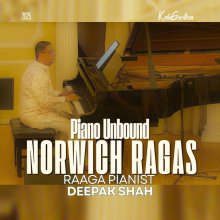
Raag Yaman - Alap - Live from Kala Festival 2025
ディーパク・シャー
Raag Yaman - Jhala - Live from Kala Festival 2025
ディーパク・シャー
Raag Yaman - Jod - Live from Kala Festival 2025
ディーパク・シャー
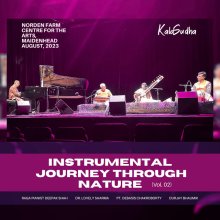
ラーグ・ヤマンに基づくドゥン、第1部 - カーラ・フェスティバル2023
デバシス・チャクロボルティ
ラーグ・ヤマンに基づくドゥン、第2部 - カラ・フェスティバル 2023
デバシス・チャクロボルティ
ラーグ・ヤマンに基づくドゥン、第5部 - カラー・フェスティバル 2023
デバシス・チャクロボルティ
ラーグ・ヤマンに基づくドゥン 第3部 - カラ・フェスティバル2023
デバシス・チャクロボルティ
ラーグ・ヤマンに基づくドゥン 第4部 - カーラ・フェスティバル2023
デバシス・チャクロボルティ
Albums
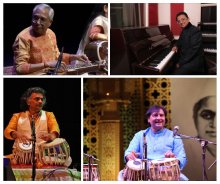
Master Performers
Artists renowned for their renditions of ヤマン

ディーパク・シャー
Piano

ドクター・ラブリー・シャルマ

デバシス・チャクロボルティ
Indian Slide Guitar

ドゥルジャイ・バウミク
Tabla
Classifiers
Swara geometries, relationships, and classifications
Swara Geometries
サイト構築
Around the World
Global connections and equivalent scales
ラーグ・ヤマンは、西洋音楽学におけるリディア旋法の精神的な兄弟です。歴史的にすべての旋法の中で「最も明るい」と見なされており、リディア構造は西洋映画で驚き、空間、「地球外」を呼び起こすために使用されます(ジョン・ウィリアムズとレナード・バーンスタインによって有名に使用されています)。ヤマンは音調協和のピークを表し、すべての音が「正しい」と感じられ、その正しい場所にある音階です。
よくあるご質問
Where can I hear Raag Yaman played live in concert?
KalaSudha's musicians play Raag Yaman in concert, and have performed it live at Kala Festival, KalaSudha's touring festival. KalaSudha presents Hindustani musicians in the UK, Europe and India, in series such as London Ragas in London and Kala Concert in India. Yaman belongs to the first prahar, or three-hour watch, of the night. Coming concerts are on the events page.
Which recordings of Raag Yaman should I listen to first?
KalaSudha's recordings of Raag Yaman include the raga pianist Deepak Shah's alap, jod and jhala, recorded live at Kala Festival. They also include Dr Lovely Sharma's sitar performance with the tabla player Durjay Bhaumik. The alap is the unmetered opening, where the raga takes shape phrase by phrase. For a lighter piece, hear the ensemble of Pandit Debasis Chakroborty in a dhun based on Raag Yaman.
What is the difference between Raag Yaman and Raag Yaman Kalyan?
Raag Yaman Kalyan follows Raag Yaman closely but adds shuddha, or natural, Ma beside Yaman's tivra Ma. David Courtney calls that shuddha Ma weak, places it in the descent and says most accounts treat the two as different ragas. Rajan Parrikar writes that the shuddha Ma has no independent life in Yaman Kalyan and that its other contours match Yaman. He also notes that some musicians touch shuddha Ma while still calling the raga Yaman.
What is the Carnatic equivalent of Raag Yaman?
The Carnatic equivalent of Raag Yaman is Kalyani, the 65th melakarta, or parent scale, of Carnatic music. Kalyani uses the same seven notes as Yaman: Sa and Pa, shuddha Re, Ga, Dha and Ni, and tivra Ma, the raised fourth. Rajan Parrikar writes that Kalyan, a name often used for Yaman, shares its scale with Kalyani.
Is Raag Yaman a good raga for a beginner to learn?
Raag Yaman is often taught to beginners. The AUTRIM project of the National Centre for the Performing Arts and the University of Amsterdam links this to its simple melodic structure, which leaves wide room for improvisation. Rajan Parrikar writes that mastery of Yaman is held essential for any serious student. Prabha Atre recalled learning only Yaman for nearly two years with Sureshbabu Mane, in an interview with Bhushan Toshniwal.
Which film songs are based on Raag Yaman?
Film songs based on Raag Yaman include Ek Dil Ek Jaan from Padmaavat, which Archana Nathan, writing in Scroll, hears in Yaman. Nathan also hears it in Hamesha Tum Ko Chaha from Devdas and Jhonka Hawa Ka Aaj Bhi from Hum Dil De Chuke Sanam. Vipin Nair calls Jab Deep Jale Aana, from Chitchor, a Yaman-based composition. It is also described as set in Yaman Kalyan.
Which bandishes are well known in Raag Yaman?
Well-known bandishes, or set compositions, in Raag Yaman include Eri Aali Piya Bina, which Rajan Parrikar calls a very popular classical bandish, and Piharva Tihari, a well-known cheez in his account. Cheez is another word for a composition. Parrikar writes of Yaman under its other name, Kalyan. He also names Main Vari Vari Ja'oongi, a popular cheez of Vilayat Hussain Khan, and the traditional Mandara Mana Laye.
How can I learn a raga online?
You can learn a raga online with the KalaSudha Academy, in live one-to-one lessons with a teacher or in a structured course, from foundation to advanced. Learners book lessons in their own time zone, and teachers teach live in their own language. Instructors and touring artists also lead in-person workshops and summer camps where enough learners register interest.
Have more questions? Contact our support team and we'll be happy to help!