

ロンドン・ラーガズ:物語と足さばき
- 11 10月 2026
- 日曜日
- 5:00 午後 – 7:00 午後
- 2時間
- Royal Wharf Community Dock
- ロンドン, GB
チケット

イベント概要
出演アーティスト
イベントハイライト
ジャイプルとラクナウ
まず話し、それから踊る
パランパラーガト・カタック・ヌリティヤ
ロイヤル・ワーフのアットホームなバイタク
出演アーティスト
-
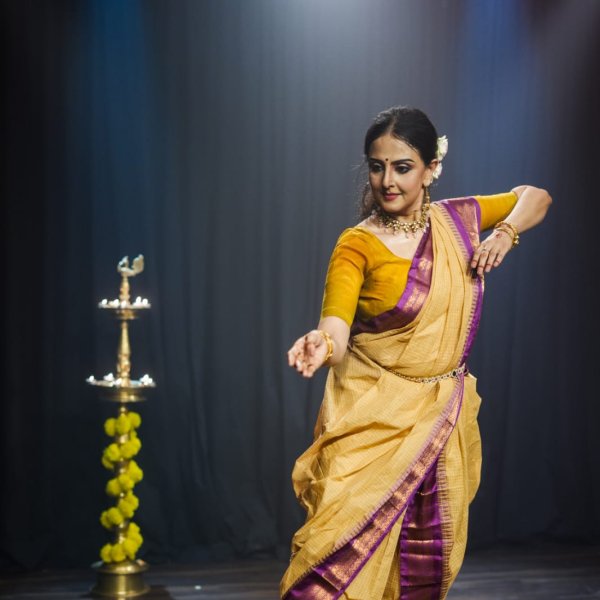 アロクパルナ・グハ

イベント詳細
今年10月、アロクパルナ・グハがシルバータウンのロイヤル・ワーフ・コミュニティ・ドックで開かれる月例のバイタクロンドン・ラーガズに出演し、カタックを踊ります。デビプリヤ・シルカールが歌を担い、タブラの生演奏が加わります。
グハは5歳でシュリー・プラディープタ・ニヨギにカタックを学び始め、のちにマラビカ・ミトラ博士に師事しました。ジャイプルとラクナウという二つのガラナの様式を併せて扱います。プラヤーグ・サンギート・シクシャ・サミティの上級ディプロマ、ラビンドラ・バラティ大学の金メダルを受けています。プラチーン・カラ・ケンドラに属するプシュパク・ダンス・アカデミーを設立しました。同アカデミーはコルカタとトロントで教えています。ウダイ・シャンカル舞踊祭とコナーラク舞踊祭、そしてロンドン、バーミンガム、バルセロナ、トロントの舞台に立っています。
公演は二部構成です。前半は短いレクチャーデモンストレーションが二つ。一つはカタックの源流について、もう一つはタブラについて。タブラはこの踊りから切り離せないと彼女は考えています。休憩のあとはヴァンダナで幕を開け、パランパラーガト・カタック・ヌリティヤの伝統的なレパートリーを幅広く見せます。
この順番が要です。カタックを見に来る人の多くは、どう見ればいいのか誰にも教わっていません。足はリズムの周期を数え、顔は物語を語っています。ここでは、どこを見ればいいかを先に話し、そのあとで踊って見せます。誰かをこの音楽に連れていきたかったけれど、どの公演から始めればいいか分からなかった方は、この夜を選んでください。
ロンドン・ラーガズは月例のバイタクです。部屋が一つ、160席、演者と客席を隔てる高い舞台はありません。できれば前の方にお座りください。
ロンドンやその近くにいらっしゃるなら、ぜひお越しください。アクセシビリティで必要なことがあればご連絡ください。
開場は午後4時45分。公演は5時開演、7時終了。
ご来場の方へ:
- 許可なく撮影することはできません。
会場情報

Frequently Asked Questions
What time does it start, and when will it finish?
Doors open at 4:45 PM and the music starts at 5:00 PM. The concert ends at 7:00 PM, with an interval between the two halves.
Seating is unreserved and the room holds 160, so come at doors if you want to sit close.
What do tickets cost?
£20 early bird until 5:00 PM on Sunday 4 October, then £25 general admission for the last week. Student tickets are £15 throughout, with valid ID at the door.
You can book here on this site or through Eventbrite. The price is the same either way, though Eventbrite adds its own booking fee at checkout.
What is London Ragas?
Our monthly baithak in London. One evening a month, a room of about 160, and no distance between the performers and the seats.
The 2026 series runs through the year: Shakir Khan and Ustad Shahbaz Hussain in July, Pandit Debasis Chakroborty with Ustad Akram Khan on 26 September, and this Kathak evening in October.
Do I need to know anything about Kathak before I come?
No, and this evening is built for that. Alokparna Guha opens with two short lecture-demonstrations, one on where Kathak comes from and one on tabla, before she dances anything.
By the interval you will know what the footwork is doing and what the hands and face are telling you. The second half is the dance itself.
How do I get my ticket?
Your confirmation email carries the ticket. Show it on your phone at the door, or bring a printout if you prefer paper.
If the email has not arrived, check your spam folder first. Still missing, write to [email protected] and we will send it again.
I can no longer attend. Can I have a refund?
Ticket sales are final once confirmed. If something has come up, write to [email protected] at least 7 days before the event and tell us what happened.
We look at each request on its own merits. A refund is not guaranteed, and we cannot consider requests inside the last week.
What happens if the event is cancelled or moved to another date?
You choose between a full refund and a transfer to the new date or an equivalent concert.
Refunds for a cancelled event go back to your original payment method within 7 to 14 business days. You do not need to claim them.
Can I photograph or film the performance?
No, not during the performance. The musicians improvise, and a raised phone or a lit screen pulls the room out of the music. Put the camera away and stay with the sound.
If you are covering the concert for press, or need to record for another reason, write to [email protected] before the day. Filming without that permission is not allowed.
I have access needs. Who do I talk to?
Write to [email protected] before you book and tell us what you need.
Wheelchair spaces and seats near the stage need arranging with the venue in advance, so the earlier you write, the more we can do.
I have never been to an Indian classical concert. Will I follow it?
Yes. You do not need to recognise a raga or count a taal to follow what happens on stage.
The music opens at a crawl with no pulse at all, then the tabla enters and the rhythm takes hold. That shape repeats through the evening, and most people read it by the second piece. Sit close and give the opening time.
What is a baithak?
A baithak is the room this music grew up in. The audience sits close, the musicians play at the same level, and nothing stands between the player and the listener.
We build our concerts that way because the detail of a raga carries best at short range. You hear the string under the slide and the fingertip on the tabla skin, not just the note.
When should I arrive?
Come at the door time on the event page rather than at the start time. It gives you room to find a seat and settle.
The concert opens with an alap, the slowest and quietest stretch of the evening. Walking in during it costs you the part that sets up everything after.
Is there an interval?
Yes. The concert runs in two halves with a short interval between them.
The first half holds the classical raga set. The second opens out, and on most of our bills it changes either the players or the form.
What should I wear?
Whatever you are comfortable sitting in for a couple of hours.
Our audiences turn up in jeans and in saris on the same night, and neither looks out of place.
Is seating allocated?
No. Seating is unreserved, so pick any free seat when you arrive.
Arriving at doors rather than at the start gets you the closer rows, which is where this music rewards you most.
What is a tabla?
A pair of hand drums. The smaller wooden one sits under the right hand and carries the pitch. The larger metal one under the left hand supplies the bass and bends it, by pressing the heel of the palm into the head while striking.
The black circle on each head is what makes the sound recognisable. It weights the skin so the drum rings at a definite pitch rather than thudding.
What is Kathak?
One of the eight classical dance forms of India, from the north. It runs on two things: chakkars, fast spins taken on the heel, and abhinaya, the storytelling carried in the face and hands.
Ankle bells mark the footwork, so the dancer works as a percussionist too, trading rhythmic patterns with the tabla in the same cycle.
Have more questions? Contact our support team and we'll be happy to help!