

起源と背景
ラーガ・バイラヴは、ヒンドゥスターニー音楽のバイラヴ・タートに属するラーガで、早朝に演奏され、シュッダのガ、マ、パ、ニとともにコーマルのレとコーマルのダを用います。コーマルは低めた音、シュッダは本来の音を意味し、タートとは親音階のことです。Raag Bhairav、Raga Bhairav、Bhairavaとも書かれます。
この記譜では、小文字はコーマルの音、アポストロフィは高いオクターブを示します。アーローハ(上行)はS r G M P d N S'、アヴァローハ(下行)はS' N d P M G r Sです。デヴィッド・コートニーの説明では、最も目立つ音であるヴァーディーはコーマルのダで、その相手となるサンヴァーディーはコーマルのレです。国立舞台芸術センターとアムステルダム大学のAUTRIMプロジェクトは、両方を主要な音として扱い、それぞれにゆっくりとした揺れ、アーンドーランを聞き取っています。
もっと見る表示を減らす
バイラヴとバイラヴィーは別のラーガで、それぞれ独自のタートを持ちます。どちらもレとダを低めますが、バイラヴはガとニをシュッダのまま保ち、バイラヴィーはそれらも低めます。ジョージ・ハウレットの表では、カルナータカ音楽でバイラヴの音階に当たるのは第15メーラカルタのマーヤーマーラヴァガウラで、コートニーも同じ名前を挙げています。AUTRIMはアヒール・バイラヴとナト・バイラヴをバイラヴの系統に数えています。
KalaSudhaはバイラヴの録音をリリースし、ヒンドゥスターニー音楽の音楽家をコンサートで紹介しています。KalaSudhaのアカデミーでは、オンラインと各地のワークショップでラーガを教えており、各コースは講師がKalaSudhaとともに作り上げています。
デヴィッド・コートニーによれば、神話ではバイラヴは最初のラーガで、シヴァの顔から生まれました。Journal of the Music Academy第XXV巻(1954年)に掲載されたRag-O-Rupの書評は、伝統的な称号アーディ・ラーガ、つまり「最初のラーガ」を伝えています。この名前は怒れるシヴァであるルドラを指し、このラーガは早朝の演奏習慣に属します。
ロサンゼルス・カウンティ美術館は、1650年から1660年ごろのラーガマーラー絵画Bhairava Ragaを所蔵しており、そこではシヴァが妃とともに描かれています。
AUTRIMプロジェクトは、中速のティーンタールによるチョータ・カヤールを紹介しています。そこでは信者が、太陽が昇ったのでクリシュナに目覚めるよう呼びかけます。Arunoday Neeko Bhayoは、同じ日の出をテーマにした速いエークタールのチョータ・カヤールです。
技術的な詳細
旋律の構造と動きのパターン
アーロハ(上行)
S r G M P d N S'
アヴァローハ(下行)
S' N d P M G r S
パカッド(特徴的なフレーズ)
r r S, d d P, G M d d P, G M r r S, .N S
Tanpura Tuning
P - S - S - .S
Additional Notes
Phraseologies
これらのフレーズの記号の見方:rとdはコーマルのレとダ、点は音を低いオクターブに置きます。
特徴的なフレーズr r Sとd d Pは、サの前のコーマルのレとパの前のコーマルのダに重心を置きます。G M d d PとG M r r Sでは、旋律がガとマからそれらの音に達します。.N Sは低いニから終止します。
上行G M d N S'はレとパを飛ばし、AUTRIMは上行の箇所で両方を避ける演奏家もいると述べています。AUTRIMはまた、レとダの音程が音楽的な文脈によって変わると聞き取っています。
Common Phrases
- G M d N S'
録音と演奏
名演奏家によるこのラーガをお聴きください
Master Performers
Artists renowned for their renditions of バイラヴ

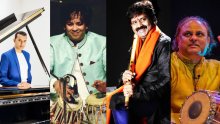
シャーバズ・フセイン
Tabla

レケシュ・チャウハン
Piano
よくあるご質問
Where can I hear Raag Bhairav played live in concert?
You can hear Raag Bhairav at KalaSudha's concerts in the UK, Europe and India. The pianist Rekesh Chauhan and the tabla player Ustad Shahbaz Hussain have played it in the Duke's Hall of the Royal Academy of Music, London. Bhairav is a raga of dawn and early morning. David Clarke notes that its hour keeps it rare in live performance, though it lives on in recordings and in musicians' morning practice. Coming concerts are on the events page.
Which recordings of Raag Bhairav should I listen to first?
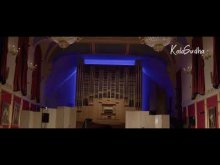
KalaSudha's recordings of Raag Bhairav include a live video of the pianist Rekesh Chauhan and the tabla player Ustad Shahbaz Hussain. It was filmed in the Duke's Hall of the Royal Academy of Music, London. Rekesh Chauhan uses touch and voicing on the piano to suggest the fine inflections of pitch that Bhairav asks for. Ustad Shahbaz Hussain's tabla holds the metre and answers the melody. The performance opens slowly and settles into a pulse that grows more insistent.
What is the difference between Raag Bhairav and Raag Ahir Bhairav?
Raag Bhairav uses komal, or lowered, Re and Dha with shuddha Ni, while Raag Ahir Bhairav keeps komal Re but takes shuddha Dha and komal Ni. The AUTRIM project writes that Ahir Bhairav's lower half reflects Bhairav, so it is often placed in the Bhairav group. AUTRIM adds, citing Bhatkhande, that some musicians hear it as Bhairav below and Kafi above. Bhairav's own mark is a slow oscillation on komal Re and komal Dha.
What is the Carnatic equivalent of Raag Bhairav?
The Carnatic counterpart of Raag Bhairav's scale is Mayamalavagowla, the 15th melakarta, or parent scale, with the same seven notes. George Howlett pairs the two and calls Bhairav the most prominent Hindustani raga on this scale, with all seven notes in both directions. In Carnatic teaching, the first exercises are set in Mayamalavagowla, after the method credited to Purandara Dasa.
Which bandishes are well known in Raag Bhairav?
Well-known bandishes, or set compositions, in Raag Bhairav include Jago Mohan Pyare, a traditional composition that the AUTRIM project calls popular among musicians. In it a devotee asks Krishna to wake because the sun has risen. David Clarke's book Rāgs Around the Clock sets Dhana Dhana Murata, a devotional song to Krishna whose probable composer is Ustad Bade Ghulam Ali Khan, who wrote as Sabrang.
How can I learn a raga online?
You can learn a raga online with the KalaSudha Academy, in live one-to-one lessons with a teacher or in a structured course, from foundation to advanced. Learners book lessons in their own time zone, and teachers teach live in their own language. Instructors and touring artists also lead in-person workshops and summer camps where enough learners register interest.
What is the difference between Raag Bhairav and Raag Bhairavi?
Raag Bhairav and Raag Bhairavi are different ragas, each with its own thaat, or parent scale. Both lower Re and Dha, but Bhairav keeps Ga and Ni shuddha, or natural, while Bhairavi lowers them too. The AUTRIM project calls Bhairav a dignified and sober raga, with a slow oscillation on komal Re and Dha. Both are morning ragas, though Bhairavi is also sung at any hour to close a concert.
Is Raag Bhairav a good raga for a beginner to learn?
Raag Bhairav belongs to Class XII, the last class of the Hindustani vocal course that India's Central Board of Secondary Education (CBSE) sets for schools. Earlier classes set ragas such as Yaman and Kafi in Class IX, Bhupali in Class X and Bhairavi in Class XI. Class XII students then sing a drut, or fast, khayal in Bhairav, Bageshri and Malkauns.
Which film songs are based on Raag Bhairav?
Hindi film songs that David Courtney lists in Raag Bhairav include Jago Mohan Pyare Jago, from Jagte Raho, and Amma Roti De, from Sansar. Courtney calls Amma Roti De a "pretty good example of Bhairav". He also lists Mohe Bhul Gaye Sanvariya, from Baiju Bawra, and notes that some argue it belongs to Kalingada, a closely related raga.
Have more questions? Contact our support team and we'll be happy to help!