

बागेश्री
बागेश्री
.n S g M D n S' | S' n D M P D m G R S
उत्पत्ति र सन्दर्भ
रातको दोस्रो प्रहरको गहिरो मौनमा, जब संसार स्थिर भइसकेको छ, राग बागेश्री आत्मा र आफ्नो प्रियबीचको कुराकानी जस्तै उदाउँछ। यो "विरह" (लालसा) र "श्रृङ्गार" (रोमान्स)को राग हो, परम्परागत रूपमा आफ्नो प्रेमीको फर्कनाको प्रतीक्षा गरिरहेकी महिलाको रूपमा वर्णन गरिएको।
काफी थाट रचना, बागेश्री, एक भावनात्मक उत्कृष्ट कृति हो, जसको शक्ति यसको "वक्र" (बाङ्गो) ज्यामितिमा निहित छ। यो सीधा रेखामा चल्दैन; बरु, यो तल्लो र मध्य सप्तकहरूमा घुमिरहन्छ, मध्यम (म)लाई कोमल, लगभग पीडादायक सूक्ष्मताका साथ घुमाउँदै। यसको सुन्दरता ठूलो गतिमा होइन, तर "रहन" सक्ने क्षमतामा छ। यो छाया र नरम चन्द्रमाको धुन हो, जहाँ प्रत्येक नोटलाई कोमल, लगभग पीडादायक सूक्ष्मताका साथ व्यवहार गरिन्छ।
थप देखाउनुहोस्कम देखाउनुहोस्
राग बङ्गाल जस्तै, बागेश्रीले मध्यम (म)मा अत्यधिक महत्त्व दिन्छ। तथापि, जहाँ बङ्गालले बिहानको "हावादार" प्रार्थना सिर्जना गर्न म प्रयोग गर्दछ, बागेश्रीले गहिरो भावनात्मक गहिराई जगाउन यसलाई प्रयोग गर्दछ। गायकले कोमल नीबाट मलाई सम्पर्क गर्ने तरिकाले एक हस्ताक्षर "हुक" सिर्जना गर्दछ जसले शताब्दीयौंदेखि भारतीय संगीतको रोमान्टिक ध्वनि परिदृश्य परिभाषित गरेको छ।
कलासुधामा, हामी बागेश्रीलाई अन्तिम "रात कविता" को रूपमा हेर्छौं। यो एक राग हो जसले कलाकारबाट उच्च स्तरको परिपक्वता माग गर्दछ। यो तपाईंले बजाउनुभएको नोटहरूको बारेमा होइन, तर तपाईंले तिनीहरूबीच छोड्ने मौनको बारेमा हो। यो भरिएको, तर पर्खिरहेको हृदयको आवाज हो।
प्राविधिक विवरण
रागको स्वर संरचना र चलन
आरोह (चढाइ)
.n S g M D n S.
अवरोह (ओराली)
S. n d , M P D , M g R S
पकड (पहिचान वाक्यांश)
S .n .D S , M g , M D n D , M g , M g R S
Chalan (Movement)
.n .D S M
Tanpura Tuning
M — S — S — Sa
Additional Notes
Phraseologies
बागेश्री रेखीय मार्गहरू बेवास्ता गर्ने "वक्र" (बाङ्गो) व्याकरणद्वारा परिभाषित गरिएको छ। आन्दोलन तल्लो दर्ताबाट मध्यम (M) सम्मको विकर्ण पहुँच हो। यसले तनाव सिर्जना गर्न आरोहमा R र P छोड्छ, तिनीहरूलाई अवरोहमा भारी, भावपूर्ण ग्लाइडहरू (मींड्स) मार्फत समाधान गर्दछ। धुन "निलम्बित" छ, कहिल्यै टोनिकमा धेरै छिटो बस्दैन।
Common Phrases
- .n .D S m
रेकर्डिङ र प्रस्तुतिहरू
महान् कलाकारहरूबाट यो राग सुन्नुहोस्

Tracks
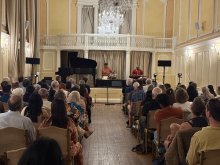
Raag Bageshri - Alap - Live from Kala Festival 2025
देबासिस चक्रवर्ती
Raag Bageshri - Drut Gat - Teental (with Akram Khan) - Live from Kala Festival 2025
देबासिस चक्रवर्ती
Raag Bageshri - Madhyalaya Gat - Teental (with Akram Khan) - Live from Kala Festival 2025
देबासिस चक्रवर्ती
Raag Bageshri - Vilambit Gat - Teental (with Akram Khan) - Live from Kala Festival 2025
देबासिस चक्रवर्ती
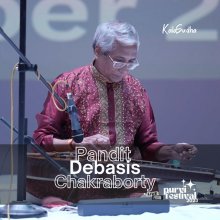
राग बागेश्वरी – झाला
देबासिस चक्रवर्ती
राग बागेश्वरी – मध्य लय
देबासिस चक्रवर्ती
Master Performers
Artists renowned for their renditions of बागेश्री

देबासिस चक्रवर्ती
भारतीय स्लाइड गिटार

सन्दीपन मुखर्जी
तबला
Classifiers
Swara geometries, relationships, and classifications
Swara Geometries
संरचना
Around the World
Global connections and equivalent scales
बागेश्री पश्चिमको "माइनर-मेजर" हाइब्रिडसँग पङ्क्तिबद्ध हुन्छ, देरी रातको ज्यायजको लागि उत्तम।
Dorian Mode
C−D−Eb−F−G−A−Bb−C
A "minor" mode with a "major" 6th; evokes soulful, non-melancholic depth.
बारम्बार सोधिने प्रश्नहरू
Where can I hear Raag Bageshri played live in concert?
You can hear Raag Bageshri live at KalaSudha's concerts in the UK, Europe and India, and Pandit Debasis Chakroborty has played it at Kala Festival, a touring festival. He has also played it on Indian slide guitar at Purvi Festival in Motihari, Bihar. The AUTRIM project of the National Centre for the Performing Arts and the University of Amsterdam places Bageshri in the late night. Coming concerts are on the events page.
Which recordings of Raag Bageshri should I listen to first?
KalaSudha's recordings of Raag Bageshri include a solo alap recorded live at Kala Festival, where Pandit Debasis Chakroborty sets out the raga on Indian slide guitar with no tabla and no fixed beat. On the album Norwich Ragas, gats in Tintal with the tabla player Ustad Akram Khan follow it, each faster than the last. Pandit Debasis Chakroborty's Purvi Festival performance, with the tabla player Sandipan Mukherjee, is also out as a video release.
What is the difference between Raag Bageshri and Raag Rageshri?
Raag Bageshri uses komal Ga, the lowered form, and keeps Pa, while Raag Rageshri takes shuddha Ga, the natural form, and leaves Pa out. The AUTRIM project gives Bageshri seven notes, with komal Ga and komal Ni, and writes that Pa is left out going up and used sparingly. It finds their upper halves alike apart from Pa. Turns such as Ma, Dha, komal Ni, Dha, Ma belong to both, but Bageshri's oscillated komal Ni makes it very distinct.
What is the Carnatic equivalent of Raag Bageshri?
Carnatic music has its own Raag Bageshri, which George Howlett describes as imported from Hindustani music and retaining many of its original features; he gives the era as unclear. He lists it under Kharaharapriya, the 22nd melakarta, or parent scale. Among other Carnatic ragas, Howlett pairs Bageshri with Sriranjani, which he sums up as Bageshri with no Pa.
Which bandishes are sung in Raag Bageshri?
Bandishes, or set compositions, in Raag Bageshri include Gunde Lavo Ri Malaniya, a chhota khayal sung by Padma Talwalkar for the AUTRIM project of the National Centre for the Performing Arts. A chhota khayal is a shorter khayal composition, and this one is set in Tintal at a fast tempo. In its words a woman asks the flower girl for garlands as she prepares to welcome her loved one. She wonders how the night will pass without him.
How can I learn a raga online?
You can learn a raga online with the KalaSudha Academy, in live one-to-one lessons with a teacher or in a structured course, from foundation to advanced. Learners book lessons in their own time zone, and teachers teach live in their own language. Instructors and touring artists also lead in-person workshops and summer camps where enough learners register interest.
Is Raag Bageshri a good raga for a beginner to learn?
Raag Bageshri is a Class XII raga in the Hindustani vocal course that India's Central Board of Secondary Education (CBSE) sets for schools, the last class the course covers. Before it, students learn ragas such as Yaman and Kafi in Class IX, Bhupali in Class X and Bhairavi in Class XI. In Class XII, students sing Bageshri as a drut, or fast, khayal beside Bhairav and Malkauns.
Which film songs are based on Raag Bageshri?
Hindi film songs that David Courtney lists in Raag Bageshri include Aja Re, Paradesi, from Madhumati, and Bedardi Dagabaz Ja Tu Nahin Balma Mora, from Bluff Master. Courtney calls the Bluff Master song a "pretty good example" of the raga, and Bolo Na, from Chittagong, "quite a good approach to Bageshri".
Have more questions? Contact our support team and we'll be happy to help!