

Yaman
यमन
.N R G M# P D N S' | S' N D P M# G R S
Origens e contexto
Raag Yaman é frequentemente chamado de "Imperador" da música hindustani, especialmente para as horas da noite. É geralmente o primeiro raga que os alunos aprendem, mas ainda desafia até músicos experientes. Yaman pertence ao Kalyan Thaat e é tocado durante a primeira parte da noite, um momento em que o dia termina e a noite começa. O raga é conhecido por seu caráter pacífico, alegre e estável.
Historicamente, este raga exibe uma mistura de culturas e é frequentemente associado ao poeta e músico Sufi do século XIII Amir Khusrau. Suas raízes estão na antiga escala Kalyan indiana, mas acredita-se que Khusrau tenha adicionado ideias musicais persas e primeiro a chamou de "Aiman". Alguns estudiosos pensam que o nome veio de "Yavanon-ka-Kalyan", um termo usado por músicos hindus para a versão tocada por artistas persas ou "Yavana", que mais tarde se tornou Yaman.
Mostrar maisMostrar menos
Yaman se destaca por causa de seu uso do Teevra Ma (quarta aumentada), uma nota sustenida que transforma uma escala básica em algo contemplativo e bonito. Sua natureza multipropósito o tornou o raga mais gravado e executado na música clássica hindustani. Registros de grupos como a Sangeet Natak Akademi e várias transmissões mostram que Yaman é tocado em concertos com mais frequência do que quase qualquer outro raga, frequentemente como a peça principal para apresentações noturnas.
A famosa cantora hindustani Prabha Atre uma vez falou sobre quão importante é Yaman. Seu professor a fez praticar Yaman por um ano inteiro porque, como ela disse, "o domínio completo de Yaman simplificaria a compreensão e apreciação de outros ragas". Ustad Vilayat Khan compartilhou uma visão semelhante, dizendo que se um músico realmente conhece seu raga, "ele se abrirá para você como um ser divino". Isso mostra o foco profundo e a firmeza necessários para dominar as notas puras de Yaman.
Na cultura popular, Yaman forneceu a espinha dorsal melódica para algumas das obras-primas mais duradouras do cinema indiano. Sua capacidade de equilibrar o anseio romântico com dedicação espiritual é melhor ouvida na assombrosa "Man Re Tu Kahe Na Dheer Dhare" do filme Chitralekha, uma música frequentemente votada por compositores como um dos melhores exemplos de música de filme baseada em raga. O humor vespertino do raga é capturado literalmente no clássico "Jab Deep Jale Aana" de Chitchor, enquanto seu "Shringar" rasa romântico brilha em "Chaudhvin Ka Chand Ho". Mesmo no cinema contemporâneo, o raga continua a ser relevante, como músicas como "Laal Ishq" de Ram-Leela demonstram que a antiga "Arquitetura da Graça" ainda ressoa com o público moderno. Por meio de uma performance complexa de 15 bandishes que quebra recordes ou uma simples música de filme de três minutos, Yaman permanece o som definitivo da noite indiana.
Detalhes técnicos
Estrutura melódica e padrões de movimento
Aroha (subida)
.N R G M# P D N S'
Avroh (descida)
S' N D P M# G R S
Pakad (frase característica)
.N R G R S, P M# G R S
Chalan (Movement)
.N R G, R S, .N R G M# P, M# G, R S, P M# D N S', S' N D P, M# G R S
Tanpura Tuning
P — S — S — Sa
Additional Notes
Phraseologies
O movimento é expansivo e linear, focando em "Nyasa" (descanso) no G e N.
- O Início Suspenso: .N R G
- O Deslize Lydian: G M# P
- A Descida Majestosa: S' N D P, M# G R S
- Exemplo de Frase: .N R G, R S, P M# G R S
Common Phrases
- The Signature Ascent: .N R G
- The Lydian Fulcrum: G M# P
- The Classic Resolution: P M# G R S
- The High Octave Reach: m# D N S'
Gravações e apresentações
Ouça grandes músicos interpretarem este raga

Tracks
Yaman, Pt. 1
Dr Lovely Sharma
Yaman, Pt. 2
Dr Lovely Sharma
Yaman, Pt. 3
Dr Lovely Sharma
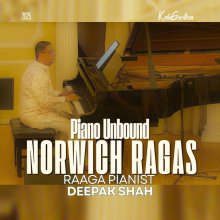
Raag Yaman - Alap - Live from Kala Festival 2025
Deepak Shah
Raag Yaman - Jhala - Live from Kala Festival 2025
Deepak Shah
Raag Yaman - Jod - Live from Kala Festival 2025
Deepak Shah
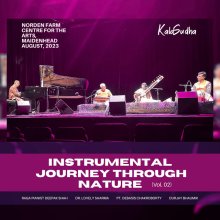
Dhun Baseada no Raag Yaman, Pt. 1 - Kala Festival 2023
Debasis Chakroborty
Dhun Baseada no Raag Yaman, Pt. 2 - Kala Festival 2023
Debasis Chakroborty
Dhun Baseada no Raag Yaman, Pt. 3 - Kala Festival 2023
Debasis Chakroborty
Dhun Baseada no Raag Yaman, Pt. 4 - Kala Festival 2023
Debasis Chakroborty
Dhun Baseada no Raag Yaman, Pt. 5 - Kala Festival 2023
Debasis Chakroborty
Albums
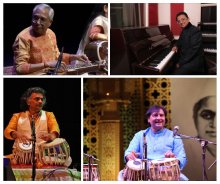
Master Performers
Artists renowned for their renditions of Yaman

Deepak Shah
Piano

Dr Lovely Sharma

Debasis Chakroborty
Indian Slide Guitar

Durjay Bhaumik
Tabla
Classifiers
Swara geometries, relationships, and classifications
Swara Geometries
Estrutura
Around the World
Global connections and equivalent scales
Raag Yaman é o irmão espiritual do Modo Lydian na musicologia ocidental. Historicamente considerado o "mais brilhante" de todos os modos, a estrutura Lydian é usada no cinema ocidental para evocar maravilha, espaço e o "Extra-terrestre" (famosamente usado por John Williams e Leonard Bernstein). Yaman representa o pico da Consonância Tonal, uma escala onde cada nota parece "correta" e em seu lugar certo.
Perguntas frequentes
Where can I hear Raag Yaman played live in concert?
KalaSudha's musicians play Raag Yaman in concert, and have performed it live at Kala Festival, KalaSudha's touring festival. KalaSudha presents Hindustani musicians in the UK, Europe and India, in series such as London Ragas in London and Kala Concert in India. Yaman belongs to the first prahar, or three-hour watch, of the night. Coming concerts are on the events page.
Which recordings of Raag Yaman should I listen to first?
KalaSudha's recordings of Raag Yaman include the raga pianist Deepak Shah's alap, jod and jhala, recorded live at Kala Festival. They also include Dr Lovely Sharma's sitar performance with the tabla player Durjay Bhaumik. The alap is the unmetered opening, where the raga takes shape phrase by phrase. For a lighter piece, hear the ensemble of Pandit Debasis Chakroborty in a dhun based on Raag Yaman.
What is the difference between Raag Yaman and Raag Yaman Kalyan?
Raag Yaman Kalyan follows Raag Yaman closely but adds shuddha, or natural, Ma beside Yaman's tivra Ma. David Courtney calls that shuddha Ma weak, places it in the descent and says most accounts treat the two as different ragas. Rajan Parrikar writes that the shuddha Ma has no independent life in Yaman Kalyan and that its other contours match Yaman. He also notes that some musicians touch shuddha Ma while still calling the raga Yaman.
What is the Carnatic equivalent of Raag Yaman?
The Carnatic equivalent of Raag Yaman is Kalyani, the 65th melakarta, or parent scale, of Carnatic music. Kalyani uses the same seven notes as Yaman: Sa and Pa, shuddha Re, Ga, Dha and Ni, and tivra Ma, the raised fourth. Rajan Parrikar writes that Kalyan, a name often used for Yaman, shares its scale with Kalyani.
Is Raag Yaman a good raga for a beginner to learn?
Raag Yaman is often taught to beginners. The AUTRIM project of the National Centre for the Performing Arts and the University of Amsterdam links this to its simple melodic structure, which leaves wide room for improvisation. Rajan Parrikar writes that mastery of Yaman is held essential for any serious student. Prabha Atre recalled learning only Yaman for nearly two years with Sureshbabu Mane, in an interview with Bhushan Toshniwal.
Which film songs are based on Raag Yaman?
Film songs based on Raag Yaman include Ek Dil Ek Jaan from Padmaavat, which Archana Nathan, writing in Scroll, hears in Yaman. Nathan also hears it in Hamesha Tum Ko Chaha from Devdas and Jhonka Hawa Ka Aaj Bhi from Hum Dil De Chuke Sanam. Vipin Nair calls Jab Deep Jale Aana, from Chitchor, a Yaman-based composition. It is also described as set in Yaman Kalyan.
Which bandishes are well known in Raag Yaman?
Well-known bandishes, or set compositions, in Raag Yaman include Eri Aali Piya Bina, which Rajan Parrikar calls a very popular classical bandish, and Piharva Tihari, a well-known cheez in his account. Cheez is another word for a composition. Parrikar writes of Yaman under its other name, Kalyan. He also names Main Vari Vari Ja'oongi, a popular cheez of Vilayat Hussain Khan, and the traditional Mandara Mana Laye.
How can I learn a raga online?
You can learn a raga online with the KalaSudha Academy, in live one-to-one lessons with a teacher or in a structured course, from foundation to advanced. Learners book lessons in their own time zone, and teachers teach live in their own language. Instructors and touring artists also lead in-person workshops and summer camps where enough learners register interest.
Have more questions? Contact our support team and we'll be happy to help!