

Reading Raga Resonance: Bow, Beat, and Breath
- #Reading
- #Vor Ort
- SEP 12, 2026
- Samstag
- 12:00 PM
- 2 Stunden, 30 Minuten
- The Great Hall, Reading
- Reading, Vereinigtes Königreich
Sichern Sie sich Ihre Tickets

Veranstaltungsübersicht
Höhepunkte der Veranstaltung
Drei Generationen Sarangi-Erbe
Ausbildung bei zwei großen Sarangi-Meistern Indiens
Europas größter Tabla-Spieler
Drei Gharanas in einem Musiker
Bogen und Schlag tauschen die Rollen
Zwei Konzerte an einem Tag in Reading
Auftretende Künstler
-
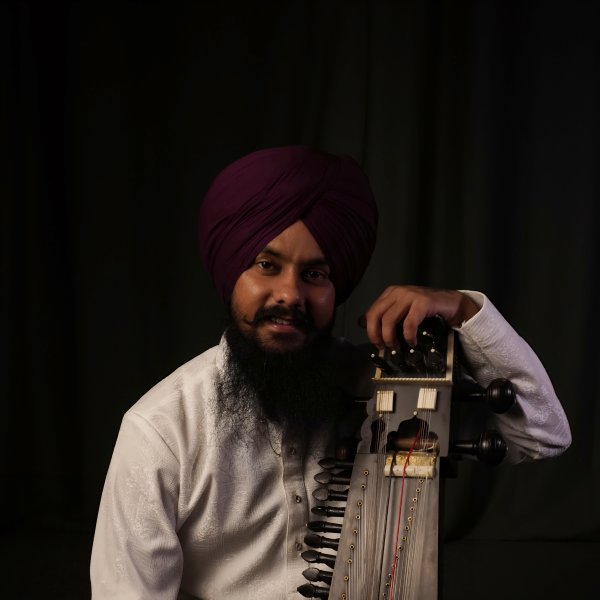 Satwinder Pal Singh
-
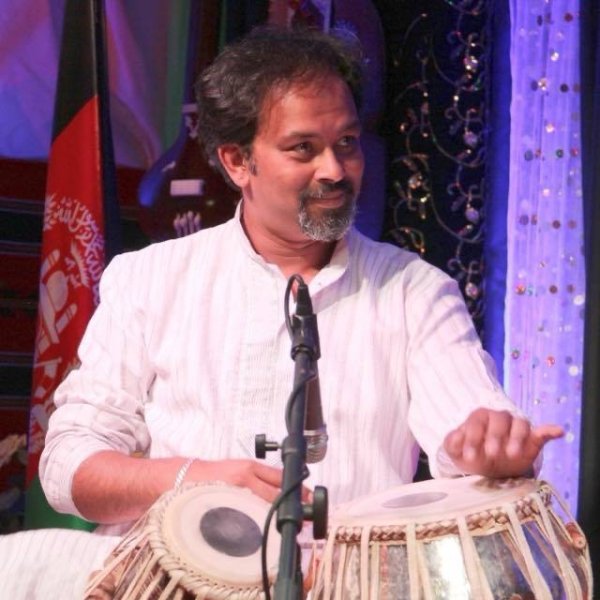 Shahbaz Hussain


Veranstaltungsdetails
Liebe Musikbegeisterte aus Reading, wir freuen uns, Sie zum zweiten Mal im Rahmen unseres jährlichen Kunstfestivals im The Great Hall, Reading University, willkommen zu heißen und "Reading Raga Resonance: Bow, Beat, and Breath" zu präsentieren. Erleben Sie am 12. September 2026 um 12:00 Uhr einen zauberhaften Klangraum, in dem ein berührendes Sarangi und ein mitreißendes Tabla in einem wunderbaren musikalischen Gespräch zusammenkommen.
Diese besondere Veranstaltung bringt zwei renommierte Künstler auf die Bühne: Satwinder Pal Singh an der Sarangi und Ustad Shahbaz Hussain am Tabla. Satwinder begann schon in frühester Kindheit Sarangi zu spielen und bestritt seinen ersten öffentlichen Auftritt im Alter von 5 Jahren. Nach der Ausbildung durch seinen Vater studierte er bei großen Meistern wie Ustad Sabri Khan und Pandit Ram Narayan Ji. Ustad Shahbaz wurde zunächst von seinem Vater Ustad Mumtaz Hussain unterrichtet und studierte später bei mehreren Gurus: Ustad Faiyaz Khan der Delhi Gharana, Ustad Shaukat Hussain Khan der Punjab Gharana und Ustad Allah Rakha. Er führt die Fusionsgruppe Indus und hat sich dabei mit östlichen klassischen Künstlern einen vielseitigen Stil erarbeitet. Shahbaz ist im Norden Englands als aktiver Tabla-Lehrer tätig.
Diese Darbietung bietet ein einzigartiges, dialogisches Erlebnis, das die tiefe Verbindung von Rhythmus und Melodie in unserer alten Musiktradition offenbart. Anstelle eines gewöhnlichen Konzertformats möchten wir einen echten musikalischen Austausch gestalten, bei dem der Bogen (Gaj) und der Takt gleich viel Zählung und Partnerschaft erhalten.
Die Darbietung entfaltet sich in zwei verschiedenen Sessions. In der ersten Hälfte liegt der Fokus auf Sarangis weitläufigem, stimmhaftem Solopart, unterstützt vom klangvollen Begleitung des Tabla. In der zweiten Hälfte wechseln die Rollen: Das Tabla übernimmt, um seine kraftvolle rhythmische Soloentfaltung zu präsentieren, während die Sarangi sanft begleitet. Diese Hin-und-Her-Erzählung verspricht eine faszinierende Schau klassischer Meisterschaft, gegenseitiger Achtung und spontaner musikalischer Entdeckung.
Dieser Abend ist mehr als Musik; er ist eine Einladung, innezuhalten, zu reflektieren und das friedvolle Nachhallen von Shabd zu erleben. Seit Jahrhunderten sehen indische klassische Traditionen Musik als eine Form der Meditation und als Weg, Gleichgewicht in uns und in unsere Gemeinschaften zurückzubringen. Heute verweisen diese zeitlosen Praktiken auf die tiefe Verbindung zwischen Musik, psychischer Gesundheit, Achtsamkeit und emotionalem Wohlbefinden. Dieser Abend bietet Erneuerung — eine Gelegenheit, durch die universelle Sprache der Musik zu wachsen, sich zu verbinden und neu zu verbinden.
Wenn Sie in Reading oder der näheren Umgebung wohnen, kommen Sie unbedingt vorbei. Für besondere Bedürfnisse stehen wir Ihnen gerne zur Verfügung.
Einlass ab 11:30 Uhr, Musikbeginn um 12:00 Uhr
Besucherregeln:
- Unbefugtes Filmen oder Fotografieren ist nicht gestattet.
- Die Nutzung von Mobiltelefonen (inkl. SMS) während der Veranstaltung ist nicht gestattet. Wir bitten höflich um Ihre Kooperation. Vielen Dank!
Venue information
The Great Hall, Reading
The Great Hall, University of Reading, London Road Campus, Reading, RG15AQ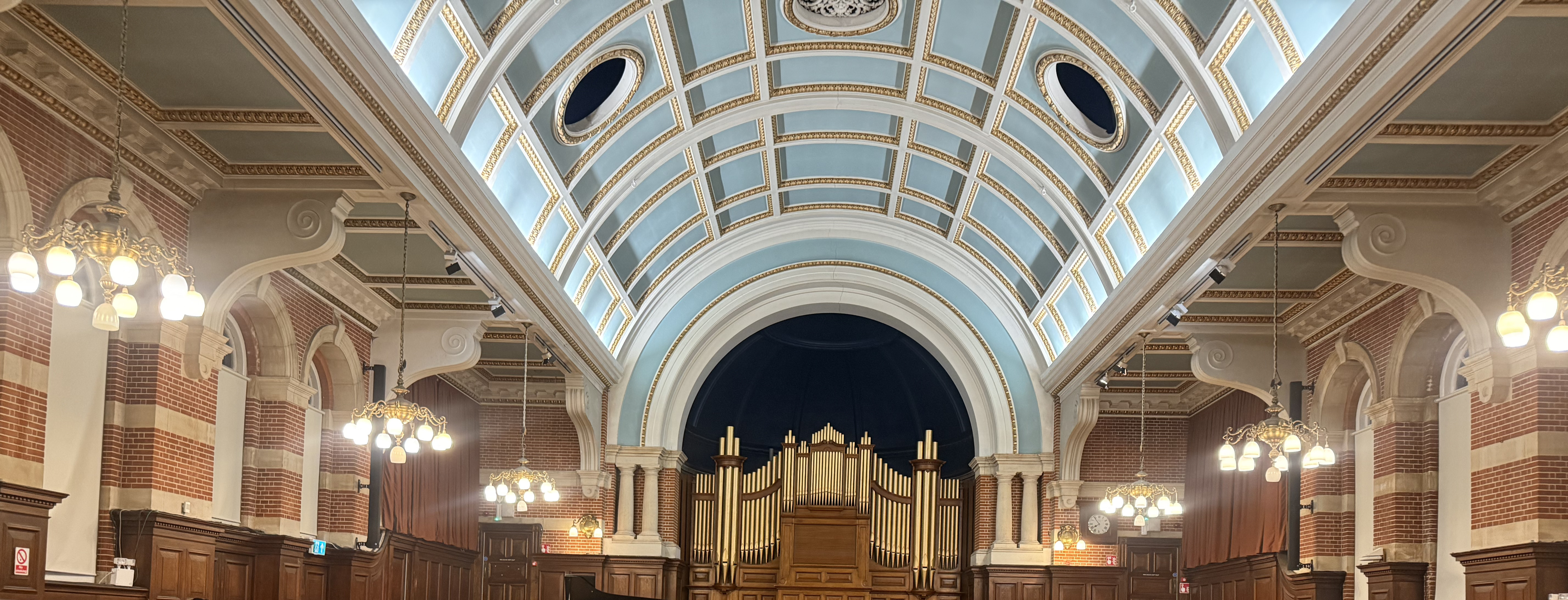
Häufig gestellte Fragen
What is a tabla solo, and what should I listen for?
A tabla solo puts the tabla in the lead. The player builds compositions across a fixed cycle of beats, the taal, while a melody instrument, often a sarangi or harmonium, keeps time with a short repeating tune called the lehra. For the rest of an Indian classical concert the tabla keeps time behind the melody instrument.
Each cycle runs the same length, and every new cycle starts on beat one. That beat is the sam.
You do not need to count. Listen for the lehra to repeat, then listen for the tabla to land on the sam. New to the drum? See What is a tabla?
There are two Reading concerts on 12 September. What is the difference?
Two separate concerts at The Great Hall, Reading, on 12 September, each with its own ticket. Bow, Beat, and Breath starts at 12pm: sarangi and tabla, the two players swapping lead and accompanist at the interval. Slide & Strum on The Mystic Frets starts at 6pm, with Indian slide guitar, Western guitar and tabla playing a classical raga half, then a fusion half after the interval.
The afternoon concert ends around 2.30pm and evening doors open at 5.30pm, so you can attend both. The Full Day ticket covers the pair.
Where do I park at The Great Hall, Reading?
Park at the White Gates Car Park on the University of Reading's London Road Campus. Set your sat nav to RG1 5AG, the car park's postcode, and drive in from Crown Place, off the London Road (A4).
The campus has up to 200 spaces for Great Hall events. Spaces go first come, first served, and they get tight at busy times. Evening and weekend events need no parking permit.
Coming by train or bus? See how to get to The Great Hall.
Is The Great Hall in Reading accessible?
Yes, The Great Hall in Reading is accessible.
You need to book a wheelchair space ahead of the concert. Write to [email protected] once you have your ticket, and we will arrange it with the venue.
Where can I hear live Indian classical music in Reading, and how do I find out about the next KalaSudha concert there?
KalaSudha presents Indian classical music in Reading and lists each concert on its Reading page, with a link to book. To hear when the next Reading date is set, press Register for updates there or join the KalaSudha newsletter.
KalaSudha has presented concerts at The Great Hall on the London Road Campus, the University of Reading's original home, as part of the Kala Festival.
Who is the sarangi player Satwinder Pal Singh, and who taught him?
Satwinder Pal Singh is a London-based sarangi player from Moga, Punjab. He took up the sarangi at 11 under his father, Shaminder Pal Singh, a Top Grade artist of All India Radio, and in 2012 studied in Delhi with his father's teacher, Sabri Khan. He has also trained under Ram Narayan and Harsh Narayan. He plays the saranda, israj, dilruba and taus too, instruments his family has carried through generations of Sikh music. He and his father both hold Top Grade status for sarangi from All India Radio.
Who is the tabla player Ustad Shahbaz Hussain, and who were his teachers?
Ustad Shahbaz Hussain is a tabla player who teaches across the north of England. He first studied under his father, the vocalist Mumtaz Hussain, then learned from Faiyaz Khan of the Delhi gharana and from Shaukat Hussain Khan and Allah Rakha of the Punjab gharana. He leads the fusion group Indus and accompanies touring classical artists. He teaches at the University of Newcastle and the University of Huddersfield, and received the Son of Lahore Award from the Government of Pakistan in 2008.
What is a sarangi?
The sarangi is a short bowed instrument with three gut playing strings and around 35 sympathetic strings that resonate beneath them.
Players stop the strings from the side with the backs of their fingernails. Many musicians hold that, of all Indian instruments, the sarangi sits closest to the human voice.
What is the Senia-Maihar gharana, who founded it, and which KalaSudha artist plays in it?
The Senia-Maihar gharana is the sarod lineage that Allauddin Khan founded at Maihar, a former princely state, in the early 20th century. Most sources treat it and the Maihar gharana as one school spanning several instruments. "Senia" names the Tansen line, which Allauddin Khan joined as a disciple of Wazir Khan of Rampur. He brought a dhrupad approach to the sarod, sitar, violin and bansuri. Among KalaSudha's artists, Pandit Debasis Chakroborty plays in the gharana.
Have more questions? Contact our support team and we'll be happy to help!