

Piano
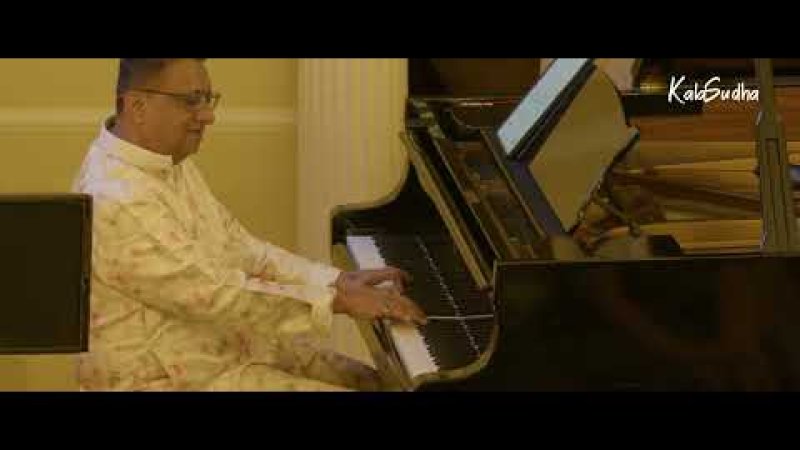
(पियानो)The piano reached India through colonial drawing rooms and became central to Hindi film music through composers including RD Burman and AR Rahman; contemporary fusion pianists now explore its possibilities within raga frameworks.
3
6
£300 - £15,000
Entry-level digital uprights start around £300; quality acoustic uprights range from £2,000 to £6,000; a new mid-range grand piano typically starts at £10,000. Professional Steinway and Bosendorfer concert grands exceed this range significantly.

History & Origins
A Keyboard Instrument Built on Strings
The piano is a chordophone and keyboard instrument in which felt-covered hammers strike steel strings when a player depresses a key. Invented around 1700 by the Italian harpsichord maker Bartolomeo Cristofori, it replaced the harpsichord's plucking mechanism with a hammer action that allowed gradation of volume. The full name, pianoforte, reflects this: soft and loud. A modern concert grand has 88 keys spanning more than seven octaves, roughly 230 strings, and a cast-iron plate supporting up to 20 tonnes of combined string tension. No other Western instrument covers so wide a range or so many dynamic gradations under a single player's hands.
The Piano Enters India
The piano arrived in India through the British colonial presence. By the mid-19th century, upright pianos occupied the drawing rooms of Calcutta and Bombay's anglicised households, Christian missions, and railway-town clubs. Indian musicians initially encountered the instrument through church music and European classical recitals. The piano's equal-tempered tuning sat at a distance from the microtonal vocabulary of Hindustani and Carnatic traditions, so for decades it remained a European domestic curiosity rather than a vehicle for Indian musical ideas.
The Piano in Indian Film Music
Hindi film music changed this. By the 1950s and 1960s, Bombay's studio orchestras had absorbed the piano as a core harmonic and melodic instrument. Sachin Dev Burman used sparse piano figures to frame romantic songs. His son Rahul Dev Burman pushed the instrument further, layering piano riffs with guitar and tabla to produce a sound that was neither Indian classical nor Western pop but something distinct to the Hindi film studio. AR Rahman, working from the 1990s onward, treated the piano as a compositional centrepiece: his arrangements for films such as Roja, Lagaan, and Slumdog Millionaire built textures from piano, strings, and electronics that reached audiences far beyond India. The piano became the primary instrument through which Indian film music engaged with global harmonic language.
Indian Classical Fusion and the Piano
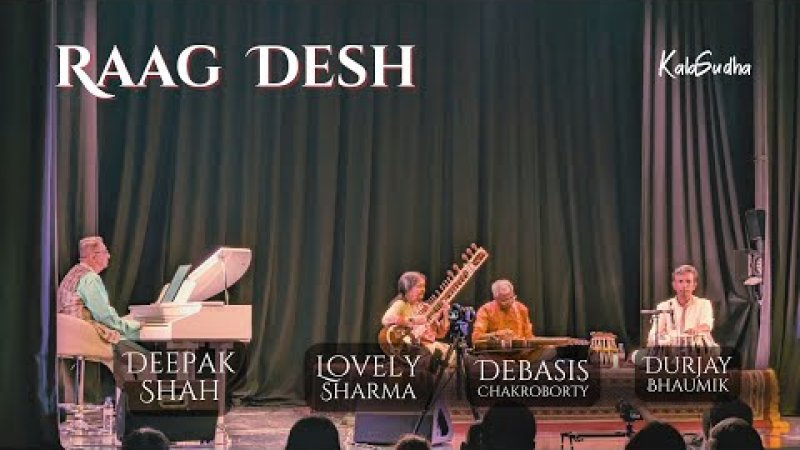
Pianists have also brought the piano into raga music. Anil Srinivasan, trained in both Western classical and Carnatic traditions, has performed with vocalist Bombay Jayashri and with Carnatic instrumentalists, demonstrating that the piano's fixed pitches can outline raga grammar through careful note selection and idiomatic ornament. Ustad Amjad Ali Khan, the sarod player, has collaborated with pianists to explore territory between slow Hindustani alap and Western classical slow movements. These collaborations expose a central tension: raga depends on microtonal inflection and the continuous glide between pitches, while the piano locks each pitch to equal temperament. Fusion artists resolve this by choosing ragas whose characteristic phrases map well onto the piano's twelve-pitch grid, or by accepting the piano's fixed palette as a deliberate compositional constraint.
Construction: Soundboard, Strings, and Hammers
The piano's acoustic foundation is a spruce soundboard, a thin, slightly arched panel glued across the instrument's interior. Spruce's stiffness-to-weight ratio allows it to vibrate across the piano's full frequency range. Strings run from a hitch pin at the tail end to tuning pins driven into a laminated hardwood pin block at the treble end; the pin block must grip each tuning pin with enough friction to hold pitch against the pull of string tension. Bass strings are long and wound with copper to increase mass without requiring impractical length; treble strings are shorter, thinner, and plain steel. A single bass note strikes one or two strings; most treble notes strike a choir of three strings tuned to the same pitch, which increases volume and produces the slight beating that gives the piano its characteristic bloom.
Action, Regulation, and the Grand vs Upright Difference
The piano action, the mechanism between key and hammer, is an engineering feat of levers, springs, and cloth-covered wooden parts numbering in the thousands. A grand piano action uses gravity to return the hammer after a strike, enabling rapid repetition of a single note at speeds impossible on an upright. The upright action uses a spring-return system, which is slower but allows a much smaller cabinet. Regulation is the process of adjusting each action component so that every note across the keyboard responds with identical weight and travel. A well-regulated piano feels uniform from the lowest bass key to the highest treble note; a neglected one is uneven, with some notes heavy and others light.
Equal Temperament and Raga: What Piano Players Must Know
Raga performance on piano requires understanding a fundamental mismatch. Indian classical music uses shruti, microtonal intervals finer than a semitone, as expressive tools. The piano divides each octave into twelve equal semitones; there are no pitches between them. A komal gandhar (flat third) in Bhairavi sits slightly lower than the piano's E-flat, and the tivra madhyam (sharp fourth) of Yaman lies slightly higher than F-sharp. Pianists working in Indian classical contexts either accept this approximation or use the piano's harmonic richness to compensate. Some play figures that move quickly through the target pitch, creating the impression of approach. Others treat the constraint as a compositional resource, finding that the piano's resonance and sustain can carry emotional weight even without microtonal inflection.
Bartolomeo Cristofori, a harpsichord maker employed by the Medici court in Florence, built the first documented piano around 1700. His invention replaced the harpsichord's quill-plucking mechanism with a hammer that struck the string and immediately escaped, allowing the string to vibrate freely while the key remained depressed. This escape mechanism, the escapement, is the mechanical heart of every piano action built since. Cristofori's instruments were refined over the 18th century by German and Austrian makers, culminating in the Viennese action preferred by Haydn and Mozart and the heavier English action that Beethoven favoured. By the 19th century, Steinway in New York and Bosendorfer in Vienna had produced the modern cross-strung, iron-framed concert grand.
The piano reached India during British colonial expansion. Upright pianos arrived as domestic status objects in the anglicised households of Calcutta, Bombay, and Madras in the 1800s, carried by colonial administrators, missionaries, and trading families. Music schools attached to Christian missions taught European classical piano to Indian students, producing the first generation of Indians trained on the instrument. The piano remained confined to European and Europhile circles through the late 19th and early 20th centuries; its equal-tempered tuning gave most Indian classical musicians little reason to engage with it.
Hindi film music opened the piano to Indian popular culture. Studio orchestras in Bombay adopted the instrument in the 1940s and 1950s, and by the 1960s and 1970s composers including SD Burman and RD Burman were using it as a core melodic and harmonic voice in film scores. AR Rahman, beginning in the 1990s, elevated the piano to a compositional centrepiece in Indian film music, embedding it in orchestrations that circulated globally. Alongside film, fusion artists, including Anil Srinivasan in Carnatic contexts and various collaborators with Hindustani masters, have explored what the piano can offer raga music, accepting its equal-tempered constraints while drawing on its sustain, range, and harmonic richness.
Construction & Craftsmanship
Construction Process
The piano's acoustic core is a spruce soundboard, a thin arched panel spanning the instrument's interior. Builders select spruce with tight, even grain, typically Sitka or European spruce, because its stiffness-to-weight ratio allows vibration across the full seven-octave range. The soundboard is slightly crowned, meaning it curves gently upward under string tension. This curvature loads the board and keeps it responsive; a flat or collapsed soundboard produces a thin, dead tone. The soundboard attaches to ribs on its underside, which distribute vibration, and to the bridge on its upper surface, through which string energy transfers into the wood.
Strings run from hitch pins at the tail of the cabinet to tuning pins set into the pin block, a thick laminate of hardwood plies glued with alternating grain directions to resist splitting. Bass strings are long and wound with copper over a steel core to add mass without impractical length; they are struck by large, dense hammers. Treble strings are shorter, thinner, plain-steel, and grouped in threes, three strings per note, to increase volume and produce the slight beating that characterises the piano's sustain. The entire string system sits above a cast-iron plate that absorbs up to 20 tonnes of combined tension and holds the geometry stable across seasons.
The hammer mechanism converts key movement into a controlled strike. Each hammer head is covered with multiple layers of pressed wool felt, graded from firm at the core to softer at the striking surface. The felt's density determines tone: harder felt produces a brighter, more percussive attack; softer felt yields a rounder, more singing quality. Piano technicians voice the instrument by needling the hammer felt to soften it or by applying hardener to brighten it. The entire action, levers, flanges, repetition springs, and let-off buttons, must be regulated so every hammer travels the same distance, releases at the same point below the string, and rebounds cleanly for rapid repetition.
Maintenance & Care
- Tuning: Tune every six months under normal domestic use; instruments in recording studios or variable climates benefit from quarterly tuning. A piano left untuned for years requires multiple pitch-raise passes spread over weeks. Forcing tension up in a single session risks cracking the soundboard or stripping tuning pins from the pin block. Use a registered piano technician, not an unqualified tuner.
- Humidity: Maintain 40–50% relative humidity at a stable temperature. Below this range the soundboard dries and can crack; the pin block loses grip on tuning pins, causing the piano to go flat. Above it, the soundboard swells and pitch rises unevenly. A Dampp-Chaser system (heating and humidifying rods mounted inside the cabinet) holds humidity constant year-round. In India this matters during monsoon season, when ambient humidity can exceed 70%.
- Key cleaning: Wipe key tops with a barely damp cloth and dry immediately. Excessive moisture warps key coverings. Clean surfaces regularly to remove oils from skin contact; do not use chemical cleaners on ivory or synthetic tops.
- Action and interior: The action interior collects dust in felt and cloth bushings, causing sluggish or noisy key return. Have a technician vacuum the action during service visits using a soft brush attachment. Do not blow or brush dust out without removing the action first. Keep liquids away from the keyboard; a spill that penetrates the keybed damages action components that are labour-intensive to replace.
Technical Specifications
Detailed specifications for the Piano
Physical Dimensions
| Specification | Value |
|---|---|
| Grand Piano Length | 1,500mm (baby grand) to 2,750mm (concert grand) |
| Upright Piano Height | 900mm–1,300mm |
| Grand Piano Width | ~1,500mm |
| Grand Piano Weight | 250kg–600kg |
| Key Count | 88 (standard); some models have 85 |
String & Soundboard System
| Specification | Value |
|---|---|
| Total String Count | ~230 strings |
| Total String Tension | Up to 20 tonnes (combined) |
| Bass String Material | Copper-wound steel core |
| Treble String Material | Plain high-carbon steel |
| Strings Per Treble Note | 3 (unison choir) |
| Soundboard Material | Sitka or European spruce |
Hammer & Action Mechanism
| Specification | Value |
|---|---|
| Hammer Covering | Pressed wool felt (graded density, firm core to soft surface) |
| Grand Action Type | Gravity-return escapement (enables rapid note repetition) |
| Upright Action Type | Spring-return (slower repetition; smaller cabinet) |
| Action Parts Per Note | ~80 individual components |
| Regulation | Periodic service required for even touch across all 88 keys |
Pedal System
| Specification | Value |
|---|---|
| Sustain Pedal (right) | Lifts all dampers; strings ring freely |
| Sostenuto Pedal (middle, grand) | Sustains only notes held at moment of depression |
| Soft Pedal (left) | Una corda (shifts hammers) in grand; moves hammers closer to strings in upright |
| Pedal Count | 3 (concert grand); 2 (some uprights, omitting sostenuto) |
Acoustic Characteristics
| Specification | Value |
|---|---|
| Frequency Range | ~27.5 Hz (A0) to ~4,186 Hz (C8) |
| Dynamic Range | ppp to fff (approximately 40dB–100dB) |
| Sustain | 3–30 seconds depending on register and pedal use |
| Tuning System | Equal temperament (12 equal semitones per octave) |
| Tonal Character | Rich harmonic spectrum; treble unison choir produces characteristic bloom |
Your Journey to Piano Mastery
Follow this structured path from absolute beginner to accomplished performer
Hand Position & Keyboard Geography
Scales & Sargam Mapping
Indian Raga Exploration on Piano
Composition & Accompaniment
Advanced Improvisation & Fusion
Media Gallery
Watch performances, see details, and explore the Piano in action


Featured Artists
Renowned Piano players and performers
Rekesh Chauhan

Deepak Shah

Raymond Yiu

Past Events
Browse our archive of past performances

Music Without Boundaries


An Instrumental Journey Through the Nature


Discover the Magic of Indian Raagas on Piano - Workshop
Ready to start learning Piano?
Get personalized quotes and explore courses