


Satwinder Pal Singh
Sarangi player from Moga, Punjab, based in London
Location
London, United KingdomSpecialization
Sarangi • Senia-Maihar GharanaDiscography
Explore the musical journey through albums, singles, and live recordings

Ustad Akram Khan (Tabla Solo) [Live from Kala Festival 2025]


Media Gallery
Watch performances, rehearsals, and behind-the-scenes moments
Video Performances
(...)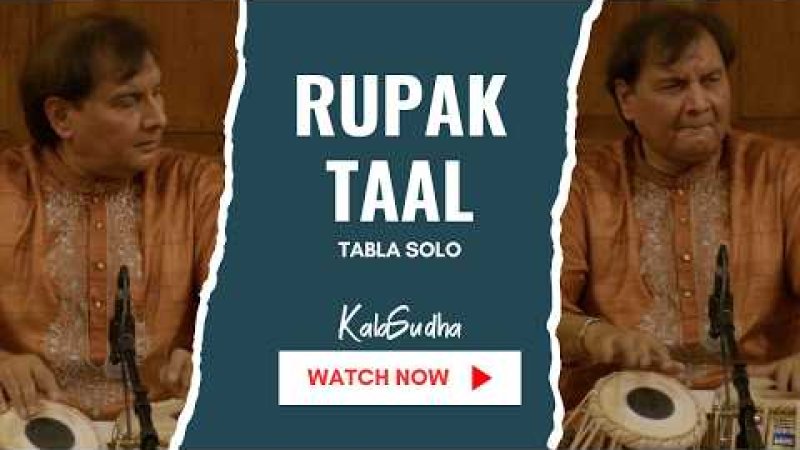
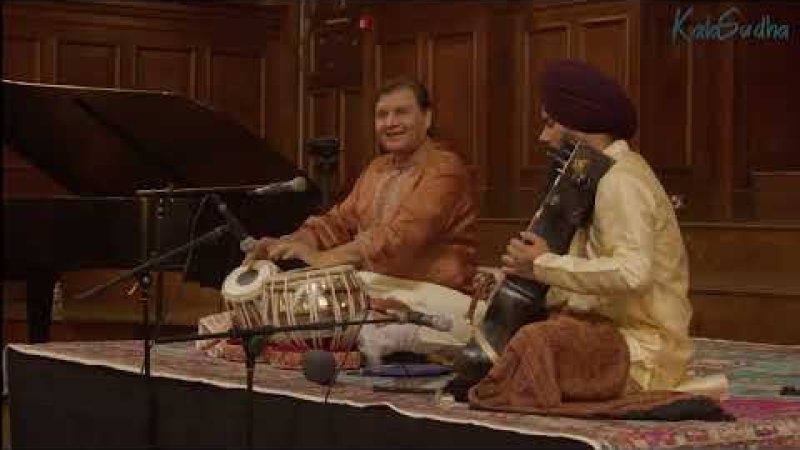
Photo Gallery
(...)Media Detail Related


Video Performances
(...)Photo Gallery
(...)Media Detail Related
About Satwinder Pal Singh
Satwinder Pal Singh is a London-based sarangi player from Moga, Punjab, born 12 July 1993. His father, Shaminder Pal Singh, is a Top Grade staff artist of All India Radio, Jalandhar, and the first Sikh sarangi player in AIR history to reach that classification. Shaminder Pal Singh trained under Padma Bhushan Ustad Sabri Khan. His grandfather, Harchand Singh, was a kirtankaar and banjo player, holding both the classical and devotional currents of Punjab within the same family.
Satwinder first performed on stage at age five as a vocalist at the Baba Harivallabh Sangeet Sammelan in Jalandhar, in 1998. He took up the sarangi at age 11 under his father, and in 2012 studied with his Dada-Guru Padma Bhushan Ustad Sabri Khan in Delhi, performing alongside him. He has also trained under Padma Vibhushan Pandit Ram Narayan and Harsh Narayan.
Beyond classical sarangi, he plays the Saranda, Israj, Dilruba, and Taus, instruments his family has carried through generations of Sikh music. He has also recorded as a vocalist, releasing Punjabi tracks "Ruh Lai Gya" and "Shaman Pai Gaiyan". His sarangi features on soundtracks including the Netflix series CAT and films Kaalakaandi, Mastaney, Sarvaann, and The Journey of Punjab (2016).
His awards include a Presidential Award at the AIR Music Competition, A-Grade status at All India Radio, gold medals at the Baba Harivallabh and Gurmat Sangeet competitions, and five consecutive Gold Medals at the National Youth Festival (AIU). He received an Appreciation Award from ICMA in San Francisco. He has performed at festivals across India, the UK, Australia, and New Zealand, alongside Ustad Zakir Hussain at Adi-Anant Festival at NCPA Mumbai, Taufiq Qureshi at Kala Ghoda, Fazal Qureshi, Sunanda Sharma, Shafqat Ali Khan, Yogesh Samsi and Ustad Akram Khan.
KalaSudha features Satwinder Pal Singh among its performing artists. His work on the platform gives listeners access to the Sikh sarangi tradition and its living lineage, through recordings and concert documentation.
The sarangi is a bowed string instrument. Harsh Narayan, Ram Narayan's grandson, still teaches him. His 2012 study with Sabri Khan was in New Delhi. Satwinder Pal Singh has also played the Adi-Anant Festival with Ustad Zakir Hussain in Chennai, the Bhai Mardana Sangeet Sammelan in Auckland and the Sur Bahar Music Conference in Perth. In July 2024 he played in a concert series at St Martin-in-the-Fields in London.
The Kaalakaandi soundtrack came out in 2017, and Shaman Pai Gaiyan is with the band Turbanators. KalaSudha also books him as a session musician for film and television.
KalaSudha has presented Satwinder Pal Singh at Kala Festival, its touring festival, in London, Reading and Norwich. At The Bhavan in London he played sarangi in support of Ustad Akram Khan's tabla duet. At the Great Hall of the University of Reading he accompanied Ustad Akram Khan's tabla solo, holding the lehra, the repeating melody that outlines the rhythmic cycle, and KalaSudha released that tabla solo as an album. In Bow, Beat, and Breath at the same hall he shared the stage with Ustad Shahbaz Hussain: the sarangi led the first half and the tabla the second. In Norwich he supported Ustad Akram Khan's tabla solo at St Andrew's Hall.
Attendee reviews
Ratings describe the event experience.
-
Event Attendee
Event experience 5/5
Hello, everybody. This was a beautiful event. From start to finish, I enjoyed every bit of it. The music was good; the blurbers were good. Obviously, I needed to know one of the instruments I couldn't recognise, which is the Sarangi. And it was very, very positive for me. It has been my special day. So this fitted in with the bell, Beautiful. I enjoyed it. Thank you.
-
Event Attendee
Event experience 5/5
I came to know about this program at the last minute and I was really looking forward to it. I am a music person and the program was amazing. We really enjoyed it, and I was also talking to the organiser. From next time, we plan to bring more crowd here because there is a big community in this area. We will definitely make it more successful. This program was really amazing — all the artists were unbelievable, really rich and very good. I think this is positive feedback for people to join our events. I was also discussing that social media and networking are very important to build awareness because there is a big community in this area. There is another separate program going on currently, so not many people could attend this time. But we will plan better, spread the word, and when a new event comes in, we will definitely have a more successful event next time. Thank you so much.
-
Event Attendee
Event experience 5/5
Listen to piano, tabla and guitar together in a jugalbandi, and then to listen to slide guitar and tabla in a jugalbandi. Amazing, Amazing. limited audience, perfect venue, perfect, perfectly organized. It was really, really wonderful. Even in today’s generation, there are children who are connected to classical music. They have their own likings, but they should also see this side of classical music, because watching live shows and watching live performances like this. I think they will understand it. The roots are here only. From this, it has come and moved to what they hear, what they watch, and what they go for. So, definitely they should, if they come and listen to this classical music. They can enjoy, They will enjoy, they will understand where it is coming from.
-
Event Attendee
Event experience 5/5
The greatest, greatest evening it was and honestly, everybody enjoyed it. All the practice really showed, everything was there. Thank you so much. Thank you for having me. Another wonderful day, amazing, truly an amazing evening. You are wonderful. Please make sure you arrange more events like this. Feedback is five-star for this. It was a great, great evening, honestly. You guys have done a lot of good for everybody. Everyone was entertained here. Well done, man. Well done. Thanks, more and more events like this. Thank you so much.
-
Event Attendee
Event experience 5/5
It was nothing that I have seen before. The Ustad ji played tabla non-stop for like one and a half hours, and it was amazing, out of this world. Everyone played beautifully, the slide guitarist and the previous tabla player as well as Ustadji. He was amazing. I’m really looking forward to coming here again, and I wish this is more publicised so that a lot more people get to know about it, because I’m sure there are many people in Reading and all over the UK who would want to come here. It was brilliant. I would suggest that you put up some snippets across social media and try to promote this more and more, because this is phenomenal and it needs to reach the public as much as it can. I enjoyed it thoroughly, and I’m sure there are many people who are not aware of this function and have missed out on watching him and watching all of them.Thank you very much.
-
Event Attendee
Event experience 5/5
Well, Thank you very much for organising this. I haven't been to a concert for many years. I've been going to concerts mainly in London since the early, uh, mid-80s. You know, I've seen a lot of the great artists and I look forward to supporting you as you've got another programme coming shortly. I hopefully, if I'm here in November, I'm looking forward to supporting you at that time. Thank you very much again. Thank you.
-
Event Attendee
Event experience 5/5
Thank you very much for organising it, because we really thoroughly enjoyed it. For future generations, I would say keep organising events like these here. Normally, in India, it's accessible, in the uk, it isn't. So if you keep organising this, I think it will be really helpful for younger generations here and globally to be aware of old instruments CLASSICAL MUSIC So thank you. Thank you. Keep up the good work. Thank you.
-
Event Attendee
Event experience 5/5
We've just had the most amazing recital of Indian Classical Music. We had in the first half some Western instruments, Piano, Slide Guitar and Tabla, which was extraordinary. The second half was mind-blowing. Ah. Extraordinary expertise. I can't explain, can't put it into words, but it was terrific.
-
Event Attendee
Event experience 5/5
It was a brilliantly organised event. I really, really enjoyed all the music. You had amazing artists, and it was very unusual for Reading. So thank you for bringing this to Reading, and I hope next time you get a wider Audience to Reading, because it would be so nice to have more events like this in Reading. Thank you very much for bringing it here.
-
Event Attendee
Event experience 5/5
Today's performance was extraordinary. Um. A little bit more than I expected it's going to be. I was expecting a regular performance, but it's turned out to be extraordinary. The young generation, I think, needs to come and experience the talent we have in our country, and it takes years and years of, uh, learning. I thoroughly enjoyed today, and I thank you all for organising all this and also the artists coming here.
Showing 3 of 10 reviews
Frequently Asked Questions
Who is the sarangi player Satwinder Pal Singh, and who taught him?
Satwinder Pal Singh is a London-based sarangi player from Moga, Punjab. He took up the sarangi at 11 under his father, Shaminder Pal Singh, a Top Grade artist of All India Radio, and in 2012 studied in Delhi with his father's teacher, Sabri Khan. He has also trained under Ram Narayan and Harsh Narayan. He plays the saranda, israj, dilruba and taus too, instruments his family has carried through generations of Sikh music. His father holds Top Grade status for sarangi from All India Radio, and Satwinder Pal Singh is an A-grade artist.
His father, a disciple of Ustad Sabri Khan, is the first Sikh sarangi player in All India Radio's history to reach Top Grade.
What is a sarangi?
The sarangi is a short bowed instrument with three gut playing strings and around 35 sympathetic strings that resonate beneath them.
Players stop the strings from the side with the backs of their fingernails. Many musicians hold that, of all Indian instruments, the sarangi sits closest to the human voice.
What is the Senia-Maihar gharana, who founded it, and which KalaSudha artist plays in it?
The Senia-Maihar gharana is the sarod lineage that Allauddin Khan founded at Maihar, a former princely state, in the early 20th century. Most sources treat it and the Maihar gharana as one school spanning several instruments. "Senia" names the Tansen line, which Allauddin Khan joined as a disciple of Wazir Khan of Rampur. He brought a dhrupad approach to the sarod, sitar, violin and bansuri. Among KalaSudha's artists, Pandit Debasis Chakroborty plays in the gharana.
Where can I hear live Indian classical music in Reading, and how do I find out about the next KalaSudha concert there?
KalaSudha presents Indian classical music in Reading and lists each concert on its Reading page, with a link to book. To hear when the next Reading date is set, press Register for updates there or join the KalaSudha newsletter.
KalaSudha has presented concerts at The Great Hall on the London Road Campus, the University of Reading's original home, as part of the Kala Festival.
Who is the tabla player Ustad Akram Khan, and what is his lineage?
Ustad Akram Khan is a tabla player and the seventh generation of his family in the Ajrara gharana. His father was Hashmat Ali Khan. As a boy he trained first with his great-grandfather, Mohammad Shafi Khan, and later with Niazu Khan. For over four decades he has kept the gharana's repertoire alive, and he preserves more than 15 of its classic qaidas through his teaching and concerts. He made his international debut in Norway in 1987 and has played on All India Radio more than 800 times.
He also learned from his father, Hashmat Ali Khan, and he has accompanied Ustad Vilayat Khan.
How do I book Satwinder Pal Singh to perform at my concert, festival or private event?
Yes. To book Satwinder Pal Singh for a concert or event, email [email protected] with the date, the place and the type of event, and KalaSudha will come back to you. He plays the sarangi, and also the saranda, israj, dilruba and taus.
Who taught Satwinder Pal Singh the sarangi?
Satwinder Pal Singh learned the sarangi first from his father, Shaminder Pal Singh, from the age of 11. Shaminder Pal Singh is a disciple of Ustad Sabri Khan, and in 2012 Satwinder Pal Singh studied with Sabri Khan himself in New Delhi.
He has also learned from Pandit Ram Narayan and is taking lessons from Harsh Narayan, Ram Narayan's grandson.
Have more questions? Contact our support team and we'll be happy to help!