


Akram Khan
Ustad of Ajrada Gharana
Location
New Delhi, IndiaSpecialization
Tabla • Ajrara Gharana"For me, the tabla is not just an instrument; it is a voice that carries the soul of my gurus and the spirit of the Ajrada Gharana."
Discography
Explore the musical journey through albums, singles, and live recordings

Norwich Ragas: Pandit Debasis Chakroborty (Kala Festival 2025)


Ustad Akram Khan (Tabla Solo) [Live from Kala Festival 2025]

Media Gallery
Watch performances, rehearsals, and behind-the-scenes moments
Video Performances
(...)Latest videos
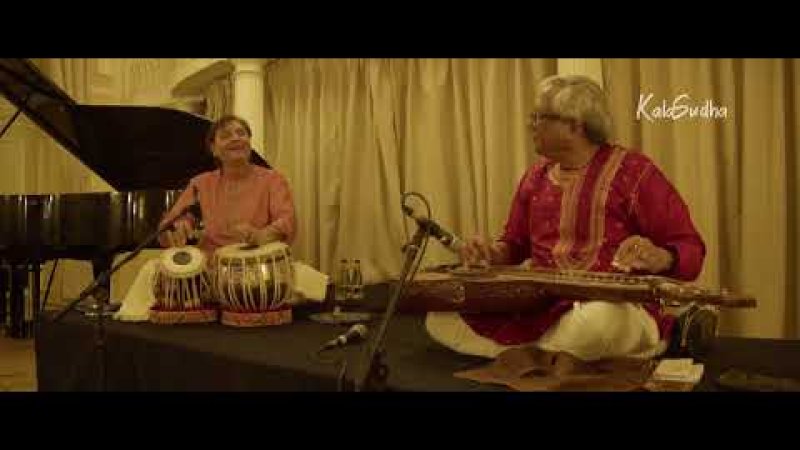
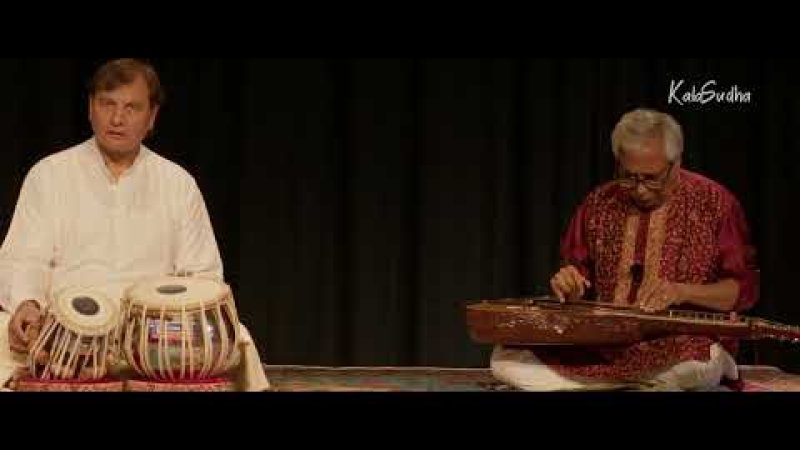
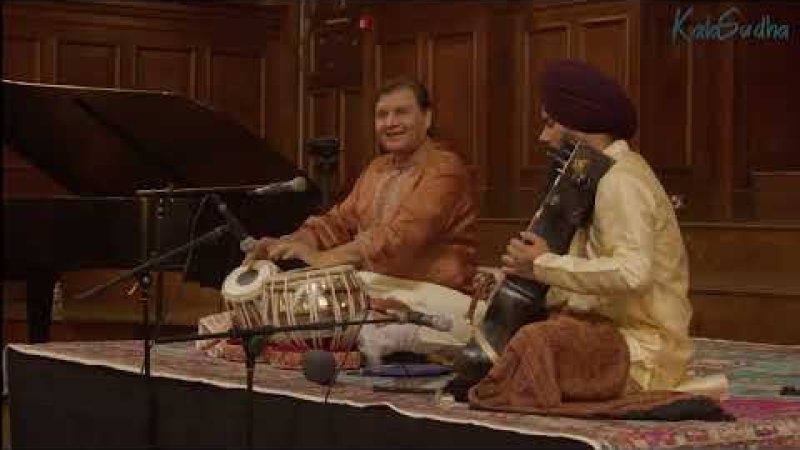
Photo Gallery
(...)Media Detail Related


Video Performances
(...)Latest videos
Photo Gallery
(...)Media Detail Related
About Akram Khan
Ustad Mohammad Akram Khan comes from a long line of Ajrada Gharana tabla players. His father was the renowned Hashmat Ali Khan, and Akram Khan himself represents the seventh generation of this school. As a boy, he trained first with his great-grandfather, Mohammad Shafi Khan, and later with the celebrated Niazu Khan.
For over four decades, Akram Khan has been a guardian of the Ajrada tradition. He has kept the repertoire and style alive, preserving more than fifteen of the gharana’s classic kaydas through his teaching and performances.
He began learning tabla at the age of eleven and gave his first public recital in Lucknow at seventeen. In 1987, at the age of twenty-two, he made his international debut in Norway. Since then, he’s played in over 11,000 concerts worldwide. The Indian Council for Cultural Relations lists him as a top-grade artist, and he’s featured on All India Radio more than 800 times, plus over 150 television appearances. He also lends his talent to charity events and works with SPIC MACAY to bring this music to young audiences.
Ustad Akram Khan plays tabla in the Ajrara gharana, also spelled Ajrada, a tabla school from north India known for a busy bayan, the left-hand bass drum, and for its kaydas. A kayda is a theme of set strokes that the player expands through variations. The school takes its name from Ajrara, a village in Meerut district, Uttar Pradesh. Its players keep the Delhi fingering and add the ring finger. The British dancer and choreographer Akram Khan is a different person.
Akram Khan also learned from his father, Hashmat Ali Khan, whom he calls his guru, the teacher who hands a tradition to a student. An NCERT tabla textbook for Class 11 lists Akram Khan and his father among the main artists of the gharana.
Akram Khan is also a top-grade artist of All India Radio, New Delhi. He has accompanied Ustad Vilayat Khan, in Japan in 1987 and in the United States in 1992. He has accompanied the sitar player Shahid Parvez at a Dhwani event. In 2019 and 2020 he played with Parveen Sultana, Rashid Khan, Rajan and Sajan Mishra, N. Rajam, Pandit Bhajan Sopori and L. Subramaniam. In the United States he has played at the Kennedy Center and the Lincoln Center.
He plays tabla on Vilayat Khan's sitar recording of the raga Shree, released by India Archive Music as IAM CD 1035. He also plays on Creating Waves, with Shubhendra Rao and Saskia De Haas Rao, on Rhyme Records. KalaSudha recorded his tabla solo live at The Great Hall in Reading, with Satwinder Pal Singh on sarangi.
With KalaSudha, you can hear Akram Khan at Kala Festival, a touring festival, and at London Ragas, KalaSudha's concert series in London. KalaSudha has presented him in cities including Norwich, Cambridge, Reading, Leicester, Totnes and London, among them a tabla solo at St Andrew's Hall in Norwich. At the Bhavan in London he led Tabla Tales, a workshop on rhythm. He teaches tabla through KalaSudha's online academy. KalaSudha members stream live concerts and recordings on its own platform.
Attendee reviews
Ratings describe the event experience.
-
Event Attendee
Event experience 5/5
Hi everybody. It's been a lovely lovely concept tonight. KalaSudha came to my attention for the first time and I would thoroughly, recommend any of their productions in future. It came to me via feed that my wife subscribes to and open week or weekend. Whatever she said that you might be interested. Look, we are interested. I'm going to tell her of. I say look, we would have been interested. It's a matter of both. Yes, so I take future reference. She comes to these and I do have to thank her for introducing me to your group. Thank you very much.
-
Event Attendee
Event experience 5/5
A really enjoyable evening, spiritual in its own way. I'm not particularly spiritual, but it's a very moving performance and elements of I suppose little elements of jazz piano and ambient piano. Um, really enjoyable night for both acts. I'd definitely come again. would recommend. Thank you.
-
Event Attendee
Event experience 5/5
It is an amazing performance by renowned artists from india. It is a very well organized event and the mellifluous beats of different instruments. It really made me transcend into a different zone altogether. It is incredible. I'm just awestruck by the beauty of Indian classical music and the diversity as well, which is really good.
-
Event Attendee
Event experience 5/5
Everything was gift for me. It was awesome. I really liked in the second part when he sang at the same time like he did and then he started. That was amazing. I wish I could start every morning like this.
-
Event Attendee
Event experience 5/5
So everything was really lovely. I think it was also really fun to see the fusion with the piano and the slide guitar. So, that was new for me. It's a little bit difficult to understand at first. A lot of impromptu going back and forth, understanding what the other player is doing. But I think once they sort of understood how it goes, you can really appreciate and enjoy it.
-
Event Attendee
Event experience 5/5
There was an introduction for me to this music, and so I shall definitely explore it soon. Yes, It was inspiring.
-
Event Attendee
Event experience 5/5
I just enjoyed everything. I mean, in the first part, in the first half of the concert, it was absolutely wonderful how the vocalist just used his body, his voice — it was just extraordinary to me. I've never heard anything quite like that before. It's just wonderful. And in the second half, I could just feel the music all the way through my body. It was just brilliant. And in the second half, I just loved it as well. I mean, they were all musicians who were just brilliant
-
Event Attendee
Event experience 5/5
Completely unforgettable music that will stay with us for the rest of our days. And I understand that the combinations are unique as well, but that's a bit of a one-off for the meeting of these musicians, so that makes it even more special. So thank you very much for a wonderful evening. A massive pleasure. And thank you so much for organising this.
-
Event Attendee
Event experience 5/5
First of all, we have been so privileged to be able to listen to such fabulous music from such prestigious, wonderful, awesome artists. And the tabla, it was just like gliding. It was a dance on the tabla. It was fantastic. The maestro Akram Khan was just the world's best, I would say. And everyone, their Monsoon Raga was fabulous. The piano, sitar with piano is something we've never heard. So, thank you so much. Thank you for bringing these maestros to Norwich. Thank you. Thank you so much. It's an honor to host them here. Thank you. Thank you very much.
-
Event Attendee
Event experience 5/5
It was really mesmerizing, so rhythmic, and just felt transported, it was beautiful, really enjoyed the evening, and it was great to talk to the musicians afterwards, they were so friendly and approachable, it was such a treat
-
Event Attendee
Event experience 5/5
Yeah, an absolutely fantastic concert tonight, absolutely incredible melodies and rhythms, really, really beautiful, and wonderful performers and an absolutely beautiful venue. So congratulations to KalaSudha, and thanks to the performers that played such beautiful music for us tonight
-
Event Attendee
Event experience 5/5
Hello, everybody. This was a beautiful event. From start to finish, I enjoyed every bit of it. The music was good; the blurbers were good. Obviously, I needed to know one of the instruments I couldn't recognise, which is the Sarangi. And it was very, very positive for me. It has been my special day. So this fitted in with the bell, Beautiful. I enjoyed it. Thank you.
-
Event Attendee
Event experience 5/5
I came to know about this program at the last minute and I was really looking forward to it. I am a music person and the program was amazing. We really enjoyed it, and I was also talking to the organiser. From next time, we plan to bring more crowd here because there is a big community in this area. We will definitely make it more successful. This program was really amazing — all the artists were unbelievable, really rich and very good. I think this is positive feedback for people to join our events. I was also discussing that social media and networking are very important to build awareness because there is a big community in this area. There is another separate program going on currently, so not many people could attend this time. But we will plan better, spread the word, and when a new event comes in, we will definitely have a more successful event next time. Thank you so much.
-
Event Attendee
Event experience 5/5
Listen to piano, tabla and guitar together in a jugalbandi, and then to listen to slide guitar and tabla in a jugalbandi. Amazing, Amazing. limited audience, perfect venue, perfect, perfectly organized. It was really, really wonderful. Even in today’s generation, there are children who are connected to classical music. They have their own likings, but they should also see this side of classical music, because watching live shows and watching live performances like this. I think they will understand it. The roots are here only. From this, it has come and moved to what they hear, what they watch, and what they go for. So, definitely they should, if they come and listen to this classical music. They can enjoy, They will enjoy, they will understand where it is coming from.
-
Event Attendee
Event experience 5/5
The greatest, greatest evening it was and honestly, everybody enjoyed it. All the practice really showed, everything was there. Thank you so much. Thank you for having me. Another wonderful day, amazing, truly an amazing evening. You are wonderful. Please make sure you arrange more events like this. Feedback is five-star for this. It was a great, great evening, honestly. You guys have done a lot of good for everybody. Everyone was entertained here. Well done, man. Well done. Thanks, more and more events like this. Thank you so much.
-
Event Attendee
Event experience 5/5
It was nothing that I have seen before. The Ustad ji played tabla non-stop for like one and a half hours, and it was amazing, out of this world. Everyone played beautifully, the slide guitarist and the previous tabla player as well as Ustadji. He was amazing. I’m really looking forward to coming here again, and I wish this is more publicised so that a lot more people get to know about it, because I’m sure there are many people in Reading and all over the UK who would want to come here. It was brilliant. I would suggest that you put up some snippets across social media and try to promote this more and more, because this is phenomenal and it needs to reach the public as much as it can. I enjoyed it thoroughly, and I’m sure there are many people who are not aware of this function and have missed out on watching him and watching all of them.Thank you very much.
-
Event Attendee
Event experience 5/5
Well, Thank you very much for organising this. I haven't been to a concert for many years. I've been going to concerts mainly in London since the early, uh, mid-80s. You know, I've seen a lot of the great artists and I look forward to supporting you as you've got another programme coming shortly. I hopefully, if I'm here in November, I'm looking forward to supporting you at that time. Thank you very much again. Thank you.
-
Event Attendee
Event experience 5/5
Thank you very much for organising it, because we really thoroughly enjoyed it. For future generations, I would say keep organising events like these here. Normally, in India, it's accessible, in the uk, it isn't. So if you keep organising this, I think it will be really helpful for younger generations here and globally to be aware of old instruments CLASSICAL MUSIC So thank you. Thank you. Keep up the good work. Thank you.
-
Event Attendee
Event experience 5/5
We've just had the most amazing recital of Indian Classical Music. We had in the first half some Western instruments, Piano, Slide Guitar and Tabla, which was extraordinary. The second half was mind-blowing. Ah. Extraordinary expertise. I can't explain, can't put it into words, but it was terrific.
-
Event Attendee
Event experience 5/5
It was a brilliantly organised event. I really, really enjoyed all the music. You had amazing artists, and it was very unusual for Reading. So thank you for bringing this to Reading, and I hope next time you get a wider Audience to Reading, because it would be so nice to have more events like this in Reading. Thank you very much for bringing it here.
-
Event Attendee
Event experience 5/5
Today's performance was extraordinary. Um. A little bit more than I expected it's going to be. I was expecting a regular performance, but it's turned out to be extraordinary. The young generation, I think, needs to come and experience the talent we have in our country, and it takes years and years of, uh, learning. I thoroughly enjoyed today, and I thank you all for organising all this and also the artists coming here.
Showing 3 of 21 reviews
Frequently Asked Questions
Who is the tabla player Ustad Akram Khan, and what is his lineage?
Ustad Akram Khan is a tabla player and the seventh generation of his family in the Ajrara gharana. His father was Hashmat Ali Khan. As a boy he trained first with his great-grandfather, Mohammad Shafi Khan, and later with Niazu Khan. For over four decades he has kept the gharana's repertoire alive, and he preserves more than 15 of its classic qaidas through his teaching and concerts. He made his international debut in Norway in 1987 and has played on All India Radio more than 800 times.
He also learned from his father, Hashmat Ali Khan, and he has accompanied Ustad Vilayat Khan.
What is a tabla?
A tabla is a pair of hand drums. The smaller drum, the dayan, is wooden, sits under the right hand and carries the pitch. The larger drum, the bayan, sits under the left hand and gives the bass. The bayan is most often copper, sometimes clay or wood, and the player bends its bass by pressing the heel of the palm into the head while striking.
Each head carries a black circle of tuning paste. The paste weights the skin and adds overtones. The dayan rings at a clear pitch, and the bayan gives a deep bass with a looser pitch that the palm can shift.
What is the Ajrara (Ajrada) gharana of tabla, where did it begin, and what is it known for?
The Ajrara gharana, also spelt Ajrada, is a school of tabla that arose in the late 18th or early 19th century in the village of Ajrara, in Meerut district. Most accounts trace it to two brothers, Kallu Khan and Miru Khan, who learnt in Delhi, making it an offshoot of the Delhi gharana. Its players add the ring finger to the Delhi technique. It is best known for qaidas, themes with set variations, in aad laya, three strokes to every two beats. Ustad Akram Khan plays in the gharana today.
Where can I hear live Indian classical music in London, and which venues does KalaSudha use?
You can hear Hindustani (North Indian) classical music live in London at London Ragas, KalaSudha's concert series in London. Its evenings are baithaks: the audience sits close to the musicians. London Ragas can take place at different venues across London, and KalaSudha plans to add more baithaks in other parts of London. KalaSudha is based in London, so every concert tour it organises also plays London once.
See how to book tickets for a London concert and how to get to the venues.
Who is the Indian slide guitarist Pandit Debasis Chakroborty, the senior-most disciple of Pandit Brij Bhushan Kabra?
Pandit Debasis Chakroborty is a Hindustani slide guitarist and the senior-most disciple of Pandit Brij Bhushan Kabra, and his playing reflects Kabra's style. His name is also written Debasis Chakraborty. He plays in the Senia-Maihar gharana and has taught since 1992.
He has been part of the Department of Performing Arts at Mangalayatan University since its inception, and returns to universities in Australia and the USA as a conductor-performer and artist-in-residence. He helped carry out a joint music research project between Mangalayatan University and Monash University, and has published 10 research papers.
He learned first from his father, then from Barun Kumar Pal and Jotin Bhattacharya, and in the mid-1990s studied with Kabra in Jodhpur. He is Associate Professor of Music at Mangalayatan University in Aligarh and advises government and non-government organisations as an expert.
How do I book Ustad Akram Khan to perform at my concert, festival or private event?
Yes. To book Ustad Akram Khan for a concert or event, email [email protected] with the date, the place and the type of event, and KalaSudha will come back to you. He plays tabla in the Ajrara gharana, as a soloist and an accompanist, and has played over 11,000 concerts.
KalaSudha has presented him at Kala Festival, a touring festival.
Can I take tabla lessons with Ustad Akram Khan, online or in person?
Ustad Akram Khan teaches tabla through KalaSudha's online academy. The academy offers classes in every discipline of Indian classical music and keeps adding specialised courses and teachers. The courses are hybrid: KalaSudha brings physical workshops and summer camps where enough learners sign up, so you can learn online and in person. For him the tabla is a voice that carries the spirit of his gurus and of the Ajrara gharana.
For one-to-one lessons with him, register interest with KalaSudha. KalaSudha's tabla course runs in three levels, Foundation, Intermediate and Advanced, with live lessons online.
Where can I learn to play the sitar or the tabla in London, online or in person, with KalaSudha?
KalaSudha's online academy teaches sitar and tabla, among every discipline of Indian classical music, and keeps adding specialised courses and teachers. The courses are hybrid. When enough learners in London sign up, KalaSudha brings physical workshops and summer camps to London, so you can learn online and in person. See learning with KalaSudha in London.
Is Ustad Akram Khan the tabla player the same person as the dancer Akram Khan?
No. Ustad Akram Khan is a tabla player of the Ajrara gharana, and the British dancer and choreographer Akram Khan is a different person.
The tabla player's full name is Mohammad Akram Khan. He is the son of the tabla player Hashmat Ali Khan and has played tabla for more than four decades, as a soloist and as an accompanist.
Have more questions? Contact our support team and we'll be happy to help!