Indian Slide Guitar
भारतीय स्लाइड गिटार
Coordinate a moving slide with clear pitch arrivals and well-placed plucks.
- Courses
- 4
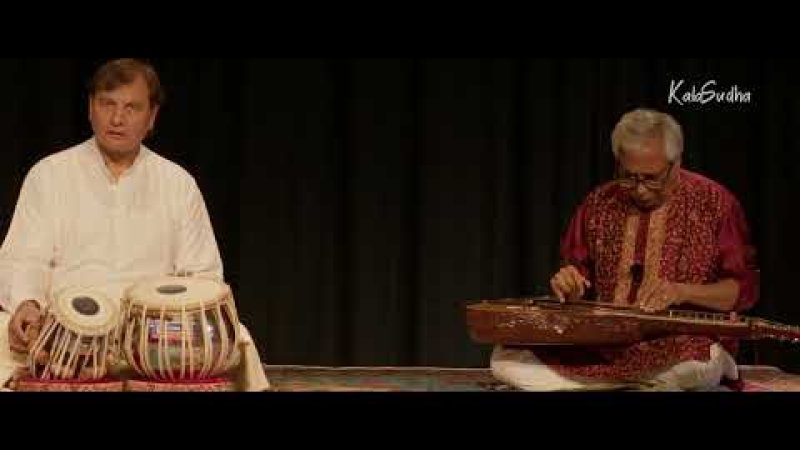
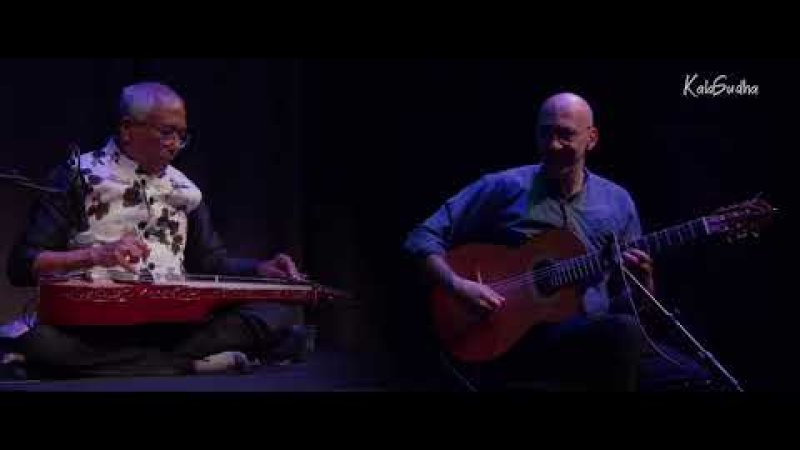
Indian slide guitar plays Hindustani raga on a guitar laid across the lap, with a slide bar and finger picks. Learn bar control, pitch by ear and plucking in phrases.
History & Evolution
Accounts of the Hawaiian guitar’s arrival in India centre on the guitarist Tau Moe. Premier Guitar places him in Calcutta from 1941 to 1947, while the ethnomusicologist Andre-Jacques Elias dates his Kolkata story to the early 1930s. In the 1950s and 1960s Kolkata players made the instrument the most common lead voice in instrumental Rabindra sangeet and Nazrul geeti, the songs of Rabindranath Tagore and Kazi Nazrul Islam.
Sources credit Brij Bhushan Kabra (1937 to 2018), a student of the sarod player Ali Akbar Khan, with first adapting it to Hindustani classical performance; Elias also records a rival claim from Barun Kumar Pal’s website. Kabra added high drone strings (chikari) and called his instrument an Indian classical slide guitar. Named designs followed, and Sanskrit ‘veena’ names became common from the 1990s. Vishwa Mohan Bhatt plays his Mohan veena, and Debashish Bhattacharya, who studied with Kabra, names four designs of his own: the Chaturangui, Gandharvi, Anandi and Pushpa Veena. Elias leaves the deeper origin of slide playing open, noting older slide instruments such as the vichitra veena.
- 1967
-
Call of the Valley
The album Call of the Valley presented Brij Bhushan Kabra’s slide guitar with Hariprasad Chaurasia on bansuri and Shivkumar Sharma on santoor. Premier Guitar calls it perhaps the first studio recording of Hindustani slide guitar. - 1994
-
Grammy for A Meeting by the River
A Meeting by the River, recorded by Ry Cooder with Vishwa Mohan Bhatt on Mohan veena in 1992 and released in 1993, won a Grammy at the 36th Annual Grammy Awards in 1994, in a world music category. - 2005
-
Sangeet Natak Akademi award for guitar
Brij Bhushan Kabra received the Sangeet Natak Akademi Award for 2005, listed under a guitar heading in Hindustani instrumental music. His remains the only entry under that heading in the Akademi lists read. - 2015
-
Indian International Guitar Festival, Kolkata
In January 2015 Debashish Bhattacharya organised the Indian International Guitar Festival in Kolkata, which Elias describes as the first festival devoted to Indian slide guitar. Brij Bhushan Kabra attended as guest of honour, and a second edition followed in 2016.
Technical Aspects
How the bar makes meend
Pitch depends on where the bar touches the string. While the bar keeps light contact and moves, one plucked note travels through changing pitches, which is how players make meend. Lifting the bar and setting it down again gives separate, detached notes. The middle finger trails behind the slide on the string to control the tone, and the picking hand decides when a fresh attack enters.
The same bar shapes the ornaments of raga music. Murki, a quick flourish between neighbouring notes, is common. Gamak, a forceful oscillation between two notes, is harder to sustain on slide guitar than on sitar. Elias weighs the instrument against sitar and sarod. A slide note sustains far longer, and one stroke can glide a long way along a single string. The bar hand has less speed, so very fast runs (taan) are harder. Krintan, the hammer-on and pull-off ornament, needs an open string at one end. Most models reach little of the low register (kharaj).
Raised strings, played on the lap
On an Indian slide guitar the strings sit well above the fingerboard and never press down onto the frets. The frets, sometimes only painted lines, act as visual markers while the ear sets the pitch. Elias gives about two centimetres of clearance for the Hawaiian guitar in India, and Kabra raised his strings with a high nut.
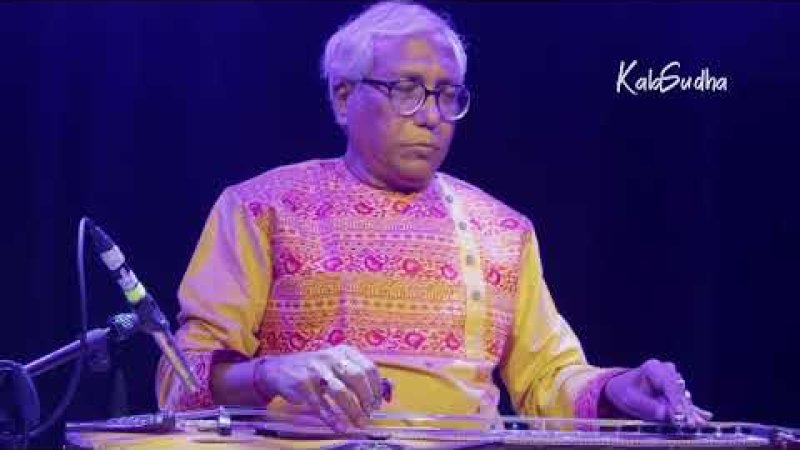
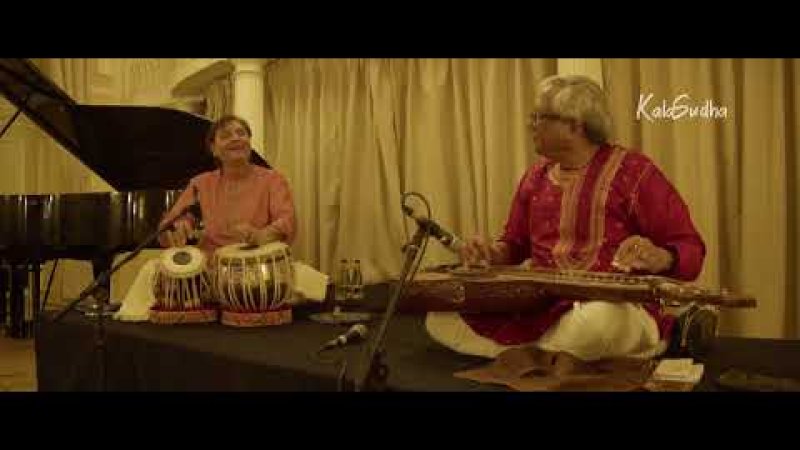
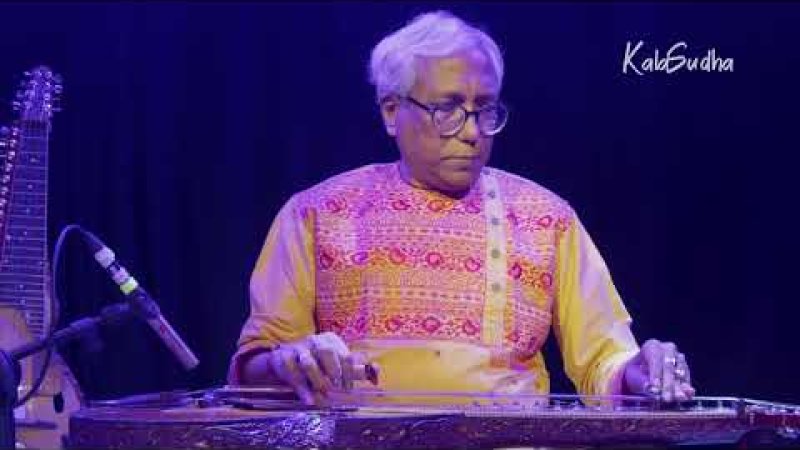
The player sits cross-legged with the instrument flat across the lap. No left-hand grip holds the neck, and many players steady the body with the right little finger. Elias describes a slide three to four inches long, held between the index and middle fingers and steadied by the thumb. This lap position separates the practice from upright slide playing, where the guitar is held as usual and the slide is worn on a finger.
Open tunings give a stable chord on the open strings, which suits the modal character of raga. Tunings vary by player and raga, and no single tuning is standard.
Chikari drones and tarab strings
Many designs add two groups of strings to the melody strings. Chikari are high drone strings struck between melody strokes. Tarab (also taraf) are sympathetic strings tuned to the notes of the raga; they vibrate when the main strings sound and add sustain. Elias reports that the Hawaiian guitar had no chikari, which ruled out jhala, the fast section that alternates melody and drone strokes.
Two layouts dominate. Vishwa Mohan Bhatt places the chikari at the back, near the body, and strikes them with the thumb. Debashish Bhattacharya places them at the front and plays them with the fingers while the thumb takes the melody string, a layout that favours faster jhala. Elias calls these the closest thing slide guitarists have to an instrumental gharana, or school. Tarab may run under the playing strings for a stronger response, or in a side course the player can strum like a swarmandal. Counts and arrangements differ between designs and models.
Journey to Mastery
Follow this structured journey to master this discipline
-
Hold the slide steady while plucking
Ask your teacher to check the instrument’s position on your lap and show you the bar grip. Common equipment is a short metal slide in the left hand, with two metal finger picks and a plastic thumb pick on the right. Hold the bar still at one position, pluck one melody string and listen for a clear attack. Repeat until your teacher hears no unwanted contact.
-
Locate a pitch with the bar
Choose a target note with your teacher and sing or hear it before you play. Move the bar to where you expect the note, pluck and compare. The strings sit above the frets, so the frets mark positions without fixing the pitch: adjust by ear until the note matches. Then move away and find the note again.
-
Control the arrival of a glide
Sound two notes your teacher has chosen as separate pitches, then join them with meend, a glide made by moving the bar along the string after the pluck. Keep light contact so one pluck carries through the movement. Start with a short distance and check that the arrival note matches the separate target you heard first.
-
Find any chikari and tarab strings
With your teacher, find the melody strings and any extra groups on your instrument. Many designs carry chikari, high drone strings struck between melody notes, and tarab, sympathetic strings that answer the main strings. Pluck a melody note and listen for which strings respond. Mark each group in your practice notes and leave their tuning to your teacher.
-
Join slide movement and articulation
Learn a short raga phrase from your teacher and agree where each pluck should fall. Locate its notes with the slide first, then add the picking pattern. Repeat the phrase and listen to each new attack, checking that the bar has reached the intended pitch before you pluck.
Media Gallery
Audio and video performances
Featured Artists
Renowned performers of this discipline