

Charukesi
चारुकेशी
S R G M P d n S' | S' n d P M G R S .d .n S
Origins & Context
Raag Charukesi is a Hindustani raga outside the ten thaats, performed in the late morning, that uses all seven notes with komal Dha and komal Ni. Komal means lowered, and the other five notes are shuddha, or natural. A thaat is one of the parent scales of Hindustani theory. It is also written Raag Charukeshi or Raga Charukesi. With shuddha Dha in place of komal Dha, its notes would form the Khamaj thaat.
Charukesi comes from Carnatic music. There it is the 26th melakarta, a parent scale of that system. Rajan Parrikar calls it a relatively recent migrant from the Carnatic tradition into Hindustani music. Lowercase marks a komal note. A dot marks the lower octave, an apostrophe the upper. The aroha, or ascent, is S R G M P d n S'. The avaroha, or descent, is S' n d P M G R S, closing through the lower .d and .n back to Sa. The vadi, the most prominent note, is Ma, and the samvadi, its partner, is Sa. Soubhik Chakraborty and his co-authors write that vadi-samvadi rules are not clear for Carnatic imports such as Charukeshi.
Show MoreShow Less
Its time is the second prahar of the day, the three-hour watch from 9am to noon. Nitin Amin hears it as a morning or a night raga, depending on which neighbouring raga the performer leans towards. Prabir Datta's compilation lists it for 3pm to 6pm or 6am to 9am. Parrikar hears the Bhairav cluster in G M d P, the R G M R S movement of Nat Bhairav and a fleeting trace of Darbari.
KalaSudha releases recordings of Charukesi and presents Hindustani musicians in concert. Its academy teaches ragas online and in local workshops, and each course is built by its instructor with KalaSudha.
Charukesi takes its name from the 26th melakarta of Carnatic music, and the Hindustani raga uses the same seven notes. Tyagaraja set Adamodi Galade in Charukesi and Adi tala.
Vishwanath Rao Ringe, who composed under the pen name Tanarang, wrote Aas Jagi Tore Darasan as a bada khayal in slow Ektal, a song of separation. Rajan Parrikar points to film songs set in the Charukesi scale, among them songs from Arzoo (1965) and Mere Humsafar (1970).
Technical Details
Melodic structure and movement patterns
Aroha (Ascent)
S R G M P d n S'
Avroh (Descent)
S' n d P M G R S .d .n S
Pakad (Catch Phrase)
.d .n S R G M G R, R G M d P, R G M R S
Tanpura Tuning
P - S - S - .S
Additional Notes
Phraseologies
In the notation here, lowercase marks a komal note, a leading dot the lower octave and an apostrophe the upper octave. Charukesi can range freely across all three octaves. Pa is sometimes skipped in both directions.
In G M d P, the line rises from Ma to komal Dha, passing over Pa, then falls back to Pa. The descending turn P d n d M G R moves from komal Dha straight to Ma. The opening rise S R G M carries a shade of Nat.
Common Phrases
- R G M R S
Recordings & Performances
Listen to master musicians perform this raga
Videos


Master Performers
Artists renowned for their renditions of Charukesi

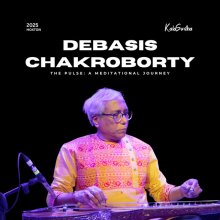
Debasis Chakroborty
Indian Slide Guitar
Classifiers
Swara geometries, relationships, and classifications
Structure
Around the World
Global connections and equivalent scales
Charukesi uses the intervals 1 2 3 4 5 b6 b7 above Sa. George Howlett names this scale Mixolydian b6: the Western Mixolydian mode with its sixth lowered by a semitone.