
Tradition

Hindustani Classical

हिंदुस्तानी शास्त्रीय संगीत

Understand the foundations of North Indian classical singing: raga, taal and composition.

North Indian tradition Khayal and dhrupad Raga and tala
Sub-disciplines
12

Hindustani classical vocal music is the singing tradition of North Indian art music. Singers develop a raga through composition and improvisation in khayal and dhrupad.

Overview

Hindustani classical vocal music is the singing tradition of North Indian art music. With Carnatic music from the South, it is one of India's two main classical traditions, and both rest on raga and taal. A raga (raag) is a melodic framework defined by its notes, the notes it stresses and its characteristic phrases. A taal (tala) is a repeating rhythmic cycle whose first beat, the sam, is where improvisation aims to land. A khayal performance often opens with alap, an unmetred exploration of the raga, before the singer states a bandish, a composition set to taal, and improvises on it. Tabla keeps taal, harmonium or sarangi shadows the voice and a tanpura sustains the drone.

Khayal (khyal) has been the most performed form since the 19th century. Its styles fall into gharanas, schools often named after a lineage's place of origin, such as Gwalior, Agra and Kirana. Dhrupad develops the raga in a long alap before a composition accompanied by the pakhawaj drum. Students practise the seven svaras (notes), sung by name as sargam, and alankars (note patterns). They learn compositions, recite each taal's drum pattern with hand beats and absorb nuance by listening to a teacher.

To choose a course, check its form and level against what you already sing. To play rather than sing, see Hindustani instrumental study.

Part of Vocal: Indian classical vocal music (Sanskrit gita, Hindi geet) is singing built on raga and tala, in two traditions: Hindustani, with forms such as khayal, and Carnatic, with the kriti.

Key Characteristics

The gharana system

Hindustani singers learn within gharanas, stylistic schools named after a lineage's place of origin. Gharanas differ in technique, in the treatment of melody and rhythm, and in repertoire, so a singer's training shapes the way they build a raga as well as what they sing.

Raga, time and season

Ragas can be linked to times of day or seasons and to the emotions they evoke. Singers weigh time, season and mood when choosing ragas, and concerts usually take place in the evening.

The khayal ensemble

The usual khayal ensemble is a solo singer with tabla, a melodic accompanist, usually harmonium and more rarely sarangi, and one or more tanpura players for the drone. Some singers also play a surmandal.

Dhrupad alap

In dhrupad, the raga unfolds at length in an alap sung to non-lexical syllables, nom-tom, moving from a slow unmetred opening to sections with a pulse, before a composition with pakhawaj.

History & Evolution

Ritwik Sanyal and Richard Widdess describe dhrupad as believed to be the oldest style of classical vocal music still performed in North India. Fifteenth-century Gwalior under Man Singh Tomar is linked with it: his court compiled songs in Hindi in place of Sanskrit. Khayal established itself under Mughal court patronage in the eighteenth century, at the court of Muhammad Shah, though khayal singers are documented earlier. Tradition credits Niamat Khan, Sadarang, with shaping modern khayal, an attribution Gordon Thompson and Mukund Lath treat as contested, and hereditary qawwal communities took part in early khayal practice. Since the nineteenth century khayal has been the Hindustani vocal genre heard most often. Teaching has passed orally through the guru-shishya relationship, often with the student living in the teacher's household, and gharanas, stylistic schools named after a lineage's place of origin, carry its styles. In the twentieth century slow khayal tempos became much slower, and the harmonium largely replaced the sarangi as the singer's accompanist.
c. 1500

Dhrupad at Gwalior

At the Gwalior court of Man Singh Tomar, songs were compiled in Hindi in place of Sanskrit, and a later Persian text credits him with the origin of dhrupad.
1665 to 1666

Raga Darpana

Fakirullah Saifkhan made Raga Darpana, a free Persian rendering of Man Singh's lost treatise Manakutuhala, which survives only through this version and one chapter.
18th century

Khayal at the Mughal court

Khayal established itself under Mughal court patronage, at the court of Muhammad Shah, where tradition credits Niamat Khan, Sadarang, with shaping its modern form.
1902

First khayal recording

Gauhar Jan recorded raga Sur Malhar, the first khayal recording that Nicolas Magriel and Lalita du Perron identify.
1977

The ITC Sangeet Research Academy

The ITC Sangeet Research Academy opened in Kolkata to train musicians through a guru-shishya model with contemporary additions, alongside research and preservation.

Technical Aspects

Raga, more than a scale

A raga is a melodic framework defined by more than its scale. Its ascent and descent can differ, certain notes act as pivots, the vadi and samvadi, and characteristic melodic movements mark it out, so two ragas can share the same notes and still sound distinct. The number of ragas is not fixed: some have been sung for centuries, others are recent, and new ones arise from combining existing ragas. Vishnu Narayan Bhatkhande grouped Hindustani ragas under ten parent scales, thaats, from Bilawal to Todi, though some ragas fit the scheme poorly. Notes have no fixed absolute pitch: each singer sets Sa to suit their voice, and intonation shifts by small, microtonal amounts according to the raga. Ragas can also carry associations with times of day, seasons and moods, and singers weigh all three when they choose what to sing in a concert, which usually takes place in the evening.

How a khayal performance unfolds

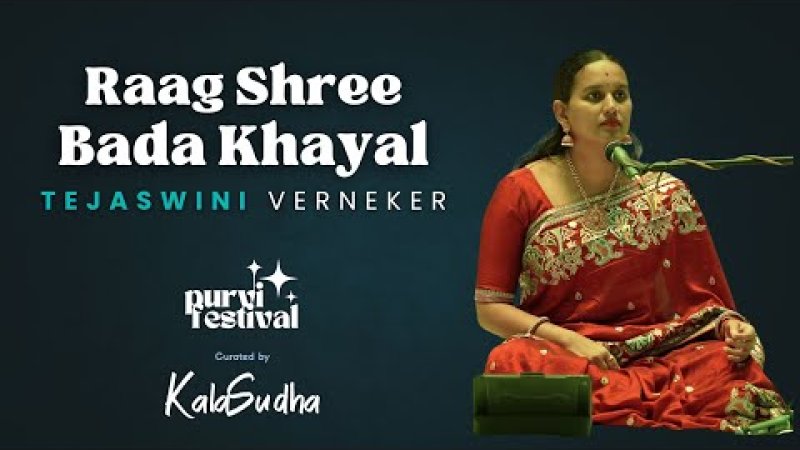
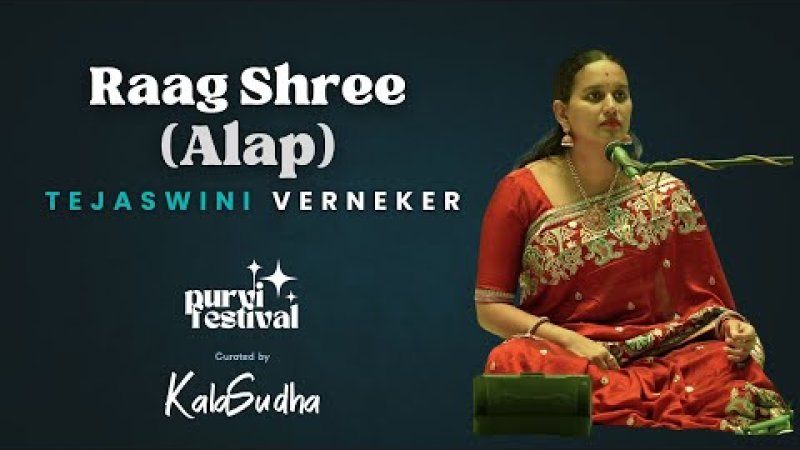
A khayal raga performance begins with a short unmetred alap, sung without text or tabla. The singer then moves into composed sections set to tala: usually a longer, slower bada khayal followed by a shorter, faster chhota khayal. Each rests on a bandish with two parts, the sthayi in the lower half of the octave, carrying the refrain, and the antara, which stresses upper Sa. Bandishes in the same raga differ in text, tala, tempo and the beat on which they begin, and these choices shape the performance. Improvisation grows from the composition: gradual expansion through the raga's registers, badhat; sargam; fast runs, tans, sung on the vowel or on the words; and rhythmic play with the text. The singer leads throughout, choosing raga, compositions, tala and the length of each section, while the melodic accompanist shadows the voice a split second behind.

Journey to Mastery

Follow this structured journey to master this discipline

  1. Find your Sa

    With your teacher, set Sa, the tonic, to suit your voice, since Hindustani notes have no fixed pitch. Sing long notes against a tanpura drone tuned to Sa with Pa or Ma, and listen until your voice blends with it, the sound Hindustani singers aim for.
  2. Sargam and the seven notes

    Learn the seven svaras, Sa Re Ga Ma Pa Dha Ni, as sung note names. Sa and Pa stay fixed; Re, Ga, Dha and Ni can be flat, komal, and Ma can be sharp, tivra. Sing simple sargam patterns up and down, then hear how each raga uses these forms.
  3. Keep the tala

    Learn a tala, a repeating cycle of beats in sections, with its theka, the drum syllables that mark it. Clap the cycle, track sam, its first beat, and sing a short phrase that lands on sam. Start with tintal, the sixteen-beat cycle, then try ektal and jhaptal.
  4. Ornament and alankars

    Practise alankars, patterned note exercises, then the ornaments your teacher demonstrates: kan, a grace note from the raga, and meend, a glide between notes, with khatka and murki later. Record yourself and compare each ornament with your teacher's model before you move on. Stay with each one until your teacher closes it.
  5. A first bandish

    Learn a short khayal composition, a bandish, in two parts: the sthayi in the lower half of the octave, carrying the refrain, and the antara, which rises to upper Sa. Sing it as taught, then use its opening phrase, the mukhda, to return to sam.

Masters of the Past

Learn from the legends who shaped Hindustani Classical

Explore All Masters

Cohort Courses

Comprehensive courses to master Hindustani Classical

A khayal singer sits on a patterned rug singing, with a tanpura behind, in a white room with a curved window

Hindustani Vocal

Hindustani vocal lessons online, prepared by KalaSudha: khayal singing in three levels, live lessons one-to-one or in a cohort, and feedback on practice.
108 path topics across nine modules
  • Your Sa, your voice
  • Feedback on every topic
  • Six gharanas, one shared core
  • +1 more
Register interest

Frequently Asked Questions

Which online Hindustani vocal courses are taught live by trained musicians?

KalaSudha teaches Hindustani vocal music online, live and one-to-one, with trained musicians it has vetted. It reviews each teacher's training, lineage and teaching before taking them on.

Beginners start at Foundation with sargam, the seven notes sung by name, and alankars, set patterns of notes. Forms such as khayal and dhrupad come later, as you move up the levels of our online academy. We also hold workshops and summer camps where enough learners sign up.

How long does it take to learn khayal singing?

Learning khayal singing on the KalaSudha Hindustani Vocal course typically takes 9–12 months for Foundation, 9–15 months for Intermediate and 12–30 months for Advanced.

The months are a guide you agree with your teacher. The pace depends on your practice and on how many lessons each topic needs, and your teacher closes each topic only when its completion check is met.

Have more questions? Contact our support team and we'll be happy to help!

Stay close

Keep KalaSudha close.

Receive news of concerts, learning opportunities, recordings and the work taking shape at KalaSudha.
  • Concert news
  • Learning opportunities
  • Recordings and stories

We respect your privacy. Unsubscribe at any time.