T
Tansen
16th century
Born at Behat near Gwalior, he served the emperor Akbar and is praised by Abul Fazl; Alain Danielou traces the origin of the Dagar gharana to him.
ध्रुपद
The oldest living Hindustani vocal genre, sung with the pakhawaj drum
Dhrupad, the oldest Hindustani vocal genre still sung, opens with a long unaccompanied alap on the raga, then sings a fixed composition with the pakhawaj drum.
Historians date dhrupad as a named genre to the Gwalior court of Man Singh Tomar (reigned 1486 to 1516), where musicians such as Bakshu and Baiju, a figure much wrapped in legend, set Hindi verse in place of Sanskrit. His treatise, the Manakutuhala, is lost apart from one chapter and survives through a Persian rendering of 1665-66. The historian Hariharnivas Dwivedi notes that songs called dhruvapada existed earlier. Practitioners trace dhrupad further back, through older song forms to Sama Vedic chant and temple singing. From Gwalior it spread to Sufi gatherings, temples and the court of Akbar, where 15 of the 36 master singers Abu'l-Fazl lists came from Gwalior, Tansen foremost.
The solemn style heard today had probably formed by the reign of Muhammad Shah (1719 to 1748), who also brought khayal into the classical mainstream. Hereditary lineages carried dhrupad through khayal's rise, among them the Dagar family and the Mallick family of Darbhanga. After independence the Senior Dagar Brothers, Nasir Moinuddin and Nasir Aminuddin Dagar, and their cousins are credited with keeping it alive. New state patronage followed, and the Dhrupad Kendra in Bhopal opened on the initiative of the civil servant Ashok Vajpeyi.
A dhrupad performance opens with the alap, sung over the tanpura drone with no drum and no song text. The singer uses syllables in place of words. Dagar practitioners derive these syllables from a mantra phrase, while other writers describe them as conventional syllables with no meaning.
The alap usually starts at the middle tonic and sinks into the low register (mandra), then climbs through the middle (madhya) to the high register (tar), though singers do not always keep that order. It then takes on a pulse that quickens in stages. Vocal practice calls the pulsed phase nom-tom; it parallels the jor of instrumental music, and a fast closing phase often resembles instrumental jhala. The drum stays silent throughout.
Only then does the composition begin with the pakhawaj. The ethnomusicologist Bonnie Wade puts a concert performance at about 40 to 60 minutes, opening with a lengthy alap.
The pakhawaj, a horizontal two-headed barrel drum, accompanies dhrupad in place of the tabla, and the tanpura supplies the drone. Paintings show how the ensemble changed. In the 1500s singers kept the tala with hand gestures and sang with the rudra veena. Paintings of the 17th century add a long-necked drone lute and the pakhawaj, and in the 1700s the veena left the vocal group as its players became independent.
The drummer need not play the theka, the fixed pattern that marks a tala in khayal. Instead the drummer joins the rhythmic improvisation, playing complex patterns, falling silent where a beat is expected or improvising alongside the singer. Wade suggests this freedom may date from the time when singers kept the tala by hand.
Of the five talas in 1990s performances, chautal (12 beats) and jhaptal (10) led; practitioners also list sultal (10) and tivra (7). Songs for the spring festival of Holi, set in the 14-beat dhamar tala, form the related genre dhamar.
Dhrupad has four banis (also vanis), stylistic streams named Gauhar, Dagar, Khandar and Nauhar. Spellings vary between sources: Gauhar also appears as Gauri, and Khandar as Khandhar. The streams differ in tempo, voice culture, the balance between alap and composition, and ornament.
In practitioners' accounts, Gauhar is known for smooth glides and a reposeful gait, and the Dagar bani gives most weight to a slow, subtle alap with close attention to shruti. Khandar, the bani associated with the Mallick family of the Darbhanga gharana, uses a forceful voice and vigorous gamak. Nauhar is known for rhythmic division of the text and lively passages. Tradition names a founder for each, such as Tansen for Gauhar and Swami Haridas for Dagar, but these attributions remain unverified, and practitioners stress that the boundaries between banis were always fluid.
Follow this structured journey to master this discipline
A dhrupad alap covers a wide range, from the low tonic to the fourth or fifth note above the upper tonic, and Bonnie Wade notes the heavy demand this makes on the voice. One Dagar-trained singer describes the aim as an unsupported sound that fills the body (niradhar nad), in place of a frontal throat sound. Practise long tones across that range with your teacher.
Learn to unfold a raga at a slow pace on syllables over the tanpura drone, carrying it from the low register to the high, with close attention to shruti (microtones). Then add the pulsed nom-tom phase and the faster passages that lead towards the composition, the order a dhrupad alap follows in performance.
A bandish is a fixed composition set to a tala, a repeating rhythmic cycle. A dhrupad bandish can have four sections: sthayi, usually in the lower half of the middle register; antara, which rises to the upper tonic; sanchari, often in the low register; and abhog, which returns towards the sthayi. Many have only the first two. Learn one composition and mark where each section begins.
Dhrupad ornament rests on meend, a glide between notes, and gamak, an oscillation on or around a note. Students work on both and leave aside the fast runs (tans) and the quick turns called murki and khatka that khayal uses. As the alap gathers speed, new and quicker ornaments enter that are almost absent from the slow opening.
Performance practice centres on improvising on the composition's words once the pakhawaj enters. In bol-bant the singer divides the words into faster note values, such as halves, thirds and quarters; in laykari the singer plays rhythm against and within the tala. Dhrupad is sung solo or by a pair, and Dagar singers have performed as duos, often brothers, over several generations.
16th century
Born at Behat near Gwalior, he served the emperor Akbar and is praised by Abul Fazl; Alain Danielou traces the origin of the Dagar gharana to him.
1932 to 2013
A vocalist of the Dagar tradition who taught at Dhrupad Kendra Bhopal; the Gundecha Brothers and Uday Bhawalkar are among his pupils.
Umakant born 1959; Ramakant 1962 to 2019
Umakant and Ramakant Gundecha sang dhrupad as a duo and trained with Zia Fariduddin and Zia Mohiuddin Dagar in the Dagar tradition.
1902 to 1990
A vocalist of the Kartaram lineage of the Darbhanga gharana, he was the last court singer of Darbhanga, according to his biographer Chandrakant Lal Das.
1879 or 1880 to 1963
A dhrupad and khayal singer and musicologist of the Bishnupur gharana, he was made a Sangeet Natak Akademi Fellow in 1962.

20th and 21st century
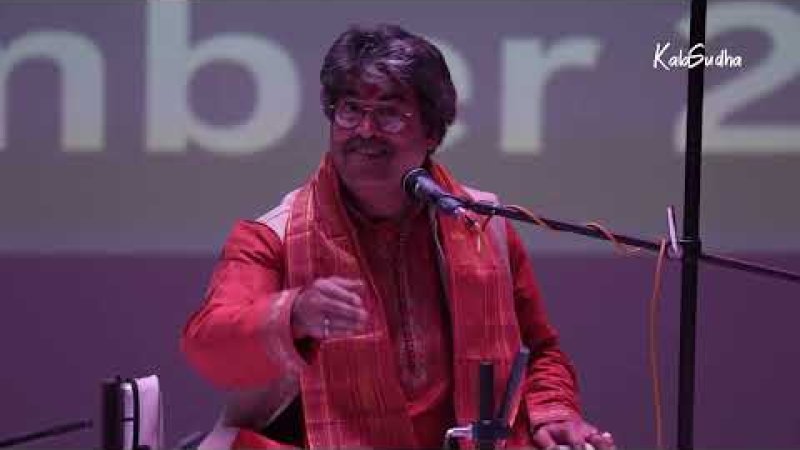
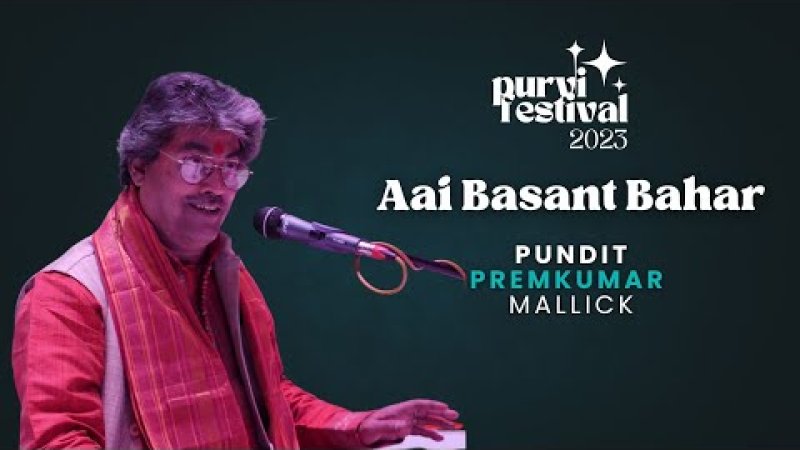
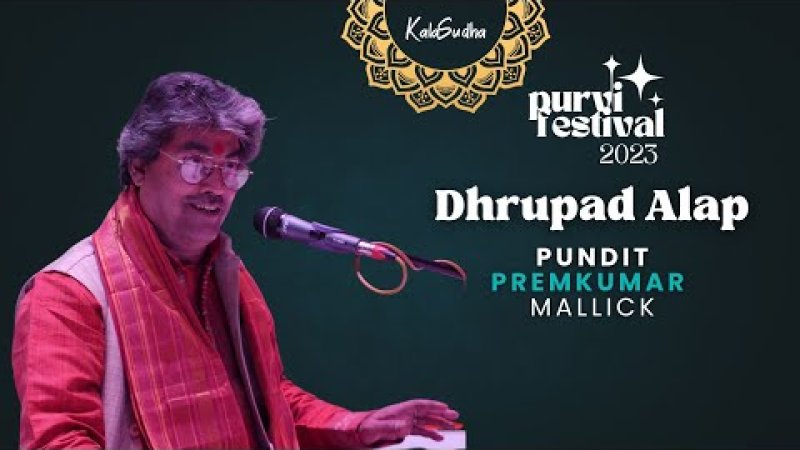
A vocalist of the twelfth generation of the Darbhanga gharana and son of Vidur Mallick, he sings in the Mallick family line of dhrupad.
Learn from the legends who shaped Dhrupad
Renowned performers of this discipline
You can learn dhrupad singing online with KalaSudha, in live one-to-one lessons with a vetted teacher. Dhrupad, the oldest Hindustani vocal genre still sung, opens with a long unaccompanied alap, an unmetred exploration of the raga, then sings a fixed composition with the pakhawaj drum.
Your first stage at Foundation is voice production. You practise long tones across the range a dhrupad alap covers, from the low tonic up to the fourth or fifth note above the upper tonic. Our courses run in levels, and KalaSudha adds workshops and summer camps where enough learners sign up.
Yes, an adult beginner can learn dhrupad singing with KalaSudha, in live one-to-one lessons online, with no musical background needed. Your first stage at Foundation is voice production. You practise long tones across the wide range of a dhrupad alap, which climbs to the fourth or fifth note above the upper tonic.
If you sang years ago and stopped, our courses run in levels, so you start again where you left off. Your teacher first reviews where you stand.
Yes, KalaSudha teaches dhrupad singing to children in live online lessons, and each teacher decides when a child is ready to start. Six to eight is a typical age to begin singing lessons.
A dhrupad alap makes heavy demands on the voice, so a young singer starts with long, steady tones. Children learn through a parent's account. To ask a teacher about your child, visit the Academy and press Talk to an Advisor.
Learning dhrupad singing starts with the basics of singing, which typically take three to six months, and a basic command of technique takes 12 to 18 months. About 30 minutes of practice a day is a typical start.
Dhrupad then asks for long tones and a slow alap, unfolded over the tanpura drone, before you sing the composition. Our courses run in levels, and your teacher agrees the pace with you.
You usually learn dhrupad in the gharana and bani of your teacher, so you choose a bani when you choose a teacher. Each KalaSudha teacher's profile names their lineage.
Four banis, or stylistic streams, are recognised: Gauhar, Dagar, Khandar and Nauhar. The Dagar bani centres on a slow, subtle alap, and the Darbhanga gharana of the Mallick family is linked with the Gauhar and Khandar banis. Hear several, then pick a teacher whose singing you want to learn. Ask us to match you in the Academy.
To find a good dhrupad teacher, or guru, look for one who can tell you who they learned from. From your first lesson, a good teacher works on long tones and exact intonation over the tanpura drone. On KalaSudha, each teacher's lineage is on their profile. Pick one yourself, or ask us to match you.
Lessons are live and online, from £30 / $30 an hour, set by each teacher. If you have sung before, your teacher first reviews where you stand. Ask about lessons in the Academy.
Dhrupad singing lessons with KalaSudha cost from £30 / $30 an hour, set by each teacher. One-to-one lessons are live and online, booked in your own time zone, and you see the price in your currency when you book.
To ask what a teacher charges, visit the Academy, press Talk to an Advisor and tell us you want to learn dhrupad.
Have more questions? Contact our support team and we'll be happy to help!
It seems that you are in
Visit KalaSudhaWe usually reply within a few hours
Loading article…
We could not load this article. Please try again later.
Was this helpful?
Thanks for the feedback
Still need help?
This conversation is resolved — reply to reopen
Topic
Answers come from KalaSudha.com. For anything else, talk to the team.
We email a six-digit code. Enter it here, never in a chat message.