

A Hundred Strings en Manchester: cuerdas de Cachemira y Delhi
- 20 Nov 2026
- Viernes
- 7:00 PM – 9:30 PM
- 2 horas, 30 minutos
- The Stoller Hall
- Manchester, GB
Entradas
- Front Stalls Early Bird
- GBP30.00 GBP
- Stalls Early Bird
- GBP25.00 GBP
- Student
- GBP15.00 GBP
- Front Stalls General Admission
-
GBP35.00 GBP
Sales start on Vie, 6 Nov 2026 - 00:00 - Stalls General Admission
-
GBP30.00 GBP
Sales start on Vie, 6 Nov 2026 - 00:00

Resumen del evento
Artistas participantes
Learning to play tabla with different gharanas and styles made me a more musically awakened soul, gave an immense depth and enriched my tabla playing.
Artistas participantes
-
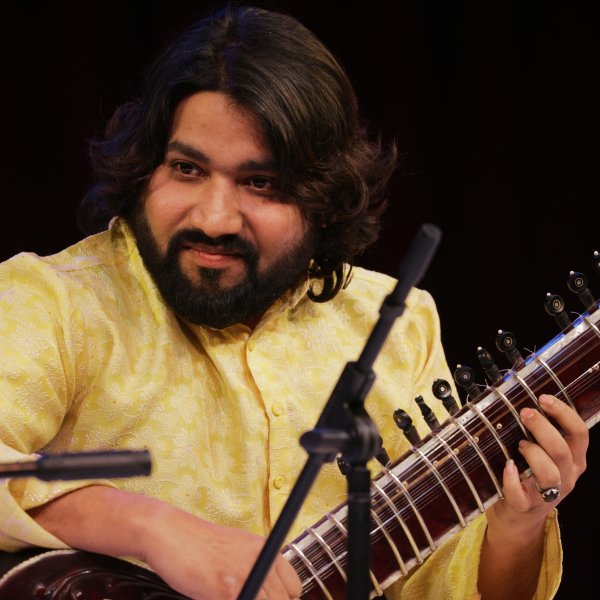 Adnan Khan
 -
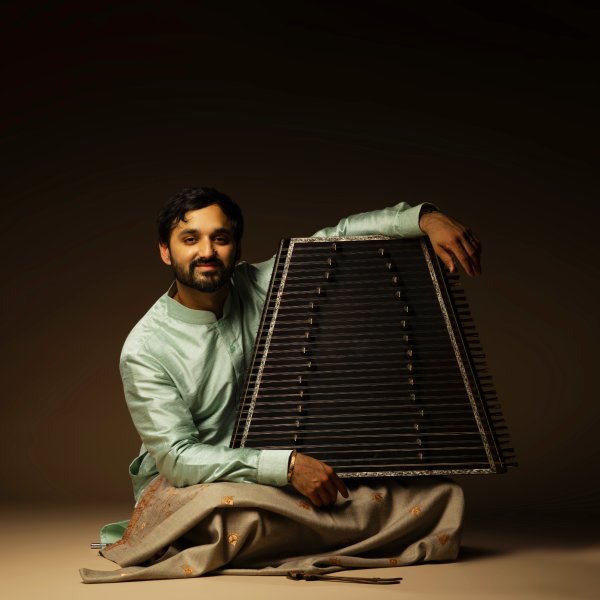 Vinay Desai
 -
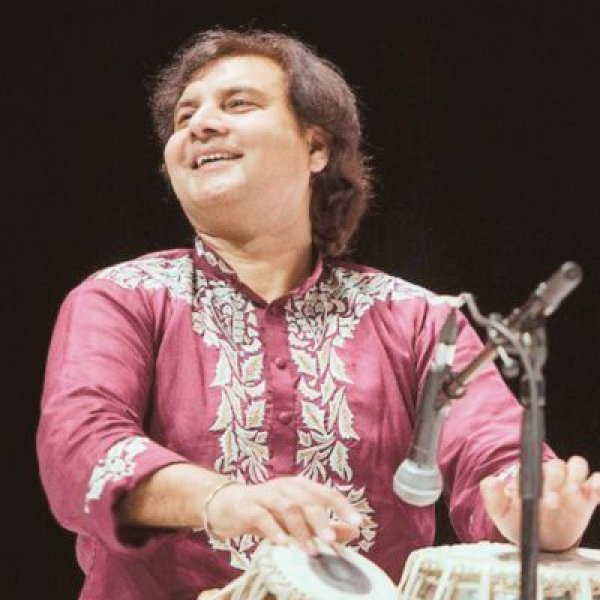 Akram Khan
 -
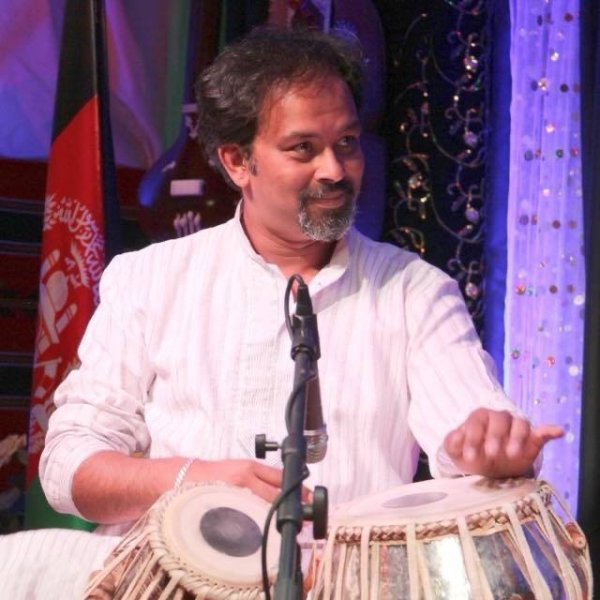 Shahbaz Hussain


Detalles del evento
El 20 de noviembre, cuatro músicos traen la música clásica india a The Stoller Hall, dentro de la Chetham's School of Music: dos tradiciones de cuerda y dos intérpretes de tabla que suman entre ambos tres gharanas.
Vinay Desai toca el santur, el instrumento de cien cuerdas de Cachemira, como discípulo directo de Pandit Shivkumar Sharma, galardonado con el Padma Vibhushan. Adnan Khan, sitarista de Delhi nominado al Grammy, toca en el estilo gayaki ang, que modela el sitar a imagen de la voz cantada. Se forma con su padre, el sitarista Ustad Saeed Khan.
Dos maestros de la tabla comparten esta noche, y Manchester es la única fecha de la gira en la que coinciden. Ustad Akram Khan es la séptima generación de su familia en el gharana Ajrada y ha dado más de once mil conciertos. Ustad Shahbaz Hussain aprendió con su padre, el cantante Ustad Mumtaz Hussain. Después estudió con Ustad Faiyaz Khan, del gharana de Delhi, y con Ustad Shaukat Hussain Khan y Ustad Allah Rakha, del gharana del Punyab. En 2008, el Gobierno de Pakistán le concedió el premio Son of Lahore.
Ustad Shahbaz Hussain vive en Manchester y enseña por todo el norte de Inglaterra. The Stoller Hall es su escenario de casa.
A Hundred Strings también actúa en Oxford el 18 de noviembre, en Bournemouth el 21 de noviembre en el Palace Court Theatre y en Londres el 22 de noviembre en St Saviour's, Pimlico.
Si tiene necesidades de accesibilidad, contáctenos.
Apertura de puertas a las 18:45. La música empieza a las 19:00.
Normas para el público:
- No grabe vídeo ni haga fotos sin nuestro permiso.
- Mantenga el teléfono guardado durante todo el concierto y no lo saque ni siquiera para escribir mensajes.
Información del lugar

Frequently Asked Questions
¿Cómo funciona la ubicación por zonas en Manchester?
Al reservar eliges una zona, Platea delantera (Front Stalls) o Platea (Stalls), y luego ocupas cualquier asiento libre de esa zona. Los asientos dentro de cada zona no están numerados, así que llega a la apertura de puertas, a las 18:45, para tener más opciones.
La Platea delantera la forman las filas más cercanas al escenario: £30 con tarifa anticipada hasta el 5 de noviembre y después £35. La Platea queda justo detrás: £25 con tarifa anticipada y después £30. Las entradas de estudiante cuestan £15. El anfiteatro está cerrado en este concierto.
¿Cómo recibo mi entrada?
La entrada llega en el correo de confirmación. Muéstrela en el móvil al entrar en la sala, o traiga una copia impresa si prefiere el papel.
Si el correo no ha llegado, revise primero la carpeta de correo no deseado. Si sigue sin aparecer, escríbanos a [email protected] y se la enviamos de nuevo.
I can no longer attend. Can I have a refund?
Ticket sales are final once confirmed. If something has come up, write to [email protected] at least 7 days before the event and tell us what happened.
We look at each request on its own merits. A refund is not guaranteed, and we cannot consider requests inside the last week.
What happens if the event is cancelled or moved to another date?
You choose between a full refund and a transfer to the new date or an equivalent concert.
Refunds for a cancelled event go back to your original payment method within 7 to 14 business days. You do not need to claim them.
When should I arrive?
Come at the door time on the event page rather than at the start time. It gives you room to find a seat and settle.
The concert opens with an alap, the slowest and quietest stretch of the evening. Walking in during it costs you the part that sets up everything after.
Is there an interval?
Yes. The concert runs in two halves with a short interval between them.
The first half holds the classical raga set. The second opens out, and on most of our bills it changes either the players or the form.
What should I wear?
Whatever you are comfortable sitting in for a couple of hours.
Our audiences turn up in jeans and in saris on the same night, and neither looks out of place.
Can I photograph or film the performance?
No, not during the performance. The musicians improvise, and a raised phone or a lit screen pulls the room out of the music. Put the camera away and stay with the sound.
If you are covering the concert for press, or need to record for another reason, write to [email protected] before the day. Filming without that permission is not allowed.
Can I use my phone during the concert?
Switch it off or set it to silent before the music starts, and leave texting until the interval.
This holds for the whole concert. A single screen lighting up in a quiet hall reaches the stage.
I have access needs. Who do I talk to?
Write to [email protected] before you book and tell us what you need.
Wheelchair spaces and seats near the stage need arranging with the venue in advance, so the earlier you write, the more we can do.
I have never been to an Indian classical concert. Will I follow it?
Yes. You do not need to recognise a raga or count a taal to follow what happens on stage.
The music opens at a crawl with no pulse at all, then the tabla enters and the rhythm takes hold. That shape repeats through the evening, and most people read it by the second piece. Sit close and give the opening time.
What is a sitar?
A long-necked lute with a gourd body, movable curved frets, and a set of sympathetic strings running beneath the playing strings.
The curved frets let a player pull a string sideways and bend one note into another several steps away. That bend, the meend, is where most of the expression lives, and the sympathetic strings keep ringing behind it.
What is a tabla?
A pair of hand drums. The smaller wooden one sits under the right hand and carries the pitch. The larger metal one under the left hand supplies the bass and bends it, by pressing the heel of the palm into the head while striking.
The black circle on each head is what makes the sound recognisable. It weights the skin so the drum rings at a definite pitch rather than thudding.
Have more questions? Contact our support team and we'll be happy to help!