

Piano
(पियानो)The piano, a hammered keyboard chordophone, reached India through colonial drawing rooms and became central to Hindi film music through R. D. Burman and A. R. Rahman. It now meets raga in fusion.
3
6
£300 - £15,000
Entry-level digital uprights start around £300; quality acoustic uprights cost £2,000 to £6,000; a new mid-range grand starts at about £10,000, and Steinway and Bösendorfer concert grands cost far more. Before you buy a used acoustic piano, have us inspect its soundboard, pin block and action.

Explore the discipline
Meet the musical tradition, its practitioners and ways to learn.
History & Origins
What is a piano?
The piano is a keyboard chordophone in which felt hammers strike steel strings, and suits your Western repertoire, film music or raga fusion. Its full name, pianoforte, means soft and loud, because touch sets each note's volume. A modern concert grand has 88 keys over more than seven octaves, about 230 strings and a cast-iron plate holding up to 20 tonnes of tension. No other Western instrument gives one player so wide a range or so many shades of loud and soft. The Italian harpsichord maker Bartolomeo Cristofori invented it around 1700, replacing the harpsichord's plucking with hammers that grade the volume.
A spruce soundboard carries the tone, and copper-wound bass strings and plain steel treble strings in choirs of three give the piano its bloom. A grand's gravity-return action repeats notes fast; an upright returns its hammers by spring in a smaller cabinet; a digital piano needs no tuning. A regulated action feels even across the keyboard.
You can play ragas on the piano within limits. It locks each note to equal temperament, while raga lives on shruti (microtones) and meend (glides): Bhairavi's komal gandhar sits a shade below E-flat, Yaman's tivra madhyam a shade above F-sharp. Pianists run quick figures through the target note to suggest the glide; others choose ragas that suit the grid or let sustain carry the line. Anil Srinivasan, trained in Western and Carnatic music, has played with Bombay Jayashri.
Cristofori built the first piano at the Medici court in Florence around 1700. Its hammer struck and escaped, leaving the string free to ring while the key stayed down; that escapement drives every piano action since. Viennese makers built the light action Haydn and Mozart preferred, and English makers the heavier action Beethoven favoured. By the 19th century Steinway and Bösendorfer had built the modern cross-strung, iron-framed concert grand.
In the 1800s uprights reached homes, missions and clubs in Calcutta, Bombay and Madras; mission schools trained the first Indian pianists. Indians first heard it in church and at European recitals, and until the early 20th century it stayed in European and Europhile circles, its fixed tuning of little use to classical musicians.
Bombay studio orchestras took up the piano in the 1940s and 1950s. By the 1960s and 1970s S. D. Burman and R. D. Burman made it a core voice in film scores, and from the 1990s A. R. Rahman made it a centrepiece in Roja, Lagaan and Slumdog Millionaire, scores released worldwide. Amjad Ali Khan has worked with pianists, setting slow Hindustani alap beside Western slow movements, and Anil Srinivasan has brought the piano to Carnatic raga.
Construction & Craftsmanship
Construction Process
The soundboard is the acoustic core: a thin panel of tight, even-grained Sitka, European or white spruce, chosen for its stiffness-to-weight ratio; low-cost pianos may use laminated boards. Ribs glued across the grain stiffen it, and a slight crown under string tension keeps it responsive; a flat board sounds thin. The bridge on top carries string energy into the wood.
Strings of high-carbon steel run from hitch pins to tuning pins set in the pin block, hardwood plies of maple or beech glued with alternating grain. Bass strings wrap a steel core in copper, adding mass without impractical length, and take large, dense hammers. The treble has three plain strings per note, which couple through the bridge for a fast attack and a slower aftersound. A cast-iron plate absorbs up to 20 tonnes of tension.
Each hammer carries layers of pressed wool felt, firm at the core and softer at the surface: harder felt sounds brighter, softer felt sings. Technicians voice it by needling or hardening the felt, and regulate the action, thousands of levers, springs and cloth-covered wooden parts, so every hammer travels, releases and rebounds alike.
Maintenance & Care
- Tuning: Tune every six months at home, quarterly in studios or changeable climates, holding pitch between A439 and A441. A long-neglected piano needs several pitch-raise passes over weeks: forcing it in one session can crack the soundboard or strip tuning pins. Book the tuning with us.
- Humidity: Keep 40–50% relative humidity at a steady temperature near 20 °C, away from vents, fires and sun. Dry air cracks the soundboard and loosens the pins, so the piano goes flat; damp swells the board and pitch rises. A Dampp-Chaser system in the cabinet steadies the soundboard, but control the room too. In India's monsoon, humidity can pass 70%.
- Keys: Wipe key tops with a barely damp cloth and dry them at once, as moisture warps them; no chemical cleaners on ivory or synthetic tops.
- Action: Dust in the felts slows the keys. Have us remove and vacuum the action; never blow or brush dust out with the action in place. Keep drinks off the keyboard: a spill into the keybed damages parts that are costly to replace.
Technical Specifications
Detailed specifications for the Piano
Physical dimensions
| Specification | Value |
|---|---|
| Grand piano length | 1,500mm (baby grand) to 2,750mm (concert grand) |
| Upright piano height | 900mm–1,300mm |
| Grand piano width | ~1,500mm |
| Grand piano weight | 250kg–600kg |
| Key count | 88 (standard); some models have 85 |
String & soundboard system
| Specification | Value |
|---|---|
| Total string count | ~230 strings |
| Total string tension | Up to 20 tonnes (combined) |
| Bass string material | Copper-wound steel core |
| Treble string material | Plain high-carbon steel |
| Strings per treble note | 3 (unison choir) |
| Soundboard material | Sitka, European or white spruce |
Hammer & action mechanism
| Specification | Value |
|---|---|
| Hammer covering | Pressed wool felt (graded density, firm core to soft surface) |
| Grand action type | Gravity-return escapement (enables rapid note repetition) |
| Upright action type | Spring-return (slower repetition; smaller cabinet) |
| Action parts per note | ~80 individual components |
| Regulation | Periodic service required for even touch across all 88 keys |
Pedal system
| Specification | Value |
|---|---|
| Sustain pedal (right) | Lifts all dampers; strings ring freely |
| Sostenuto pedal (middle, grand) | Sustains only notes held at moment of depression |
| Soft pedal (left) | Una corda (shifts hammers) in grand; moves hammers closer to strings in upright |
| Pedal count | 3 (concert grand); 2 (some uprights, omitting sostenuto) |
Acoustic characteristics
| Specification | Value |
|---|---|
| Frequency range | ~27.5 Hz (A0) to ~4,186 Hz (C8) |
| Dynamic range | ppp to fff (approximately 40dB–100dB) |
| Sustain | 3–30 seconds depending on register and pedal use |
| Tuning system | Equal temperament (12 equal semitones per octave), with slightly stretched octaves |
| Tonal character | Rich harmonic spectrum; treble unison choir produces characteristic bloom |
Available Instruments
Browse our curated selection of Pianos
Showing 1 instruments

Looking for Something Unique?
Contact us for custom-made instruments tailored to your specific requirements
Contact for Custom OrderYour Journey to Piano Mastery
Follow this structured path from absolute beginner to accomplished performer
Hand position & keyboard geography
Beginners start here, at the Foundation level of KalaSudha's courses. Learn correct seated posture, hand arch and finger weight. Map the 88-key layout and its octaves, and build independent finger movement through five-finger exercises.
Scales & sargam mapping
Indian raga exploration on piano
Composition & accompaniment
Advanced improvisation & fusion
Media Gallery
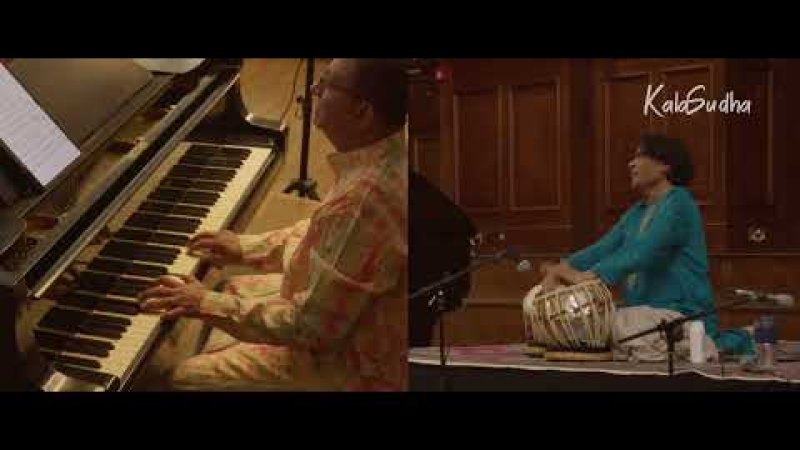
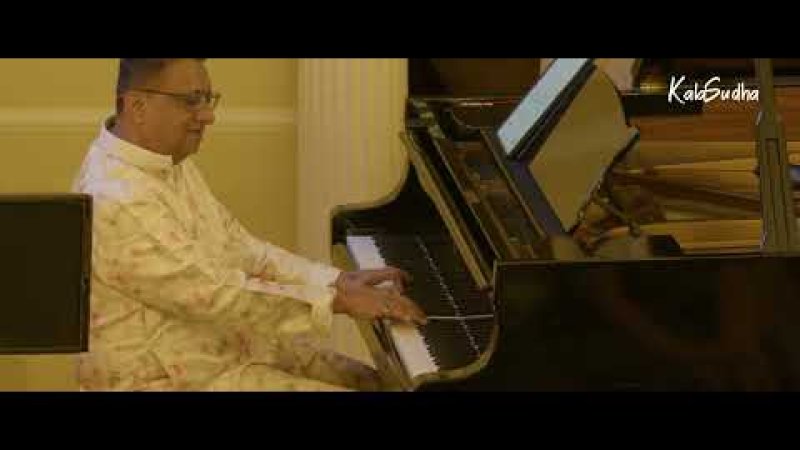
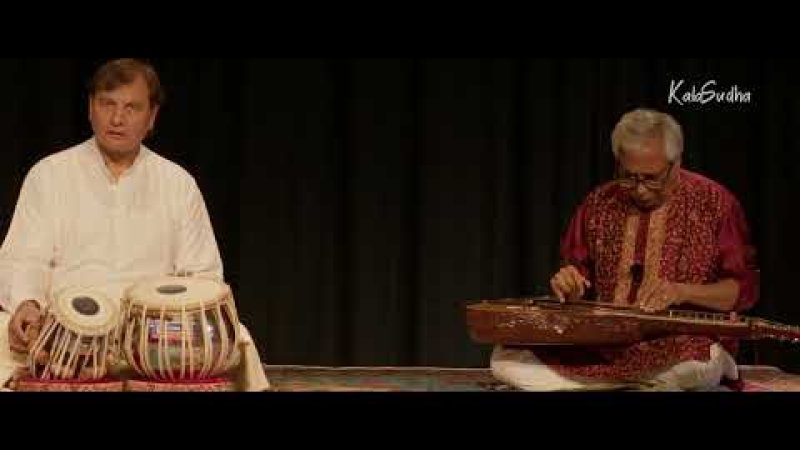
Watch performances, see details, and explore the Piano in action



Featured Artists
Renowned Piano players and performers
Rekesh Chauhan

Raymond Yiu

Deepak Shah

Past Events
Browse our archive of past performances

Music Without Boundaries


An Instrumental Journey Through the Nature


Norwich Ragas: Piano & Slide Guitar Unbound

Discover the Magic of Indian Raagas on Piano - Workshop
Frequently Asked Questions
How can a beginner, a child or a pianist returning after a long break start learning Indian classical music on the piano?
You can learn Indian classical music on the piano with KalaSudha online and in workshops, and beginners start at Foundation level. That stage covers hand position and the layout of the 88 keys. Children learn with us as well as adults, so ask us about a starting age and about an instrument size for a younger learner.
Pianists coming back after a long break can start again where they left off, because our courses run in levels. Your teacher reviews where you stand first.
Is Hindustani music tuned like the piano?
Hindustani music is closer to the piano's equal temperament than many assume. A quantitative study of sung performances found that Hindustani tuning mixes equal-tempered and just intervals, with substantial equal-tempered influence, while Carnatic tuning sits close to 5-limit just intonation. The same study found no strong evidence that the 22 shrutis are used as distinct pitches.
How often should a piano be tuned?
The Piano Technicians Guild advises tuning a piano often enough to hold its pitch between A439 and A441. It recommends stable conditions, around 20°C and 42% relative humidity, away from vents, fires and direct sun. Regulation of the action is a separate job: it adjusts the parts to compensate for felt compression and wood movement so the touch stays even.
Who invented the piano?
Bartolomeo Cristofori (1655 to 1731) invented the piano while employed at the Medici court in Florence. A Medici inventory of 1700 describes his new arpicembalo that makes soft and loud. His key invention was the escapement, which lets the hammer fall away from the string after striking so the string can vibrate. His 1720 piano in the Metropolitan Museum is the oldest surviving piano.
What humidity is best for a piano?
The Piano Technicians Guild recommends keeping a piano in stable conditions of about 20°C and 42% relative humidity. Keep it away from vents, fires and direct sun. A piano's humidity history, along with the condition of its soundboard, pinblock and action, drives restoration costs, so have us inspect a used piano before purchase.
When did the piano arrive in India?
London music retailers were exporting pianos to British Calcutta in the late 18th century, and the pianoforte replaced the harpsichord in Anglo-Indian homes in that period. Humid tropical conditions damaged keyboard instruments in British India. Between about 1840 and 1910, firms in India, Sri Lanka and Myanmar produced tropical pianos built to withstand heat, insects and humidity.
What should I check before buying a used piano?
Have us inspect a used acoustic piano before you buy. The condition of the soundboard, pinblock and action, and the piano's humidity history, drive the cost of any restoration. The Piano Technicians Guild recommends stable conditions around 20°C and 42% relative humidity, away from vents, fires and direct sun.
What should I look for when buying a piano to play Indian classical music, acoustic or digital?
When buying a piano for Indian classical music, start with tuning: the piano locks each note to equal temperament, while a raga can shade notes away from it. A digital piano needs no tuning. An acoustic piano can be retuned note by note. In 2020, the raga pianist Utsav Lal told the Indo-Asian News Service that he retunes a few notes to find Yaman's gandhar, its third degree.
On either kind, look for an action that feels even across the keyboard. Pianists suggest a meend, the glide between notes, with quick figures through the target note. KalaSudha sells digital and acoustic uprights and mid-range grands. Ask us for a quote, or for a piano made to order.
Where can I buy a piano for Indian classical music, with international delivery and service where I live?
You can buy a piano for Indian classical music from KalaSudha, by quote or made to order, and we deliver worldwide. We pack every instrument for international shipping, so ask us about cases and insurance before it travels.
We service and repair any piano in any country, wherever you bought it: ask us. We also supply strings and spare parts. After the sale, help comes through the chat on any page or by email to [email protected]. Ask us as well about gift vouchers and class sets for schools, or a flight case if your instrument travels with you.
What can I give someone who is learning to play an Indian classical instrument?
A good gift for someone learning an Indian classical instrument suits the instrument they play and the stage they have reached, so ask their teacher if you are unsure. An instrument of their own, or a better one, also makes a gift: KalaSudha sells every instrument by quote or made to order. For something smaller, ask us for a case, or for strings and spare parts to suit their instrument.
Lessons make a gift as well. KalaSudha teaches online and in workshops, and beginners start at Foundation level: see our courses.
Ask us about gift vouchers.
How can I book a pianist who plays Indian classical music for a concert, an event or a recording?
You can book an Indian classical pianist through KalaSudha for a concert, event or recording. Tell us what you are planning through our page to book Indian classical musicians. To hear our artists first, try KalaSudha's recordings and concert videos.
Have more questions? Contact our support team and we'll be happy to help!
Ready to start learning Piano?
Get personalized quotes and explore courses