

牛津·拉加·尤尼森:双风与鼓的二重奏
- #牛津
- #线下
- 十一月 13, 2025
- 星期四
- 7:00 下午
- 1 小时, 30 分钟
- Holywell Music Room
- 牛津, 英国
获取您的门票

表演艺术家
-
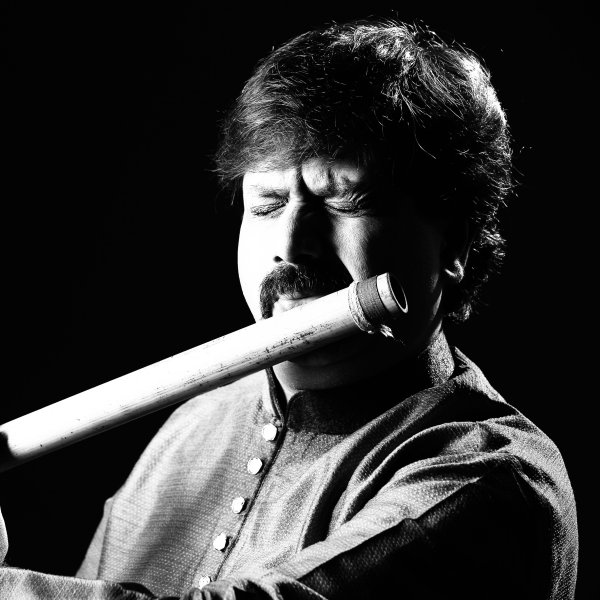 阿贾伊·普拉桑纳
-
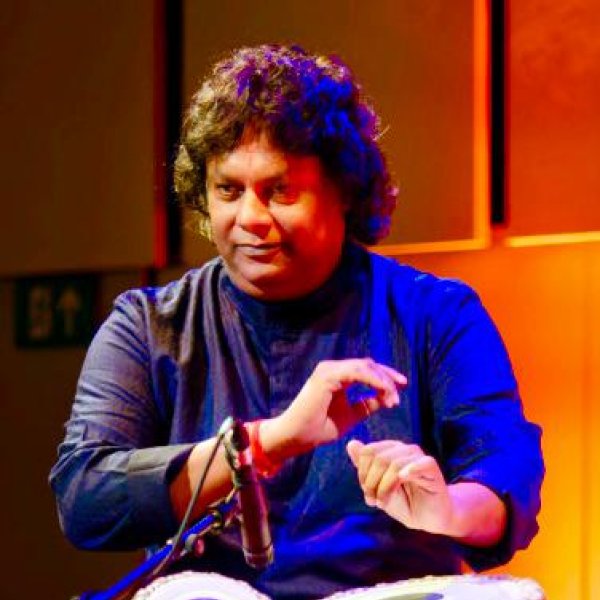 库西克·森


活动详情
各位牛津的音乐爱好者们,这个秋天,我们将为我们美丽的小镇带来一场诗意的盛宴。11月13日,一场充满魔力的印度古典拉格长笛之夜将在霍利韦尔音乐厅举行。
欢迎来体验牛津拉格齐奏:风与鼓的二重奏,这是一场超凡脱俗的印度斯坦古典音乐之夜,由三届格莱美奖提名者、国际知名的班苏里演奏家、以其创新的跨流派长笛交响曲而闻名的潘迪特·阿贾伊·普拉桑纳 (Pandit Ajay Prasanna) 和同代最杰出的塔布拉鼓演奏家之一库西克·森 (Kousic Sen) 联袂演出。
Kousic 出生于加尔各答的一个音乐世家,师从贝拿勒斯流派的大师,以其强劲有力且细腻灵动的塔布拉演奏技艺享誉全球。无论是古典音乐会、舞蹈伴奏,还是跨文化合作,他充满活力的表演都能为舞台注入新的活力。作为利物浦 Milapfest 音乐节的驻场艺术家,他在美国、加拿大、欧洲和亚洲的巡演中,与世界各地的观众分享了他精湛的节奏技艺。
Ajay 沉思的长笛演奏和 Kousic 充满活力的塔布拉鼓对话将共同创造出具有深度恢复作用的音景,呼应了人们对音乐在正念、情绪平衡和心理健康方面的力量的永恒信念。
这不仅仅是一场音乐会;它更是我们社区体验这座城市罕见音乐的机会,让传承数百年的南亚音乐传统在牛津与我们相遇。研究表明,这种疗愈音乐可以舒缓心灵,缓解压力,并提升幸福感。
带上朋友,度过一个愉快的夜晚,为我们城市丰富的文化生活增添另一个难忘的夜晚。
下午 6:30 开门,晚上 7:00 开始音乐
观众政策:
- 未经授权,禁止拍摄或摄影。
- 活动期间禁止使用手机(包括发短信和静音模式) 。敬请配合。谢谢!
牛津,到时候见!
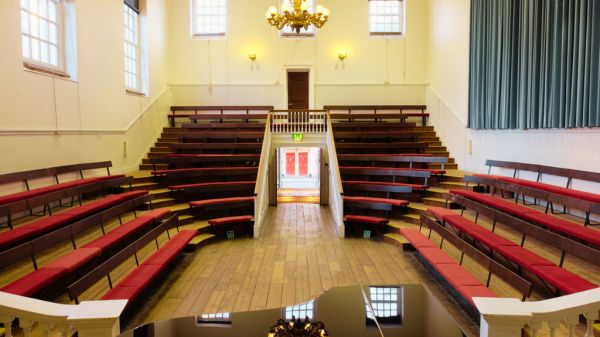
Venue information
Attendee reviews
Ratings describe the event experience.
-
Event Attendee
Event experience 5/5
I go to a lot of concerts, all kinds of music, mostly classical. The music I like best is probably string quartets. The other day I heard a very fine performance of Beethoven's late quartet, the number, Op. 130, with the Grosse Fuge, which was very fine. But tonight's concert is a completely different kind of music, two extraordinary virtuosos, or Virtuosi but the great quality they had was simple joyfulness astonishing virtuosity but what is virtuosity without the joyfulness and that music really leaves me with a feeling that is not going to leave me for a good few hours and probably I'll still be feeling it tomorrow I know this from great concerts and that was Wonderful, wonderful music. I can say no more.
-
Event Attendee
Event experience 5/5
I have to say thank you for making this an outstanding evening.
-
Event Attendee
Event experience 5/5
My mum played flute in this building many times like 60, 70 years ago and so it was a delight to come and watch a completely different musical tradition but still the flute is such an amazing instrument and we really witnessed a virtuoso tonight, it was quite incredible, really amazing.
-
Event Attendee
Event experience 5/5
I just started to play. Oh yeah? Yeah! And actually the guy who's making me my first flute, he was a student under Harry Prasad. Yep. So I think the same lineage, I think. Yep. Smaller. Yeah, he always takes me to another place, this music. Yep. And... The fun of it as well, the conversation between the two instruments and involving the crowd. It's just so beautiful, man. Such a break from normal life, you know. The thing about the breath, you know, that somehow takes you out of your head into the body.
-
Event Attendee
Event experience 5/5
Well, I think it was mesmerising, absolutely beautiful, complete serenity for an hour and a half and a complete stillness of intrusive thoughts. It was just all about being in this moment and being enraptured by that music. It really was. We have an emerging Indian flute player here. It should be prescribed on the NHS, seriously, for mental health, it really should. It's just, I think I'm going to sleep better than I have in a long time tonight.
Showing 3 of 5 reviews
常见问题
How do I get to the Holywell Music Room on Holywell Street in Oxford, and who do I ask about parking or step-free access?
To reach the Holywell Music Room, head for Holywell Street in Oxford city centre, postcode OX1 3SB. The room is part of Wadham College, which lists it at https://events.wadham.ox.ac.uk/holywell-music-room. If you need parking or step-free access, write to [email protected] before you book, or read who to talk to about access needs. To book a seat, see how to find and book KalaSudha concerts in Oxford.
Is the Holywell Music Room in Oxford accessible for wheelchair users and people with other access needs, and who should I contact about it?
The Holywell Music Room has a ramped main entrance on a loose gravel path, level access to the auditorium and one accessible toilet, according to the Oxford University AccessGuide.
Wheelchair spaces and hearing-loop provision are limited. If you need either, or have other access needs, contact KalaSudha before you book.
Where can I hear live Indian classical music in Oxford, and where are KalaSudha's Oxford concerts listed?
KalaSudha presents Indian classical music in Oxford at the Holywell Music Room on Holywell Street, part of Wadham College. The room dates from 1748, and Wadham calls it "the oldest custom-built concert hall in Europe".
The KalaSudha Oxford page lists each Oxford concert with its Book Tickets button; press Register for updates there to hear about new dates. For directions, see getting to the Holywell Music Room.
KalaSudha has presented Oxford Raga Unison at the Holywell Music Room.
Who is the flautist Pandit Ajay Prasanna, and what is his musical lineage?
Pandit Ajay Prasanna is a flute player from a musical family. He carries forward the legacy of his father, Bholanath Prasanna, a flute master whose students include Hariprasad Chaurasia. He plays in the style of the Banaras gharana. He has performed across India and abroad, including at Queen Elizabeth Hall in London and at festivals in Asia and Europe. His honours include Grammy nominations, the Global Indian Music Award for his album Cinema, the Sangeet Ratna Award and the Surmani Award.
Ajay Prasanna learned the flute from his father, who was also his guru. He is a top-grade classical artist at All India Radio, plays bansuri on the Gorillaz album The Mountain and is a four-time Grammy nominee. He advises on KalaSudha's bansuri course and teaches it.
Who is the tabla player Kousic Sen, and where did he train?
Kousic Sen is a tabla player, born into a musical family in Calcutta and trained by masters of the Banaras gharana. He plays in classical concerts, accompanies dance and works in cross-cultural collaborations. He is an Artist in Residence with Milapfest in Liverpool and has toured the USA, Canada, Europe and Asia.
What is a bansuri, how is it made, and how is it played?
A bansuri is a transverse flute cut from a single length of seasoned bamboo. It has no keys and no moving parts, only six finger holes, or seven in Pandit Pannalal Ghosh's style. The maker burns or drills the blow hole and the finger holes. The player controls pitch through the lips at the blow hole, breath pressure and half-holing, covering a finger hole in part, which gives the slides and bends of a raga. Until the 1940s it was not thought a concert instrument; Pannalal Ghosh made a larger bansuri for the classical stage.
What is the Benares (Banaras) gharana of tabla, who founded it, and what does it sound like?
The Benares gharana is a school of tabla playing named after Benares (Varanasi), where Ram Sahai founded it in the late 18th or 19th century. Gharana accounts say he studied in Lucknow, so the school descends from the Lucknow tabla gharana. Its sound is powerful and open, built on resonant strokes such as na and din, and its players favour tete played with the full hand. Lineage accounts say Ram Sahai wanted a style that could carry a solo and accompany singing, instrumental music and Kathak. Kousic Sen trained with masters of the gharana.
Have more questions? Contact our support team and we'll be happy to help!