

The Eternal Heartbeat: Discovering the Soul of Indian Classical Music

Director of Art, KalaSudha
The atmosphere in a silent auditorium, as a performer closes their eyes before the first note, evokes a clear sense of mystery. In the absence of turning sheet music or a conductor’s baton, the audience observes a deep and intuitive interaction between the artist and the pause preceding the music.
Although such a performance may appear to be pure spontaneity, it is underpinned by a silent architecture, a sophisticated system of inherited wisdom refined over three millennia. This tradition is both ancient enough to be considered sacred and sufficiently fluid to be reinvented with each execution.
Whereas foundational resources may address the technical mechanics of Raga and Tala, this inquiry focuses on the underlying philosophy of the form. Understanding the continued vitality and relevance of traditional Indian music in 2026 calls for an examination beyond customary texts. The answer lies in the pulse of Indian classical music, a tradition that not only endures over time but also advances with it.
This seven-part series examines the pulse of Indian classical music across multiple dimensions, including regional characteristics of the North and South, the technical mastery of instruments such as the Sitar and the Indian violin, and the ways in which these ancient traditions keep shaping the global musical realm.
The Concept of "Classical" in the Indian Context
In Western discourse, the term "classical" commonly means a fixed notion—a masterpiece preserved in time and performed as the composer originally intended. In contrast, classical India music works within a fundamentally different paradigm. It does not aim to replicate a historical moment; instead, it requires the realisation of a timeless structure through the performer’s immediate, lived experience.
A Framework for Continuous Creation
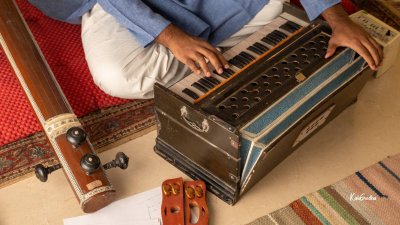
In both Hindustani classical and Carnatic traditions, the composition serves as a structural framework rather than a definitive boundary. Whereas Western classical musicians primarily interpret completed scores, Indian classical practitioners assume the roles of both architect and builder. Each Indian classical composition, known as a Bandish or Kriti, represents a concentration of melodic potential. The artist is responsible for expanding this potential, assuring that the raga is uniquely manifested in each performance, determined by the specific resonance of the environment.
The Endurance of Oral Tradition
This inherent fluidity is preserved through the Guru-Shishya Parampara, the ancestral lineage connecting teacher and disciple.
As a predominantly oral tradition, the detailed microtonal inflexions and expressive aspects of classical Indian forms largely elude standard notation. Mastery is achieved by careful auditory immersion and internalisation, assuring that while melodic structures adapt to current contexts, the underlying spiritual core persists intact. KalaSudha Academy serves as a contemporary guardian of this lineage, facilitating the precise pedagogical environment required to transform the modern student into a living repository of this ancient tradition. This pedagogical approach changes the student into a living repository of a tradition that is simultaneously ancient and immediate.
The Philosophy of Sound: Nada Brahma
Central to the traditional music of India is the ontological premise of Nada Brahma: the conviction that the universe is fundamentally composed of sound. In this context, sound is not exclusively a physical phenomenon but a primordial energy that connects the individual to a more extensive cosmic order.
Sound as a Spiritual Path
For the practitioner, music rises above the field of aesthetic entertainment, functioning instead as Sadhana, a dedicated spiritual discipline. Whether the listener engages with the expansive, meditative Alap of Hindustani music or the mathematically intricate rhythmic structures of the South, the ultimate objective remains the attainment of Rasa.

The Evocation of Rasa
The term Rasa, often translated as "essence" or "distillate," refers to the emotional state evoked by sound. An accomplished performer does not simply execute the technical requirements of a Raga: they build a specific atmospheric resonance. This might express as tranquillity, heroism, or profound longing, which the audience internalises as a visceral, emotive experience rather than a purely intellectual one. In this state, the distinction between the performer, the instrument, and the listener begins to dissolve, revealing the true purpose of Indian classical music: the pursuit of a shared, transcendent consciousness. KalaSudha Concerts are curated specifically to foster this shared, transcendent consciousness, providing a space where the visceral resonance of the raga can be experienced in its most authentic form.
Contemporary Relevance in 2026
In an age defined by transient media cycles and pervasive digital distraction, Indian classical music provides a rare engagement with the concept of "deep time." It calls for a departure from the fast consumption typical of modern soundscapes, offering instead a sustained exploration of melodic and rhythmic continuity that confronts the brevity of contemporary art.
The Science of Mindfulness
Neurological inquiries continue to present empirical support for the customary understanding of how an indian classical music song impacts the human psyche. The exact structural organisation of a raga can modulate neural oscillations, facilitating states of great physiological relaxation or elevated cognitive focus. This deliberate, incremental expansion of the melodic line acts as a corrective to the acoustic fragmentation of modern life, serving as a sophisticated form of sonic meditation.
Adaptation and Continuity
From its historical patronage in imperial courts to its assimilation into modern digital settings, classical India music demonstrates a persistent durability. This tradition does not exclusively withstand technological shifts: it actively incorporates them.
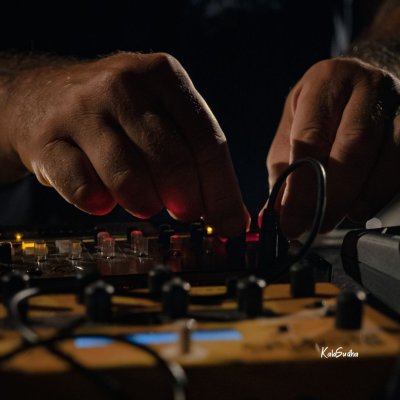
Through the adoption of precision electronic tanpuras or through cross-cultural syntheses which match Hindustani classical structures with global genres such as jazz, the art form remains vital due to its capacity for organic growth. It is a tradition that remains "living" not by resisting change, but by refining the art of evolution.
The Journey into the Raga
This initial inquiry serves as a threshold to a much broader survey of an intense musical sphere. While internalising the tradition's philosophical foundations is an essential first step, the ultimate comprehension of the form lies in the visceral engagement with the music itself. As this seven-part series proceeds, the investigation will move toward the technical sophistication of the North and the South, the specific instruments that give these traditions their singular voices, and the historical figures who facilitated the transition of this art onto the global platform. Understanding the theory is a necessary precursor: the following chapters will invite a stronger appreciation of the practice, tracing the lineage of Indian classical music from its ancestral roots to its contemporary global resonance.

Rajeev Kumar is Co-founder and Director of Art at KalaSudha. Since establishing the organisation in 2023, he has focused on building the future of classical heritage at the intersection of digital technology and Indian Classical Music, Arts, and Dance.
Continue Reading

Booking Direct, Made Simple: KalaSudha Tickets Are Now Live
This month we start something steadier than a festival season: a KalaSudha concert every month, with workshops and more to follow. That rhythm changes what we need. When you put on shows all year roun...


KalaSudha Composer: The First Release Is Open for Testing
KalaSudha Composer is open for testing. Earlier this year, we shared a first look at our browser-based notation editor for Hindustani classical music. Since then, we rebuilt large parts of it and adde...

Decoding the Ragas and Rhythms of the Indian Holi Season
In the world of IT, we live by “release cycles” and “sprint cycles”. In the rural heartlands, where Holi is a way of life, things run on an older, more robust operating system. Here, the seasons dicta...