

A Hundred Strings à Londres : cordes pincées, cordes frappées
- 22 Nov 2026
- Dimanche
- 5:00 PM – 7:30 PM
- 2 heures, 30 minutes
- St Saviour's, Pimlico
- Londres, GB
Billets
- Early Bird
- £GB25.00 GBP
- Student
- £GB20.00 GBP
- General Admission
-
£GB30.00 GBP
Sales start on dim, 8 Nov 2026 - 00:00

Résumé de l'événement
Artistes sur scène
Temps forts de l'événement
Le sitar, pincé
Le santour, frappé
Le tabla de l'Ajrada Gharana
Une église victorienne à Pimlico
Artistes sur scène
-
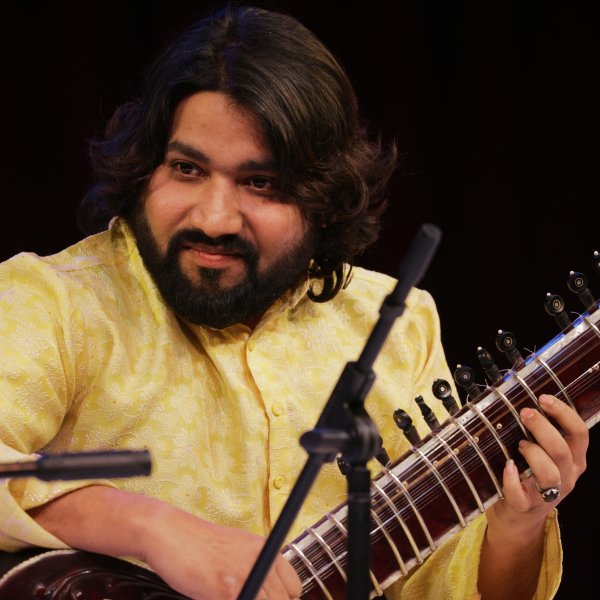 Adnan Khan
 -
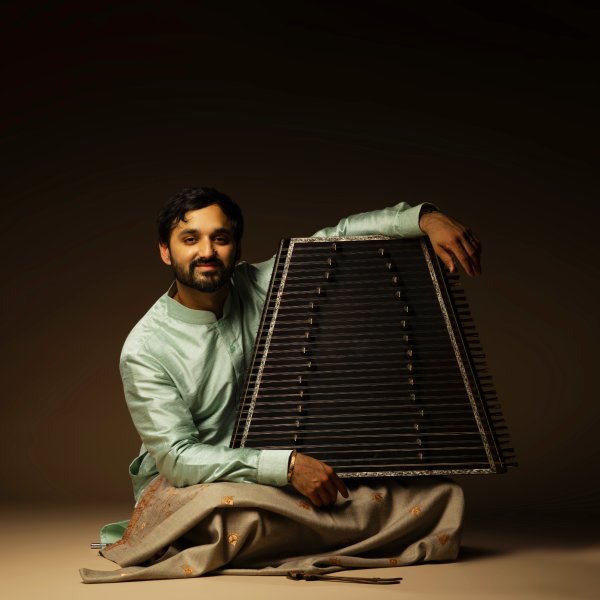 Vinay Desai
 -
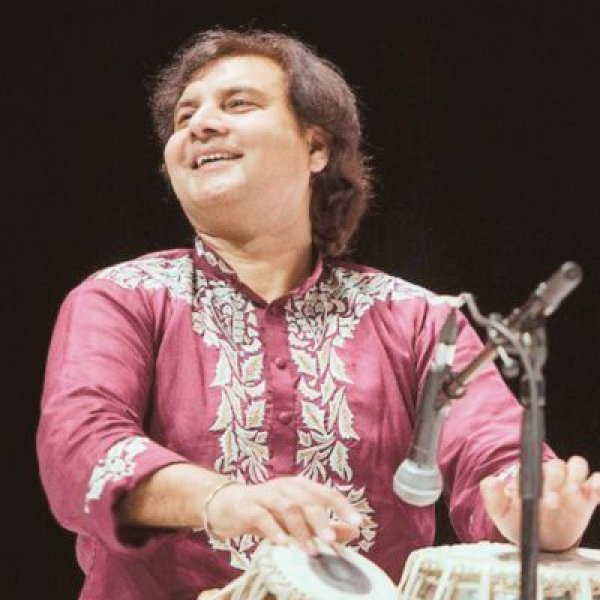 Akram Khan


Détails de l'événement
Le 22 novembre, A Hundred Strings arrive à Londres, à St Saviour's, sur St George's Square à Pimlico. Adnan Khan pince les cordes du sitar, Vinay Desai frappe celles du santour.
Adnan Khan, sitariste nommé aux Grammy Awards, joue dans le style gayaki ang, qui façonne l'instrument sur le modèle de la voix chantée. Il glisse d'une note à l'autre, tient une phrase puis l'infléchit, comme le ferait un chanteur. Il a reçu ses premières leçons de son grand-père maternel, le regretté Ustad Zafar Ahmed Khan, et se forme auprès de son père, le sitariste Ustad Saeed Khan.
Vinay Desai joue du santour, l'instrument à cent cordes du Cachemire, dont il frappe les cordes avec deux maillets de bois légers. Comme il ne peut pas glisser d'une note à l'autre, il phrase par traits rapides et frappes répétées, et chaque note continue de résonner une fois sa main passée. Il est le disciple direct de Pandit Shivkumar Sharma, lauréat du Padma Vibhushan, qui a fait passer l'instrument de la tradition sufiana du Cachemire à la scène du concert classique.
Ustad Akram Khan accompagne les deux au tabla. Il représente la septième génération de sa famille dans l'Ajrada Gharana. Formé d'abord par son arrière-grand-père, Ustad Mohammad Shafi Khan, puis par Ustad Niazu Khan, il enseigne plus de quinze kaydas classiques de ce gharana.
La veille au soir, samedi 21 novembre, les trois mêmes musiciens jouent Ragas by the Sea au Palace Court Theatre de Bournemouth.
St Saviour's n'a pas encore publié d'informations sur son accessibilité. Pour tout besoin d'accessibilité, contactez-nous.
Ouverture des portes à 16 h 45. Début du concert à 17 h.
Règles pour le public :
- Merci de ne pas filmer ni prendre de photos sans notre autorisation.
- Merci de ranger votre téléphone pendant toute la soirée, y compris pour les messages.
Informations sur le lieu

Frequently Asked Questions
Comment recevoir mon billet ?
Votre e-mail de confirmation contient le billet. Présentez-le sur votre téléphone à l'entrée de la salle, ou apportez une version imprimée si vous préférez le papier.
Si l'e-mail n'est pas arrivé, vérifiez d'abord votre dossier de courrier indésirable. S'il reste introuvable, écrivez-nous à [email protected] et nous vous le renverrons.
I can no longer attend. Can I have a refund?
Ticket sales are final once confirmed. If something has come up, write to [email protected] at least 7 days before the event and tell us what happened.
We look at each request on its own merits. A refund is not guaranteed, and we cannot consider requests inside the last week.
What happens if the event is cancelled or moved to another date?
You choose between a full refund and a transfer to the new date or an equivalent concert.
Refunds for a cancelled event go back to your original payment method within 7 to 14 business days. You do not need to claim them.
When should I arrive?
Come at the door time on the event page rather than at the start time. It gives you room to find a seat and settle.
The concert opens with an alap, the slowest and quietest stretch of the evening. Walking in during it costs you the part that sets up everything after.
Is there an interval?
Yes. The concert runs in two halves with a short interval between them.
The first half holds the classical raga set. The second opens out, and on most of our bills it changes either the players or the form.
What should I wear?
Whatever you are comfortable sitting in for a couple of hours.
Our audiences turn up in jeans and in saris on the same night, and neither looks out of place.
Is seating allocated?
No. Seating is unreserved, so pick any free seat when you arrive.
Arriving at doors rather than at the start gets you the closer rows, which is where this music rewards you most.
Can I photograph or film the performance?
No, not during the performance. The musicians improvise, and a raised phone or a lit screen pulls the room out of the music. Put the camera away and stay with the sound.
If you are covering the concert for press, or need to record for another reason, write to [email protected] before the day. Filming without that permission is not allowed.
Can I use my phone during the concert?
Switch it off or set it to silent before the music starts, and leave texting until the interval.
This holds for the whole concert. A single screen lighting up in a quiet hall reaches the stage.
I have access needs. Who do I talk to?
Write to [email protected] before you book and tell us what you need.
Wheelchair spaces and seats near the stage need arranging with the venue in advance, so the earlier you write, the more we can do.
I have never been to an Indian classical concert. Will I follow it?
Yes. You do not need to recognise a raga or count a taal to follow what happens on stage.
The music opens at a crawl with no pulse at all, then the tabla enters and the rhythm takes hold. That shape repeats through the evening, and most people read it by the second piece. Sit close and give the opening time.
What is a sitar?
A long-necked lute with a gourd body, movable curved frets, and a set of sympathetic strings running beneath the playing strings.
The curved frets let a player pull a string sideways and bend one note into another several steps away. That bend, the meend, is where most of the expression lives, and the sympathetic strings keep ringing behind it.
What is a tabla?
A pair of hand drums. The smaller wooden one sits under the right hand and carries the pitch. The larger metal one under the left hand supplies the bass and bends it, by pressing the heel of the palm into the head while striking.
The black circle on each head is what makes the sound recognisable. It weights the skin so the drum rings at a definite pitch rather than thudding.
Have more questions? Contact our support team and we'll be happy to help!