

Reading Raga Resonance: Slide Guitar, Piano & Tabla Solo Splendour
- #ریڈنگ
- #بالمشافہ
- ستمبر 14, 2025
- اتوار
- 5:30 ب.ظ
- The Great Hall, Reading
- ریڈنگ, سلطنت متحدہ
اپنے ٹکٹ حاصل کریں

ایونٹ کا خلاصہ
پرفارم کرنے والے فنکار
پرفارم کرنے والے فنکار
-
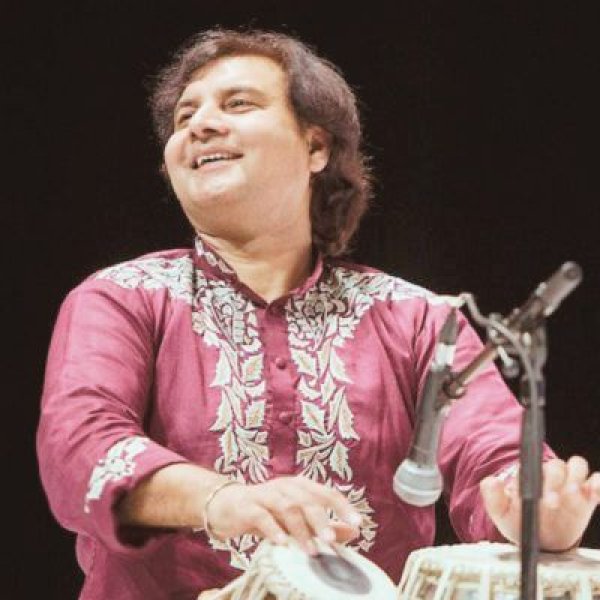 اکرم خان
-
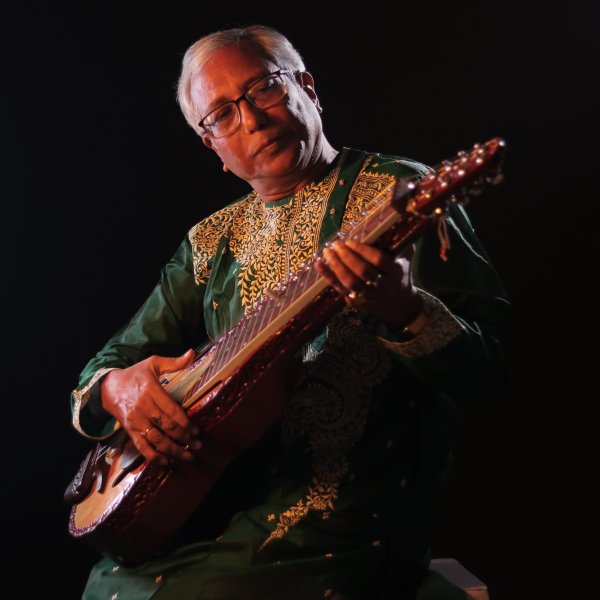 دیباسیس چکرورتی
-
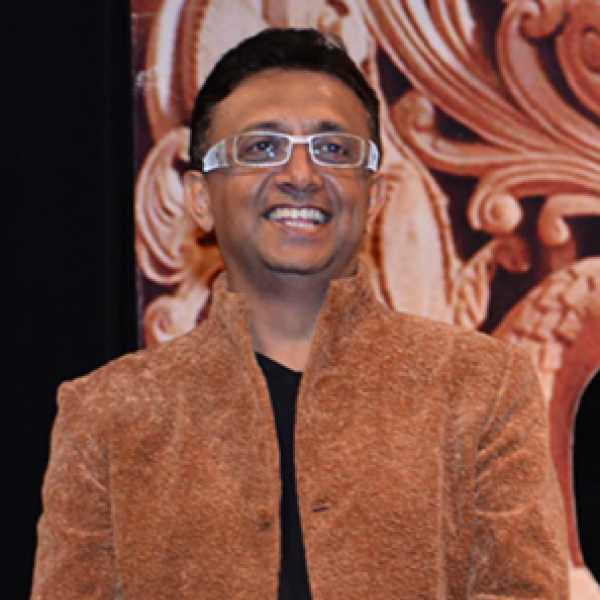 دیپک شاہ
-
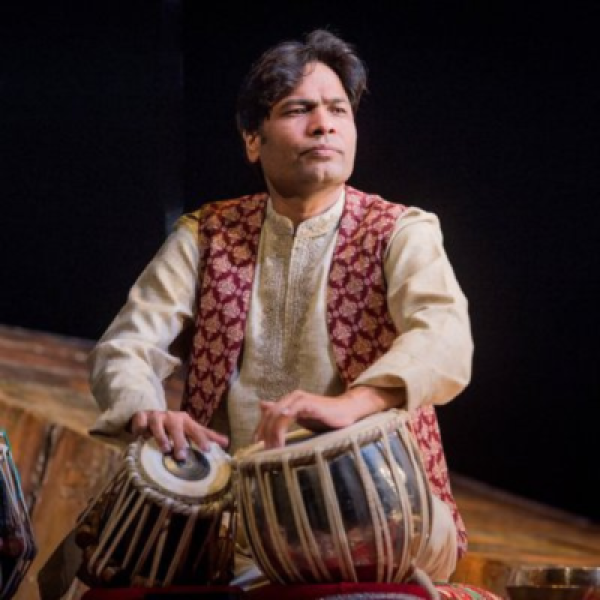 حنیف خان
-
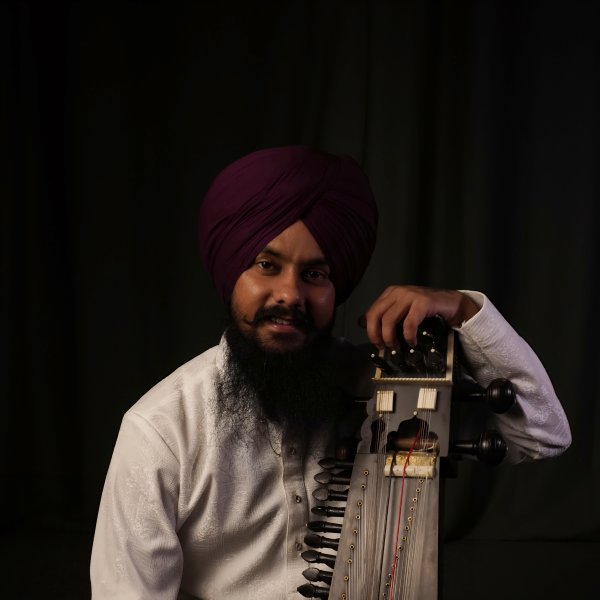 ستوندر پال سنگھ


ایونٹ کی تفصیلات
Fellow Reading music lovers, we’re excited to bring this spellbinding slice of Kala Festival 2025 to The Great Hall, Reading University. A grand setting for an evening where ancient Indian ragas meet contemporary creativity right in the heart of our town.
As part of this year’s nationwide celebration, the concert opens with an inspired duet where visiting artist Pandit Debasis Chakroborty conjures soaring melodies on Indian slide guitar, weaving them around the imaginative raga-infused piano of Raaga Pianist Deepak Shah. Their interplay is anchored by our local UK-based Tabla master, Hanif Khan, creating a radiant bridge between East and West.
After the interval, prepare for rhythmic fireworks. Ustad Akram Khan, seventh-generation master of the Ajrara gharana, unleashes a tabla solo that shifts seamlessly from whisper-soft textures to thunderous cascades. Supporting the dynamic finale, rising sarangi virtuoso Vinayak Sahai adds plaintive bow strokes that echo the human voice and deepen every rhythmic phrase.
Doors open at 5:00 pm; music begins at 5:30 pm. Between sets, there’ll be time to mingle with fellow enthusiasts between sets. Bring friends, open ears and curious hearts. Let’s make another unforgettable memory for Reading’s vibrant cultural scene.
See you there, Reading!
The piano helps me speak the language of ragas in a new way. It’s where my heart finds balance between tradition and imagination.
Venue information
The Great Hall, Reading
The Great Hall, University of Reading, London Road Campus, Reading, RG15AQ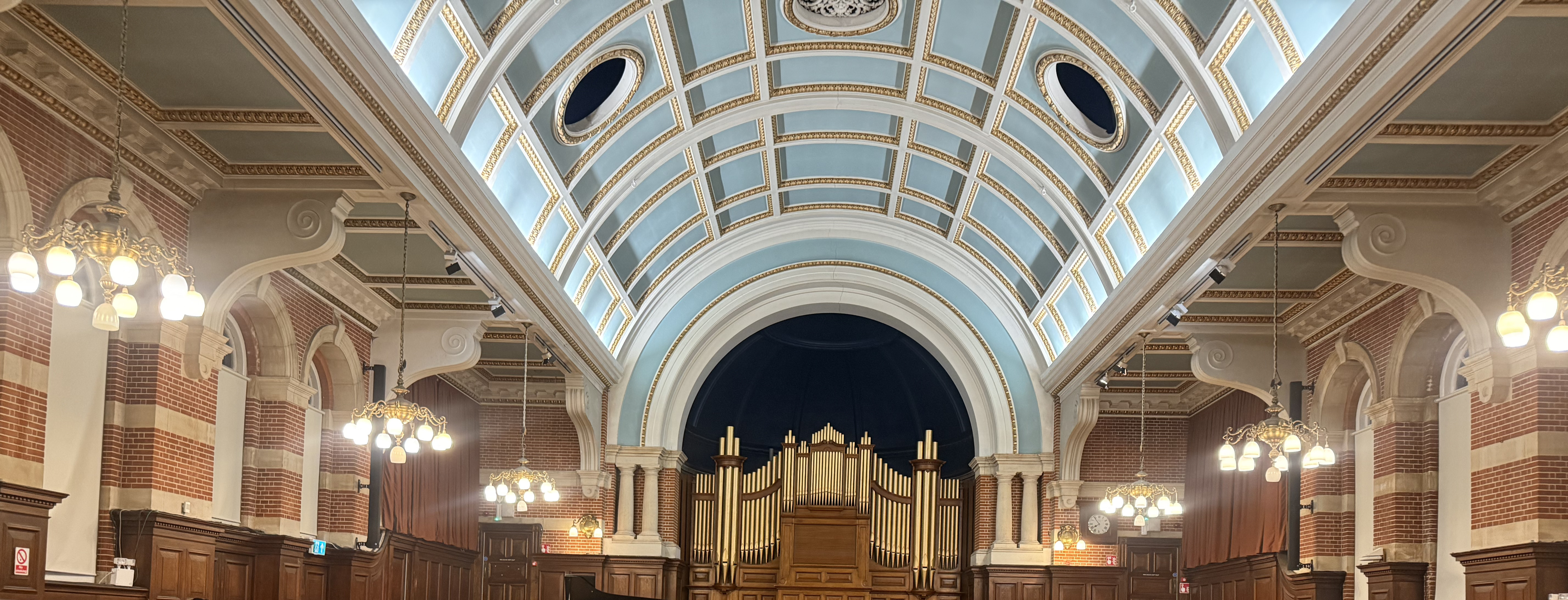
Attendee reviews
Ratings describe the event experience.
-
Event Attendee
Event experience 5/5
Hello, everybody. This was a beautiful event. From start to finish, I enjoyed every bit of it. The music was good; the blurbers were good. Obviously, I needed to know one of the instruments I couldn't recognise, which is the Sarangi. And it was very, very positive for me. It has been my special day. So this fitted in with the bell, Beautiful. I enjoyed it. Thank you.
-
Event Attendee
Event experience 5/5
I came to know about this program at the last minute and I was really looking forward to it. I am a music person and the program was amazing. We really enjoyed it, and I was also talking to the organiser. From next time, we plan to bring more crowd here because there is a big community in this area. We will definitely make it more successful. This program was really amazing — all the artists were unbelievable, really rich and very good. I think this is positive feedback for people to join our events. I was also discussing that social media and networking are very important to build awareness because there is a big community in this area. There is another separate program going on currently, so not many people could attend this time. But we will plan better, spread the word, and when a new event comes in, we will definitely have a more successful event next time. Thank you so much.
-
Event Attendee
Event experience 5/5
Listen to piano, tabla and guitar together in a jugalbandi, and then to listen to slide guitar and tabla in a jugalbandi. Amazing, Amazing. limited audience, perfect venue, perfect, perfectly organized. It was really, really wonderful. Even in today’s generation, there are children who are connected to classical music. They have their own likings, but they should also see this side of classical music, because watching live shows and watching live performances like this. I think they will understand it. The roots are here only. From this, it has come and moved to what they hear, what they watch, and what they go for. So, definitely they should, if they come and listen to this classical music. They can enjoy, They will enjoy, they will understand where it is coming from.
-
Event Attendee
Event experience 5/5
The greatest, greatest evening it was and honestly, everybody enjoyed it. All the practice really showed, everything was there. Thank you so much. Thank you for having me. Another wonderful day, amazing, truly an amazing evening. You are wonderful. Please make sure you arrange more events like this. Feedback is five-star for this. It was a great, great evening, honestly. You guys have done a lot of good for everybody. Everyone was entertained here. Well done, man. Well done. Thanks, more and more events like this. Thank you so much.
-
Event Attendee
Event experience 5/5
It was nothing that I have seen before. The Ustad ji played tabla non-stop for like one and a half hours, and it was amazing, out of this world. Everyone played beautifully, the slide guitarist and the previous tabla player as well as Ustadji. He was amazing. I’m really looking forward to coming here again, and I wish this is more publicised so that a lot more people get to know about it, because I’m sure there are many people in Reading and all over the UK who would want to come here. It was brilliant. I would suggest that you put up some snippets across social media and try to promote this more and more, because this is phenomenal and it needs to reach the public as much as it can. I enjoyed it thoroughly, and I’m sure there are many people who are not aware of this function and have missed out on watching him and watching all of them.Thank you very much.
-
Event Attendee
Event experience 5/5
Well, Thank you very much for organising this. I haven't been to a concert for many years. I've been going to concerts mainly in London since the early, uh, mid-80s. You know, I've seen a lot of the great artists and I look forward to supporting you as you've got another programme coming shortly. I hopefully, if I'm here in November, I'm looking forward to supporting you at that time. Thank you very much again. Thank you.
-
Event Attendee
Event experience 5/5
Thank you very much for organising it, because we really thoroughly enjoyed it. For future generations, I would say keep organising events like these here. Normally, in India, it's accessible, in the uk, it isn't. So if you keep organising this, I think it will be really helpful for younger generations here and globally to be aware of old instruments CLASSICAL MUSIC So thank you. Thank you. Keep up the good work. Thank you.
-
Event Attendee
Event experience 5/5
We've just had the most amazing recital of Indian Classical Music. We had in the first half some Western instruments, Piano, Slide Guitar and Tabla, which was extraordinary. The second half was mind-blowing. Ah. Extraordinary expertise. I can't explain, can't put it into words, but it was terrific.
-
Event Attendee
Event experience 5/5
It was a brilliantly organised event. I really, really enjoyed all the music. You had amazing artists, and it was very unusual for Reading. So thank you for bringing this to Reading, and I hope next time you get a wider Audience to Reading, because it would be so nice to have more events like this in Reading. Thank you very much for bringing it here.
-
Event Attendee
Event experience 5/5
Today's performance was extraordinary. Um. A little bit more than I expected it's going to be. I was expecting a regular performance, but it's turned out to be extraordinary. The young generation, I think, needs to come and experience the talent we have in our country, and it takes years and years of, uh, learning. I thoroughly enjoyed today, and I thank you all for organising all this and also the artists coming here.
Showing 3 of 10 reviews
اکثر پوچھے جانے والے سوالات
Where do I park at The Great Hall, Reading?
Park at the White Gates Car Park on the University of Reading's London Road Campus. Set your sat nav to RG1 5AG, the car park's postcode, and drive in from Crown Place, off the London Road (A4).
The campus has up to 200 spaces for Great Hall events. Spaces go first come, first served, and they get tight at busy times. Evening and weekend events need no parking permit.
Coming by train or bus? See how to get to The Great Hall.
Is The Great Hall in Reading accessible?
Yes, The Great Hall in Reading is accessible.
You need to book a wheelchair space ahead of the concert. Write to [email protected] once you have your ticket, and we will arrange it with the venue.
Where can I hear live Indian classical music in Reading, and how do I find out about the next KalaSudha concert there?
KalaSudha presents Indian classical music in Reading and lists each concert on its Reading page, with a link to book. To hear when the next Reading date is set, press Register for updates there or join the KalaSudha newsletter.
KalaSudha has presented concerts at The Great Hall on the London Road Campus, the University of Reading's original home, as part of the Kala Festival.
Who is the tabla player Ustad Akram Khan, and what is his lineage?
Ustad Akram Khan is a tabla player and the seventh generation of his family in the Ajrara gharana. His father was Hashmat Ali Khan. As a boy he trained first with his great-grandfather, Mohammad Shafi Khan, and later with Niazu Khan. For over four decades he has kept the gharana's repertoire alive, and he preserves more than 15 of its classic qaidas through his teaching and concerts. He made his international debut in Norway in 1987 and has played on All India Radio more than 800 times.
He also learned from his father, Hashmat Ali Khan, and he has accompanied Ustad Vilayat Khan.
Who is the Indian slide guitarist Pandit Debasis Chakroborty, the senior-most disciple of Pandit Brij Bhushan Kabra?
Pandit Debasis Chakroborty is a Hindustani slide guitarist and the senior-most disciple of Pandit Brij Bhushan Kabra, and his playing reflects Kabra's style. His name is also written Debasis Chakraborty. He plays in the Senia-Maihar gharana and has taught since 1992.
He has been part of the Department of Performing Arts at Mangalayatan University since its inception, and returns to universities in Australia and the USA as a conductor-performer and artist-in-residence. He helped carry out a joint music research project between Mangalayatan University and Monash University, and has published 10 research papers.
He learned first from his father, then from Barun Kumar Pal and Jotin Bhattacharya, and in the mid-1990s studied with Kabra in Jodhpur. He is Associate Professor of Music at Mangalayatan University in Aligarh and advises government and non-government organisations as an expert.
What is a tabla?
A tabla is a pair of hand drums. The smaller drum, the dayan, is wooden, sits under the right hand and carries the pitch. The larger drum, the bayan, sits under the left hand and gives the bass. The bayan is most often copper, sometimes clay or wood, and the player bends its bass by pressing the heel of the palm into the head while striking.
Each head carries a black circle of tuning paste. The paste weights the skin and adds overtones. The dayan rings at a clear pitch, and the bayan gives a deep bass with a looser pitch that the palm can shift.
What is the Ajrara (Ajrada) gharana of tabla, where did it begin, and what is it known for?
The Ajrara gharana, also spelt Ajrada, is a school of tabla that arose in the late 18th or early 19th century in the village of Ajrara, in Meerut district. Most accounts trace it to two brothers, Kallu Khan and Miru Khan, who learnt in Delhi, making it an offshoot of the Delhi gharana. Its players add the ring finger to the Delhi technique. It is best known for qaidas, themes with set variations, in aad laya, three strokes to every two beats. Ustad Akram Khan plays in the gharana today.
Have more questions? Contact our support team and we'll be happy to help!