Video
HD

Dhun Based on Raag Mishra Shivaranjani | Pundit Debasis Chakroborty | Music of India

KalaSudha Music 3 years ago
10.38

About This Video

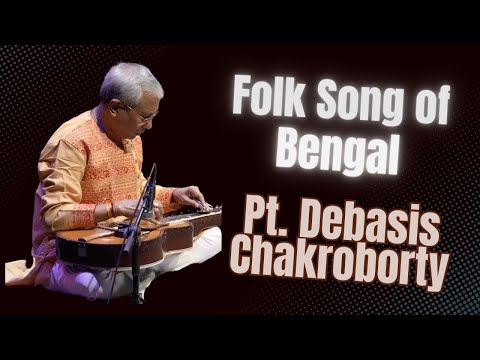
Pandit Debasis Chakroborty, a slide guitar exponent of the Senia-Maihar Gharana, performs a dhun rooted in Mishra Shivaranjani on the Indian Slide Lap Guitar. Sanju Sahai accompanies on tabla. The recording is from the inaugural Rhythms of India: KalaSudha's Cultural Odyssey concert, held at Britannia Village Hall, London, on 6 May 2023.

Mishra Shivaranjani belongs to the Kafi Thaat and carries a pentatonic core (S-R-g-P-D), its emotional weight drawn from the friction between Komal Gandhar and Shuddha Gandhar, the defining feature of the "Mishra" variant. The raga suits the late-night hours, drawing on Karuna Rasa (pathos) and Vipralambha Shringar, the sentiment of longing in separation. The dhun form centres on melodic improvisation, without the constraint of a fixed rhythmic cycle.

Chakroborty uses the slide's continuous pitch movement to track the meend-heavy phrasing this raga demands. The glides between Rishabh and Komal Gandhar, and the occasional chromatic touch of Shuddha Gandhar, trace the raga's characteristic pull between its two Gandharas. Sahai's tabla keeps rhythmic ground without crowding the melodic space.

Credits

Indian Slide Guitar Debasis Chakroborty
Tabla Sanju Sahai
Filming & Editing Vineet Johri

Ragas

Mishra Shivaranjani

मिश्र शिवरंजनी

Late night

Raag Mishra Shivaranjani is arguably the most evocative melody in the Indian musical sphere. Its parent raga, pure Shivaranjani, belongs to the Kafi Thaat family and uses a strict five-note structure (S-R-g-P-D). The "Mishra" variant is where improvisation shines. In the Hindustani tradition, "Mishra" means the freedom to tint the raga with forbidden notes (Vivadi Swaras) to heighten its emotional impact. This raga is a favourite for Thumri, Ghazal, and instrumental solos because it resembles the erratic nature of grief and love. The main "Mishra" elements include the introduction of Shuddha Gandhar (G) and Komal Nishad (n). These notes are used like salt in a dish, moderately yet adequately to change the entire flavour. At KalaSudha, we categorise Mishra Shivaranjani as a "Mood Raga," one that obliges a performer to prioritise Bhaav (expression) beyond rigid technicality. Academic Comparison: Mishra Shivaranjani vs. Shivaranjani vs. Bhairavi Mishra vs. Pure Shivaranjani: The pure version is "Shuddha" (pure) and meditative. Mishra Shivaranjani is "Lalit" (graceful) and romantic. The addition of the Shuddha Ga (G) creates a "Major-Minor" conflict that is absent in the original version.Mishra Shivaranjani vs. Bhairavi: Both are "Mishra-friendly" and emotional. However, Bhairavi is a morning raga of total surrender, while Shivaranjani is a midnight melody of active, restless longing.The "Semitone" Play: Academically, Mishra Shivaranjani is significant for its use of Chromaticism. Moving between the Komal g and Shuddha G creates a "meend" (glide) that is widely considered the most "soulful" movement in Indian music.

View Details

Video Info

Duration
10.38
Published
Category
Quality
HD
Resolution
1920x1080