Specific Discipline

Dhrupad

ध्रुपद

"The Ancient Voice of Meditative Sound"

Ancient Form Raga Purity

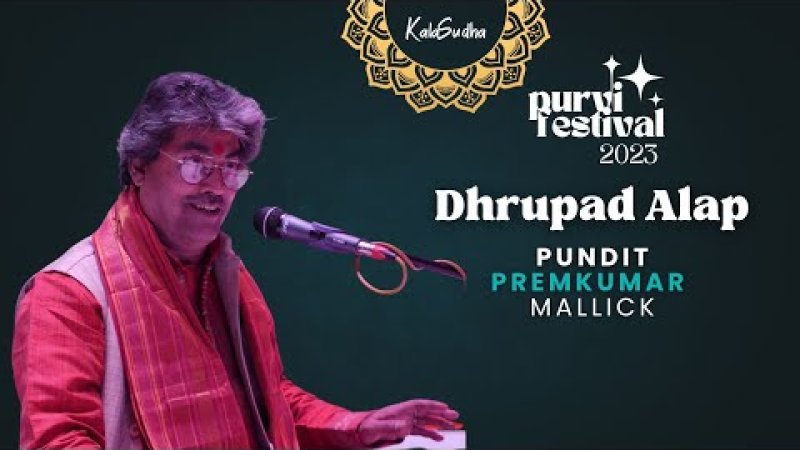
Dhrupad is the most ancient surviving Hindustani vocal form, emphasising raga purity and extended alap over virtuosic display, with roots in temple devotion and Mughal court patronage.

Quick Facts

Name Meaning
Fixed verse (dhruva + pada)
Key Family
Dagar tradition
Accompaniment
Pakhawaj (not tabla)
Characteristic
Extended alap, restrained ornamentation

Overview

Dhrupad is the most ancient surviving form of Hindustani classical vocal music, predating khayal by several centuries. The name combines dhruva (fixed) and pada (verse), reflecting the form's emphasis on composed text set within strict raga grammar. Dhrupad represents a meditative, austere approach to classical music, valuing raga purity and restraint over the virtuosic display characteristic of later forms.

Originating in temple devotion and later flourishing under Mughal court patronage, dhrupad embodies a philosophy of music as spiritual practice. The extended alap (unmetered raga exploration) that opens dhrupad performances can last longer than many complete khayal concerts, reflecting the form's contemplative pace and depth.

"Dhrupad does not entertain. It transforms. The singer becomes a vessel for sounds older than memory."

Structure and Format

Dhrupad performance begins with extended alap, exploring the raga without rhythmic accompaniment. This section progresses through registers—low (mandra), middle (madhya), and high (tar)—systematically revealing the raga's character. The alap may continue for considerable duration, with no fixed time limit.

The jod and jhala sections introduce rhythmic pulse while remaining unaccompanied. The composition proper (bandish) then enters with pakhawaj accompaniment. The bandish typically has four sections: sthayi (refrain), antara (higher passage), sanchari (wandering section), and abhog (conclusion). Not all sections appear in every composition.

Styles and Schools

Four traditional styles (banis) characterise dhrupad practice: Dagarbani, Khandarbani, Nauthar, and Gaubari. Each emphasises different aesthetic priorities: the Dagar family's approach is meditative and restrained, while other styles may emphasise power or complexity. Today, the Dagar tradition is most widely known, though other lineages continue.

The Dagar family has been central to dhrupad's survival and revival. Figures including Nasir Zahiruddin and Nasir Faiyazuddin Dagar, Nasir Aminuddin Dagar, and Nasir Moinuddin Dagar (the Senior and Junior Dagar Brothers) brought dhrupad to contemporary audiences through recordings and teaching. Their students have carried the tradition forward internationally.

Musical Characteristics

Dhrupad ornamentation is notably restrained compared to khayal. The emphasis falls on meend (slow glides) and subtle oscillations rather than the rapid taans and complex patterns of later forms. This restraint allows focus on the raga's essential phrases and intervals, revealing its character through simplicity rather than elaboration.

The texts typically address devotional themes, whether Hindu (particularly Shiva and Vishnu) or Sufi. Some compositions praise royal patrons, reflecting the form's court history. The relationship between text and melody is close, with the musical setting serving the words rather than treating text as raw material for improvisation.

Contemporary Practice

Dhrupad occupies a specialist niche within Hindustani classical music. While khayal dominates concert programming, dhrupad attracts dedicated practitioners and audiences who value its meditative depth. Institutional programmes and international workshops have expanded access beyond traditional family-based transmission.

The form's ancient associations and spiritual dimensions have attracted interest from practitioners of yoga and meditation. Dhrupad's emphasis on breath, sound, and contemplative practice creates natural connections with these disciplines.

Learn More

Explore courses and connect with expert instructors to master @discipline.

View Courses

Part of Hindustani Classical

Historical Timeline

Dhrupad originated in temple devotion, with compositions addressing Hindu deities. Under Mughal patronage, particularly during Akbar's reign, the form reached its classical maturity. Court musicians including Tansen elevated dhrupad to high art.

As khayal rose to dominance in the 18th-19th centuries, dhrupad declined in popularity. The Dagar family became central to its preservation and revival. Contemporary practice maintains the ancient tradition while institutional programmes expand access beyond family lineages.

15th Century

Temple Origins

Dhrupad develops in temple devotional contexts. The form takes shape as a vehicle for Hindu devotional texts within classical raga framework.

16th - 17th Century

Court Patronage

Mughal emperors including Akbar patronise dhrupad. Legendary musicians including Tansen bring the form to its classical maturity.

18th - 19th Century

Khayal Ascendance

Khayal rises to dominance. Dhrupad retreats to specialist practice, maintained by families including the Dagars who preserve the tradition.

20th Century - Present

Revival and Expansion

Revival efforts bring dhrupad to contemporary audiences. Recordings and international teaching expand the form's reach beyond traditional lineages.

Playing Techniques

Extended Alap

Extended alap systematically explores the raga without rhythmic accompaniment. Progressing through registers (mandra, madhya, tar), the alap may continue for significant duration.

Pakhawaj Accompaniment

The pakhawaj (barrel drum) accompanies dhrupad compositions rather than tabla. This choice reflects the form's ancient origins and creates a distinctive rhythmic texture.

Four Banis

Four traditional styles (banis) characterise practice: Dagarbani, Khandarbani, Nauthar, and Gaubari. Each emphasises different aesthetic priorities from meditative restraint to powerful projection.

Journey to Mastery

Follow this structured journey to master this discipline

1

Voice Production

Develop voice production suited to dhrupad's sustained tones and slow tempos. Master breath control for extended phrases. Build the physical foundation for lengthy alap.
20%
2

Alap Practice

Study alap development through systematic register exploration. Learn to sustain interest without rhythmic accompaniment. Develop the contemplative approach essential to dhrupad alap.
40%
3

Bandish Repertoire

Learn traditional compositions across major ragas. Study the four-part bandish structure. Understand the relationship between text and melody in dhrupad.
60%
4

Ornamentation

Study meend and restrained ornamentation appropriate to dhrupad. Develop the subtle oscillations that define the style. Avoid khayal-style virtuosic display.
80%
5

Performance Practice

Master interaction with pakhawaj accompaniment. Understand dhrupad tala patterns. Develop complete concert presentation including extended alap and bandish.
100%

Past Performances

Stay Connected to Our Musical Journey
Join our community of classical music enthusiasts and never miss out on extraordinary performances, exclusive events, and special offers.

Early Access

Get notified about upcoming events before general public

Exclusive Discounts

Special offers and member-only pricing on premium events

Artist Updates

Behind-the-scenes content and artist interviews

Join Our Newsletter

Get the latest updates delivered to your inbox

Trusted by thousands of music lovers worldwide

5K+
Newsletter Subscribers
98%
Open Rate
Weekly
Updates