
Image

सारंगी
"The Instrument of a Hundred Colors"
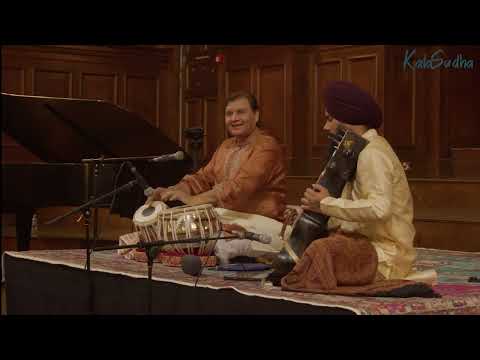
A bowed instrument of North India, the Sarangi is renowned for its haunting, vocal-like resonance and its technical role as the primary accompaniment for Khayal and Thumri.
The Sarangi stands as perhaps the most vocally expressive of all Hindustani instruments. Its name derives from sau rang (hundred colours), acknowledging its capacity to replicate the nuanced inflections of the human voice with uncanny fidelity. Carved from a single block of tun (red cedar) wood, this short-necked bowed instrument has served for centuries as the preferred accompaniment for khayal and thumri vocalists, earning it the title "the instrument that weeps."
The sarangi emerged from folk traditions of northwestern India, with historical references appearing as early as the 13th century. It gained prominence in Mughal courts, where its ability to shadow vocal lines with precision made it indispensable for serious classical performance. Unlike the harmonium, which later displaced it in many contexts, the sarangi can produce the continuous glides and microtonal inflections essential to Hindustani ornamentation.
"The sarangi does not play notes; it breathes them. In its voice, I hear the sigh of the beloved, the cry of separation, the silence between heartbeats."
The instrument's construction reflects centuries of acoustic refinement. The body comprises three hollow chambers: the pet (stomach), chaati (chest), and magaj (brain), each contributing to the instrument's distinctive tonal complexity. A goat-skin membrane covers the resonating chamber, while the bridge supports tremendous tension from three gut melody strings and approximately 35-37 sympathetic strings of steel or brass.
These sympathetic strings (tarafs) distinguish the sarangi's sound, creating a shimmering halo of resonance around each note. They are tuned to the raga being performed, amplifying related pitches and producing the characteristic "bloom" that gives the instrument its vocal quality. The result is a sound at once mournful and sweet, capable of expressing the deepest emotional states of classical repertoire.
Playing the sarangi demands a unique and physically demanding technique. The musician cradles the instrument vertically against the left shoulder while seated. Rather than pressing strings with fingertips as on guitar or violin, the sarangi player stops the gut strings with the cuticles or the flesh just above the fingernails. This allows continuous sliding (meend) across the string's length, producing the seamless glissandos essential to the gayaki (vocal) style.
The three melody strings are tuned to Sa, Pa, and Sa (tonic, fifth, and upper tonic), with the middle string serving as the primary melodic voice. The bow, held in an underhand grip, applies continuous pressure to sustain tones, while subtle variations in speed and weight create dynamic shading. Mastering this coordination requires years of dedicated practice, as the instrument offers no frets or visual markers.
For generations, the sarangi's primary role was shadowing vocalists, anticipating their melodic movements and filling the spaces between phrases. This accompaniment tradition produced legendary artists like Bundu Khan (1880-1955) and Abdul Latif Khan (1927-2003), whose sensitive support elevated countless vocal performances. The accompanist's art lies in complementing without overshadowing, decorating without distracting.
The 20th century witnessed the sarangi's emergence as a solo instrument, primarily through the efforts of Pandit Ram Narayan. His concert performances and recordings demonstrated that the instrument could sustain full-length classical presentations, moving through alap, jod, jhala, and gat with the same authority as sitar or sarod. This transformation required adapting vocal compositions and developing extended techniques suited to sustained instrumental discourse.
Despite its expressive capabilities, the sarangi faced decline in the latter 20th century. The harmonium's portability and easier learning curve displaced it from accompaniment contexts, while fewer students undertook its demanding apprenticeship. However, renewed interest from international audiences and dedicated practitioners like Dhruba Ghosh and Kamal Sabri has supported revival efforts. The instrument's irreplaceable voice continues to find listeners who appreciate its singular capacity to capture the most intimate dimensions of melodic expression.
The sarangi's origins lie in the folk traditions of northwestern India, with references appearing in historical texts from the 13th century onwards. Early forms accompanied devotional singing and regional folk genres. As the Mughal courts cultivated Hindustani classical music, the sarangi entered elite musical circles, becoming the standard accompaniment for khayal vocalists by the 18th century.
For generations, hereditary musician families (mirasis and kalawants) maintained sarangi traditions, often accompanying courtesans (tawaifs) in the mujra tradition. This association contributed to social stigma that affected the instrument's status despite its musical importance. The 20th century brought transformation as Pandit Ram Narayan pioneered solo concert performance, demonstrating the sarangi's capacity for sustained classical discourse independent of vocal accompaniment.
The sarangi evolves from folk instruments of northwestern India. Early forms accompany devotional and narrative singing traditions in Rajasthan, Punjab, and surrounding regions.
The sarangi gains prominence in Mughal courts as the preferred accompaniment for khayal singing. Its ability to shadow vocal lines with microtonal precision establishes its classical credentials. Hereditary musician families specialise in its demanding technique.
Masters including Bundu Khan and Abdul Latif Khan define the accompaniment tradition. Social changes and the harmonium's rise begin to marginalise the sarangi from its traditional roles.
Pandit Ram Narayan pioneers solo sarangi performance on concert stages and recordings. International recognition and dedicated practitioners work to preserve and extend the tradition.
The sarangi's distinctive vocal quality emerges from stopping strings with the cuticles rather than fingertips. This allows uninterrupted sliding across the string's length, producing seamless meend (glissando) essential to the gayaki style.
Approximately 35-37 sympathetic strings create the sarangi's characteristic timbral richness. These are tuned to the raga being performed, resonating when related pitches sound on the melody strings and producing a shimmering overtone halo.
The bow is held in an underhand grip, allowing continuous pressure for sustained tones. Subtle variations in bow speed and weight create the dynamic shading essential for expressive playing.
Follow this structured journey to master this discipline
Get notified about upcoming events before general public
Special offers and member-only pricing on premium events
Behind-the-scenes content and artist interviews
Get the latest updates delivered to your inbox
Trusted by thousands of music lovers worldwide