Specific Discipline

Guitar

गिटार

"Western Strings Speaking the Language of Raga"

Western Adaptation Modified Design

The Guitar in Hindustani classical music is a Western instrument adapted for raga through slide technique and modified design, pioneered by Brij Bhushan Kabra and extended by Vishwa Mohan Bhatt.

Quick Facts

Pioneer
Brij Bhushan Kabra
Technique
Lap slide (Hawaiian style)
Modifications
Added sympathetic and drone strings
Landmark Recording
Call of the Valley (1967)

Overview

The Guitar in Hindustani classical music represents a remarkable adaptation of a Western instrument to Indian melodic principles. Pioneered by Brij Bhushan Kabra in the mid-20th century, the Indian classical guitar demonstrates that raga can speak through any voice when approached with understanding and innovation. The instrument has proven capable of the sustained tones, ornamental nuances, and emotional depth essential to classical expression.

Kabra, originally trained as a geologist, discovered the Hawaiian lap slide guitar during a visit to Kolkata and recognised its potential for classical application. After studying with the legendary Ali Akbar Khan, he modified the guitar by adding sympathetic and drone strings, creating an instrument capable of the resonance and ornamentation characteristic of traditional Hindustani instruments.

"The guitar has no nation. It is a vessel waiting to be filled with whatever music the player pours into it."

The Kabra Revolution

Brij Bhushan Kabra became the first Indian artist to successfully present ragas in classical format on guitar. His 1967 collaborative album Call of the Valley, recorded with flautist Hariprasad Chaurasia and santoor master Shivkumar Sharma, achieved international recognition and remains one of the most influential Indian classical recordings. The album demonstrated that the guitar could participate equally with traditional instruments in serious classical discourse.

Kabra's approach used the slide technique of Hawaiian guitar, allowing the continuous pitch bending (meend) essential to raga grammar. By laying the guitar flat on the lap and sliding a metal bar across the strings, he achieved the glissandos impossible on standard fretted guitar. The addition of sympathetic strings created the shimmering resonance characteristic of sitar and sarod.

The Mohan Veena

Pandit Vishwa Mohan Bhatt extended this tradition, developing the Mohan Veena, a highly modified archtop guitar. His instrument features three melody strings, four drone strings, and twelve sympathetic strings, creating a hybrid that bridges Western and Indian instrument design. Bhatt's 1994 Grammy-winning album A Meeting By the River, recorded with American guitarist Ry Cooder, brought global attention to Indian slide guitar.

Technique and Adaptation

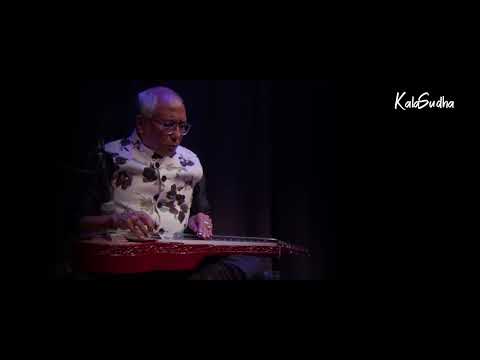
Classical guitar in the Indian tradition primarily uses slide technique rather than standard fretting. The guitar rests horizontally on the player's lap, with a metal or glass slide producing the continuous pitch variations essential to raga expression. The right hand may use fingerpicks or bare fingers, while the left hand controls the slide position and pressure.

Modifications to standard guitars include added strings (sympathetic and drone), adjusted bridge height, and sometimes altered body shape. These changes enhance sustain and resonance while providing the tonal reference points essential to modal music. Some players use purpose-built instruments while others modify standard guitars.

Contemporary Practice

The Indian classical guitar maintains a devoted following among players who appreciate its unique combination of Western construction and Indian expression. While not as prominent as traditional instruments in concert contexts, the guitar continues to attract students interested in approaching classical music through familiar Western forms. The slide guitar tradition established by Kabra and extended by Bhatt demonstrates the adaptability of raga principles to diverse instrumental voices.

Learn More

Explore courses and connect with expert instructors to master @discipline.

View Courses

Part of Carnatic Classical

Historical Timeline

Brij Bhushan Kabra pioneered Indian classical guitar in the mid-20th century. Originally a geologist, he discovered the Hawaiian lap slide guitar and recognised its potential for raga expression. After studying with Ali Akbar Khan, Kabra modified the instrument by adding sympathetic and drone strings.

His 1967 album Call of the Valley, recorded with Hariprasad Chaurasia and Shivkumar Sharma, achieved international recognition. Vishwa Mohan Bhatt extended the tradition, developing the Mohan Veena and winning a Grammy in 1994. These pioneers demonstrated the guitar's capacity for serious classical discourse.

1960s

Kabra's Innovation

Brij Bhushan Kabra discovers the Hawaiian lap slide guitar and begins adapting it for classical music. He studies with Ali Akbar Khan and modifies the instrument with sympathetic strings.

1967

Call of the Valley

The landmark album Call of the Valley features Kabra alongside Hariprasad Chaurasia and Shivkumar Sharma. The recording achieves international recognition and establishes the guitar's classical credentials.

1994

Mohan Veena and Grammy

Vishwa Mohan Bhatt develops the Mohan Veena, a highly modified guitar. His album A Meeting By the River with Ry Cooder wins the Grammy for best world music.

Present

Contemporary Practice

The Indian classical guitar maintains devoted practitioners while inspiring new generations interested in approaching raga through Western instrument forms.

Playing Techniques

Lap Slide Technique

The guitar is played horizontally on the lap using a metal or glass slide. This technique enables continuous pitch variation (meend) impossible on standard fretted guitar.

String Modifications

Classical adaptation includes adding sympathetic strings for resonance and drone strings for tonal reference. These modifications create the shimmering quality characteristic of traditional instruments.

Mohan Veena Design

The Mohan Veena, developed by Vishwa Mohan Bhatt, features three melody, four drone, and twelve sympathetic strings. This purpose-built design optimises the guitar for classical expression.

Journey to Mastery

Follow this structured journey to master this discipline

1

Posture and Basic Technique

Learn lap-style posture with guitar held horizontally. Master slide grip and basic pitch production. Develop right-hand picking technique.
20%
2

Slide Intonation

Study slide positioning for accurate intonation. Learn to tune and manage sympathetic and drone strings. Develop precision across the instrument's range.
40%
3

Ornamentation

Master meend (glissando) through controlled slide movement. Learn gamak and other ornaments adapted to guitar technique. Develop vocal-like expression.
60%
4

Raga and Composition

Study alap development approaches suited to guitar sustain. Learn compositions (gats) adapted for the instrument. Develop repertoire across multiple ragas.
80%
5

Performance Practice

Master complete performance format including alap, jod, jhala, and gat. Develop concert-level presentation. Study interaction with tabla accompaniment.
100%

Past Performances

Stay Connected to Our Musical Journey
Join our community of classical music enthusiasts and never miss out on extraordinary performances, exclusive events, and special offers.

Early Access

Get notified about upcoming events before general public

Exclusive Discounts

Special offers and member-only pricing on premium events

Artist Updates

Behind-the-scenes content and artist interviews

Join Our Newsletter

Get the latest updates delivered to your inbox

Trusted by thousands of music lovers worldwide

5K+
Newsletter Subscribers
98%
Open Rate
Weekly
Updates