

Part of Hindustani Classical
Hindustani classical instrumental music is North Indian raga music played on instruments such as sitar, sarod, sarangi, bansuri and tabla, each with its own technique.
Historical Timeline
Writers on the bansuri credit Pannalal Ghosh (1911 to 1960) with bringing it into modern Hindustani classical music. The musicologist Carl Clements finds no sign of an existing Hindustani classical bansuri tradition in the 1930s and 1940s, when Ghosh was adapting the flute for the concert stage. Ghosh studied with Girija Shankar Chakravarti and joined the Maihar gharana, or school, through Allauddin Khan. About three quarters of the recorded performance time Clements analysed follows the slow and fast sections of khyal, a vocal genre, in a format close to the Kirana gharana. His students' tradition credits him with a seventh finger hole that helps with notes in ragas such as Puriya, Darbari and Bihag.
Hariprasad Chaurasia has called his own style based on dhrupad, a genre many musicians consider more traditional than khyal; Clements judges that label, and the vocal-only label given to Ghosh, oversimplified. An NCPA feature credits Ronu Majumdar with bringing beenkari ang, the dhrupad-rooted style of the been or rudra veena, to the bansuri, with vocal forms learnt from Laxmanprasad Jaipurwale of the Kunwar Shyam tradition.
25 December 1971
Bansuri talk and recital at the Music Academy
At the Music Academy's 45th conference on 25 December 1971, a specialist in the North Indian long flute showed three flutes he had made, explained bamboo selection and hole placement, and played Yaman, Darbari and Desh with tabla.
1974 recording; 1989 release
Venu, a live bansuri and tabla recording
Hariprasad Chaurasia recorded Venu live with Zakir Hussain on tabla in Fairfax, California, in November 1974. Raga Ahir Bhairav unfolds in an unmetred alap and pulsed jor, then two gats, or compositions. Rykodisc issued it in 1989.
2011 awards
Akademi Fellowship for a bansuri player
The Sangeet Natak Akademi elected Hariprasad Chaurasia a Fellow in its 2011 awards, with the ceremony set for 9 October 2012. His citation names his teachers: Rajaram of Benares, Bholanath, and Annapurna Devi of the Maihar gharana.
April 2021
Bansuri in an NCPA feature
In the NCPA's ON Stage magazine, Ronu Majumdar says that in folk style any fingering could serve as Sa, the tonic, and that Pannalal Ghosh fixed it for classical playing, opening a span of two and a half octaves.
Playing Techniques
How the bansuri makes its sound
The lips direct a narrow air jet across the blowing hole onto its far edge. The jet works in step with resonances of the air column inside the bamboo, and together they sustain the vibration you hear as sound. The tube is closed at the end nearest the blowing hole. A concert bansuri in the Horniman Museum, London (2007.468), seals that end with a cork stopper.
Rolling the flute so that the lip covers more of the blowing hole lowers a note a little. Players start and separate notes with tonguing, a light stroke of the tongue; single, double, triple and flutter tonguing are all possible. Vibrato comes from rocking a finger over an open hole or from the breath. Carl Clements, who analysed the recordings of Pannalal Ghosh, finds that Hariprasad Chaurasia tongues more than Ghosh did, and suggests he does so to echo plucked strings. Clements links the flute's closeness to the voice to two features: notes that sustain for as long as the breath lasts, and glides as fluent as a singer's.
Finger holes, meend and tuning
The bansuri has no keys. The fingers cover, uncover or part-cover the open holes, and the pattern of covered holes decides which note the air column sounds. Sliding a finger on or off a hole by degrees produces meend, a continuous glide from one pitch to another, and the same partial covering gives the microtonal ornaments of raga phrasing. The Natyasastra, an early treatise that its translator Manomohan Ghosh dates to about 200 CE, gives flute notes made from open holes, half-open holes and holes under a shaken finger.
One composers' guide names each flute by its pipe note, the note sounded with every hole closed, and places Sa, the tonic, with the three upper holes closed, a fourth above that note. The pitch of Sa depends on the size of the flute. Makers tune single notes by enlarging or reducing a hole, and the scale does not follow equal temperament, the piano tuning that splits the octave into twelve equal steps. Fingerings in the third octave vary with the bamboo and with how the player blows.
Moving between registers
A higher note needs the air jet to reach the edge sooner, so the player blows a faster, shorter jet. The register break is the point where the flute moves up to the next overtone to sound the higher octave. A glide cannot cross the break without a jump in the line.
Length sets the overall pitch: longer flutes sound lower. The Horniman concert flute measures 650 mm, about 26 inches, and a composers' guide lists sizes from about 14 to 30 inches, with the longest rare and hard to play. A finished flute cannot be retuned by shortening it, since the holes would then sit in the wrong places. The playable range depends on the flute and the player. Published figures run from about two octaves and a third to three octaves or more for an expert, with the top notes the hardest to control and keep in tune.
Journey to Mastery
Follow this structured journey to master this discipline
1
Find a clear tone
Find a clear first tone. Ask your teacher to show how your lips align with the blowing hole, then play a short, comfortable note and pause. Keep the fingering the same and make one small change to the lip position before the next attempt. Listen to each attempt and compare its clarity with the one before.
2
Seal and uncover a hole
Cover the holes for a note your teacher has shown you, then lift and replace one finger while the others stay settled. Listen for the original pitch when the finger returns. If the returning note sounds different, check the hole coverage with your teacher before you repeat the exercise.
3
Control a short meend
Play a short meend, a glide between two nearby notes chosen by your teacher. Sound each note on its own first, then connect them by sliding a finger on or off a hole a little at a time. Compare the note you arrive at with the separate note you played first. Keep the glide short while you learn how much finger travel your flute needs.
4
Plan a phrase around breathing
Learn a short raga phrase and mark a comfortable breathing point in it with your teacher. Play up to that point, breathe, then continue the phrase. Listen for whether the note after the breath keeps its pitch and character. Shorten or lengthen the phrase to suit your present comfort.
5
Keep the entry in tala
Find where a short composition phrase begins in the tala cycle. Count the cycle aloud while your teacher plays the phrase, then play it yourself. Agree on a breathing point that lets the next entry arrive on time, and practise the breath and the entry together.
Past Performances


Featured Artists
Renowned performers of this discipline
Shanish Kumar

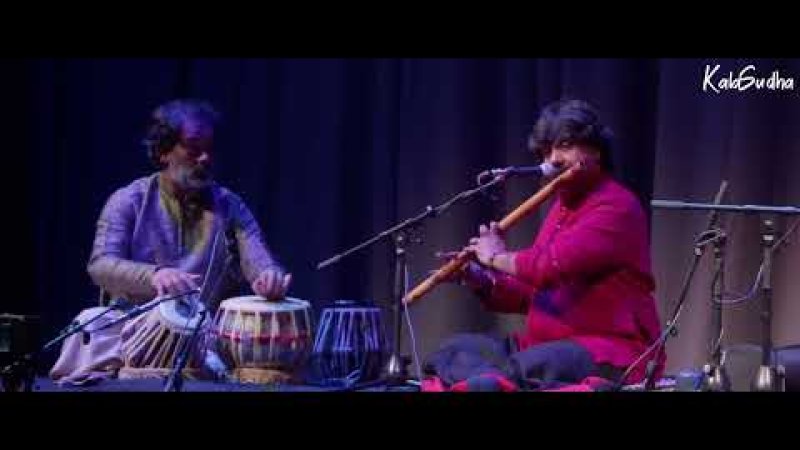
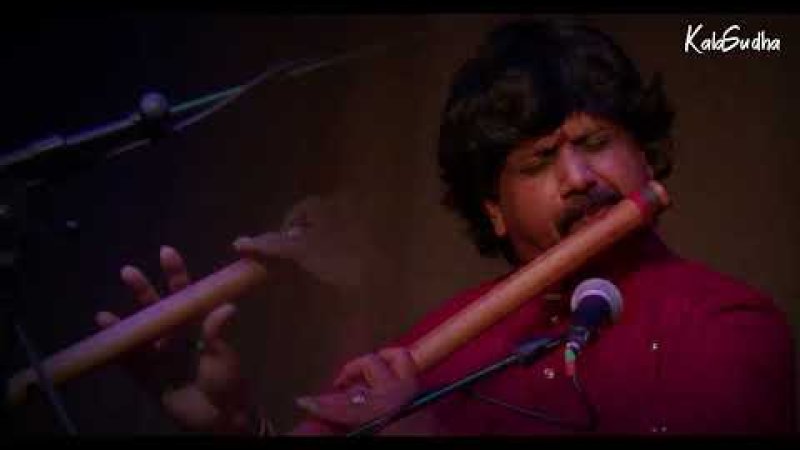
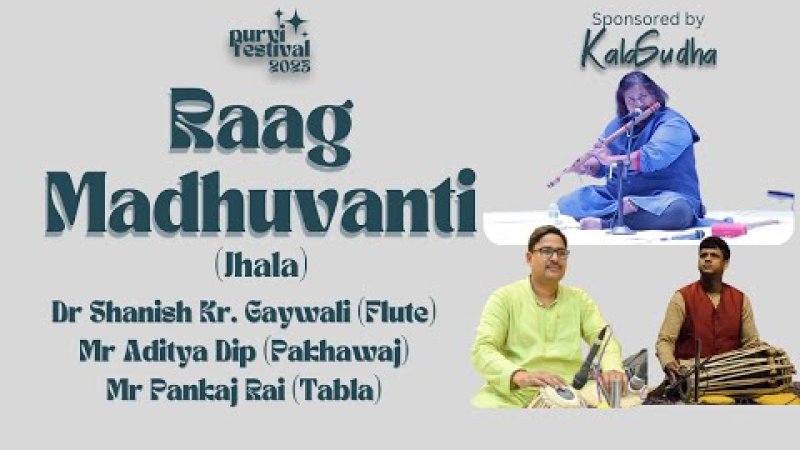
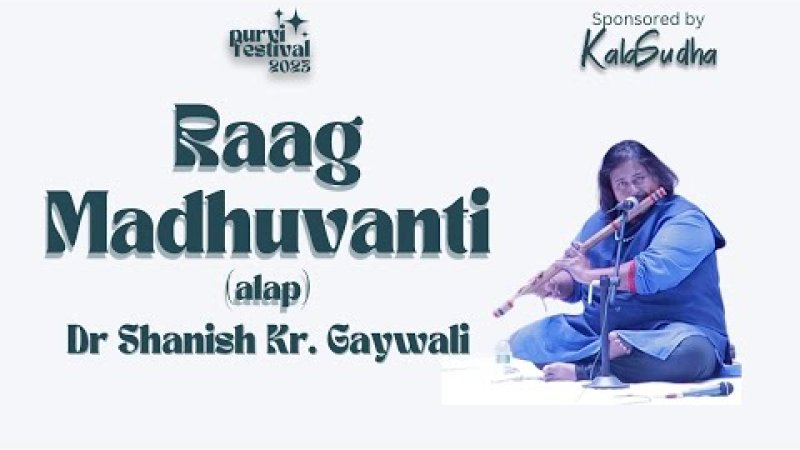
Dr Shanish Kumar Gyawali plays bansuri in the Banaras tradition, trained by Vinod Prasanna and Dr Prahalad Nath, PhD from BHU, AIR ‘B High’ grade, Young Artist Scholarship.
Ajay Prasanna

Pandit Ajay Prasanna is a widely acclaimed international flautist from a distinguished musical family. He carries the legacy of his father, Pandit Bholanath Prasanna, who was one of the best flautists
Flute
Media Gallery
Audio and video performances